

Who wrote the Navratri aarti 'Durge Durghat Bhari' and what its opening lines mean
Attributed to Samarth Ramdas in the 17th century, the aarti sung in homes and mandals during Navratri is a plea to the goddess for protection.
 Images are not validated/verified
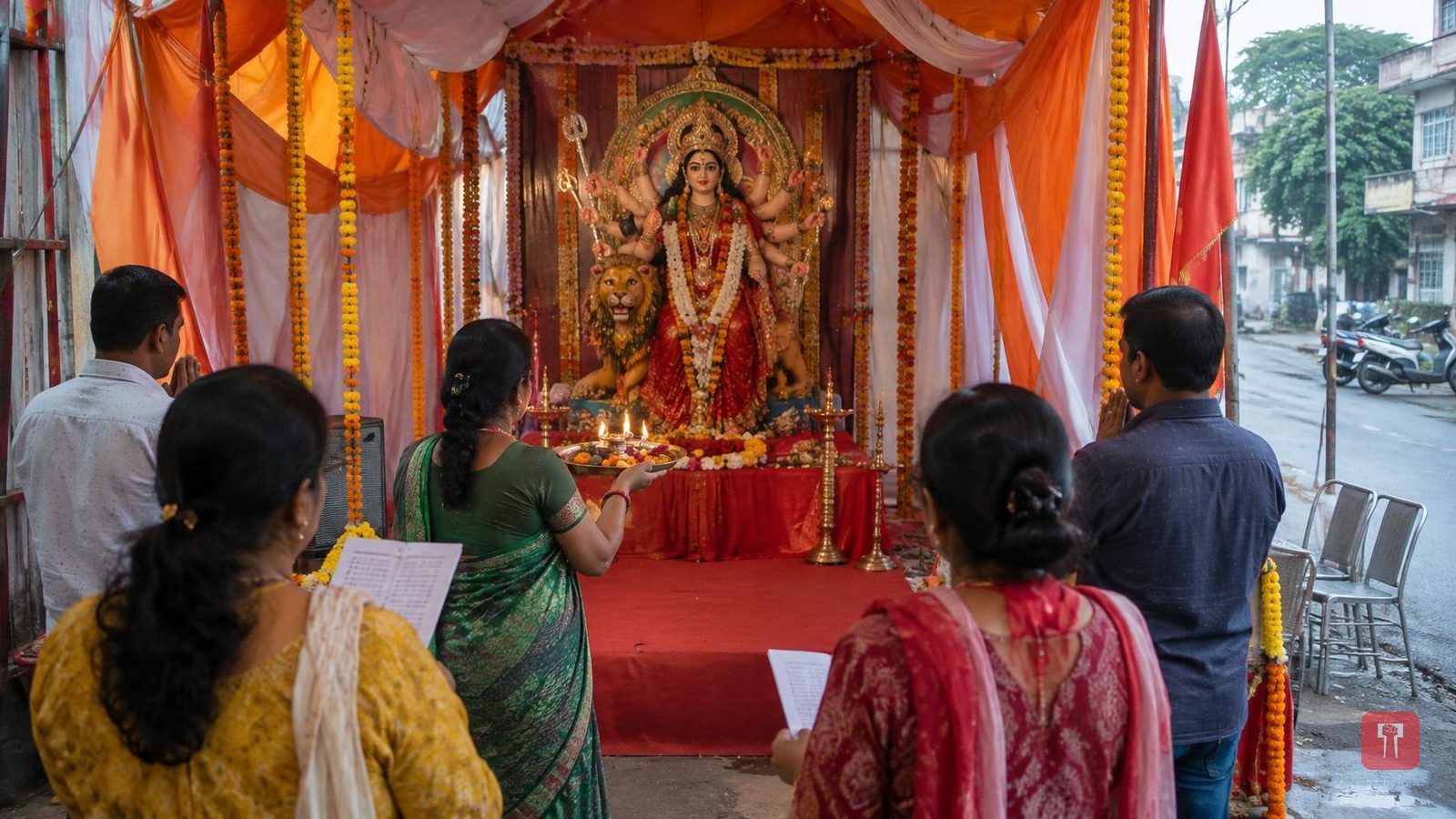
The Navratri festival lasts nine days, and the nine forms of the goddess are worshipped on these days. On the second day, Goddess Brahmacharini is worshipped; her significance is linked to penance, restraint and devotion. During these days, the aarti 'Durge Durghat Bhari Tujvin Sansari' rings out loudly in many homes and mandals. But how many people know the true meaning of this aarti and who wrote it?
The aarti is said to have been composed by Samarth Ramdas in the 17th century. According to the tale, it came to Samarth Ramdas Swami when he went to Tuljapur for darshan of Goddess Tuljabhavani. At that time, one crisis after another was descending and all the citizens were frightened. So that they might gain some courage and the strength to fight, Samarth composed this aarti describing the power of the goddess. Through it, he told how mighty the goddess is and how she rushes to the call of her devotees.
Samarth Ramdas explained the meaning of the first line after deep thought. 'Durge Durghat Bhari' means: O Mother Durga, this life is very hard. 'Tujvin Sansari Anath Nathe' means that without you we are orphans in this world. You alone are our mother, you alone are our support. When a mountain of sorrow falls upon one's life and no way out can be seen, only you can save us; that is its meaning.
In the following lines of the aarti, Ramdas Swami describes the different forms of the goddess. She has weapons in her hands, garlands of pearls around her neck and kumkum on her forehead. Samarth has told how beautiful she is to look at and, at the same time, how powerful. She killed the great demon Mahishasura and thus gave happiness to all the gods and human beings. She is the saviour from crisis.
In the last verse, Samarth Ramdas Swami regards himself as a small child and tells the goddess that he is ignorant and understands nothing. He asks her to bring him out of the attachment and fear of this world, and to let him only serve her feet and offer her devotion. This is the simple request he makes to the goddess.
That is why the aarti is still on people's lips 300 to 400 years later. When we sing it, we do not merely utter words; understanding the meaning of each line, we also come to know what wish to ask of the goddess. It is everyone's faith that the goddess surely removes sorrow. A song has also been made on this aarti.
The aarti appears as a song in Kedar Shinde's 2005 film 'Aga Bai Arrecha!'. The music for the song was composed by Ajay-Atul.
