

When to offer attar to deities in puja, and where to take care
Hinduism has no single rule that every deity must be offered attar, and no agreed list of deities who must not be, so practice depends on tradition and the idol.
 Images are not validated/verified
Offering sandalwood, flowers, incense and fragrant items to a deity during puja is a long-standing tradition in Hinduism. Fragrance is seen as a symbol of purity, joy and devotion, and offering it expresses faith and respect. The question is whether the way of offering attar is the same for every deity, which deity should be offered it and where special care is needed.
Fragrance (gandha), flowers, incense and lamps hold particular significance in worship. In the Shodashopachara puja, offering gandha to the deity is counted as one of the rites. Sandalwood, kumkum or other fragrant items are offered according to the worship tradition of the deity. The custom of offering attar is found in some temples and in home worship as well. Even so, Hinduism has no single rule applying to all that attar must be offered to every deity. The method can vary with the form of the deity, local tradition, sect and the puja procedure.
In the worship of Shri Krishna, fragrant sandalwood, tulsi leaves and sweet-smelling flowers are important. In some devotional traditions, fragrant attar is also offered to Shri Krishna. There is a tradition of offering gandha in the worship of Lord Vishnu too.
Goddess Lakshmi is worshipped with fragrant flowers, sandalwood, incense and lamps. In some traditions, attar with the scent of rose or lotus is offered to the goddess. During Dhanteras, Diwali and Lakshmi Puja, devotees may offer fragrant items according to their family tradition (kulachar).
In the worship of Goddess Durga and other Shakti deities, gandha, kumkum, flowers and incense are used. Some Shaktipeeths or local traditions may have a practice of offering attar. Even so, it is advisable to follow the rules laid down in the specific puja procedure for the goddess.
In the worship of Shri Ganesh, durva grass, red flowers, sindoor and sandalwood hold particular significance. In some home pujas, a fragrant item is offered to Ganapati. But attar should be used only according to the type of idol and the tradition.
In the worship of Lord Shiva, bel leaves, jalabhishek, dhatura and, according to tradition, sandalwood are used. Sprinkling attar on a Shivling is not a universally accepted or essential practice. Before offering any fragrant item on a Shivling, the worship practice of one's own temple or home should be kept in mind. Mixing attar into the items used for abhishek should be avoided. Offering gandha is better than sprinkling attar directly.
In the worship of Hanumanji, according to some traditions, sindoor, jasmine oil, flowers and other puja items are used. In some places a custom of jasmine fragrance is found. But jasmine oil and attar are different things. Offering attar to Hanumanji is not considered necessary everywhere.
Hinduism has no universally accepted list of deities who should not be offered attar. It is therefore not right to conclude that applying attar to any deity brings harm or incurs a fault (dosha). Even so, care is needed on some points.
Attar should not be applied directly to idols coated with sindoor or oil, where there is a risk that it will damage their paste, paint or outer surface. Metal, wooden or painted idols can be stained by the ingredients of attar or have their surface damaged. For temple deities, offer attar or any other fragrant item only according to the temple's rules. Do not sprinkle anything on an idol without the priest's permission. Worship of a family deity (kuldevta) or village deity (gramdevta) should be done with the items prescribed in that deity's tradition.
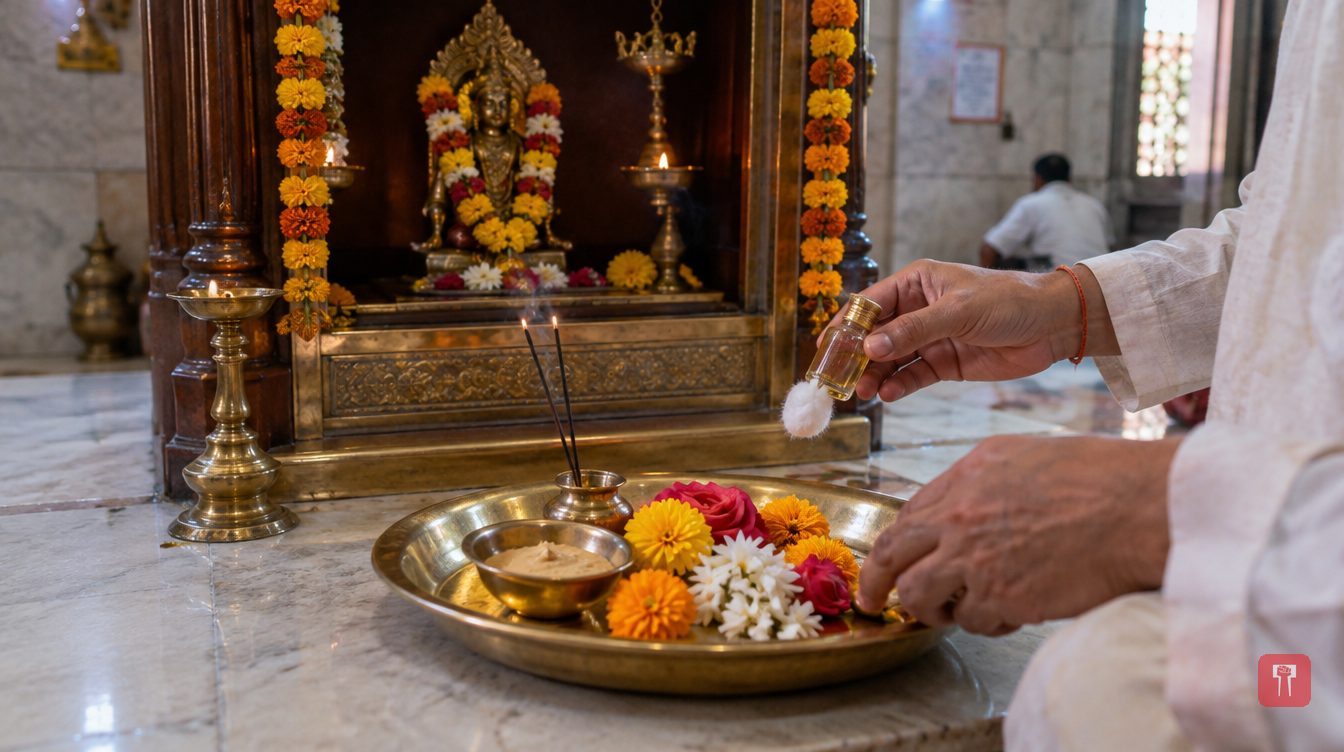
When offering attar, first look at the worship tradition of the deity. It is not necessary to apply attar directly to the idol. Instead, one or two drops of attar can be put on clean cotton or another suitable medium used for puja and placed near the deity. If a temple or a particular puja procedure prescribes a different method, follow it. Natural attar is an option, but not every natural or alcohol-free attar is necessarily safe to apply on an idol. It is therefore important to keep the material of the idol in mind.
The main sentiment behind offering attar is devotion, respect and purity. More important than believing that the fragrance of attar is needed to please the deity is worshipping with faith according to one's own tradition. It cannot be said outright that a puja remained incomplete because attar was not offered, or that applying attar to a deity incurs a fault. Before offering any fragrant item to a deity, its worship procedure, the temple's rules and the form of the idol should be kept in mind.
(Articles and news on subjects such as religion, astrology, Vastu and Feng Shui are meant only for readers' information. Consult an expert before trying anything related to them.)

Comments
No comments yet. Be the first.