

What Swami Samarth's goddess form in saree, nath and bangles means to devotees
In some images and idols, Shri Swami Samarth is shown adorned as a goddess, a form devotees read as a symbol of motherhood, compassion and spiritual oneness with Adishakti.
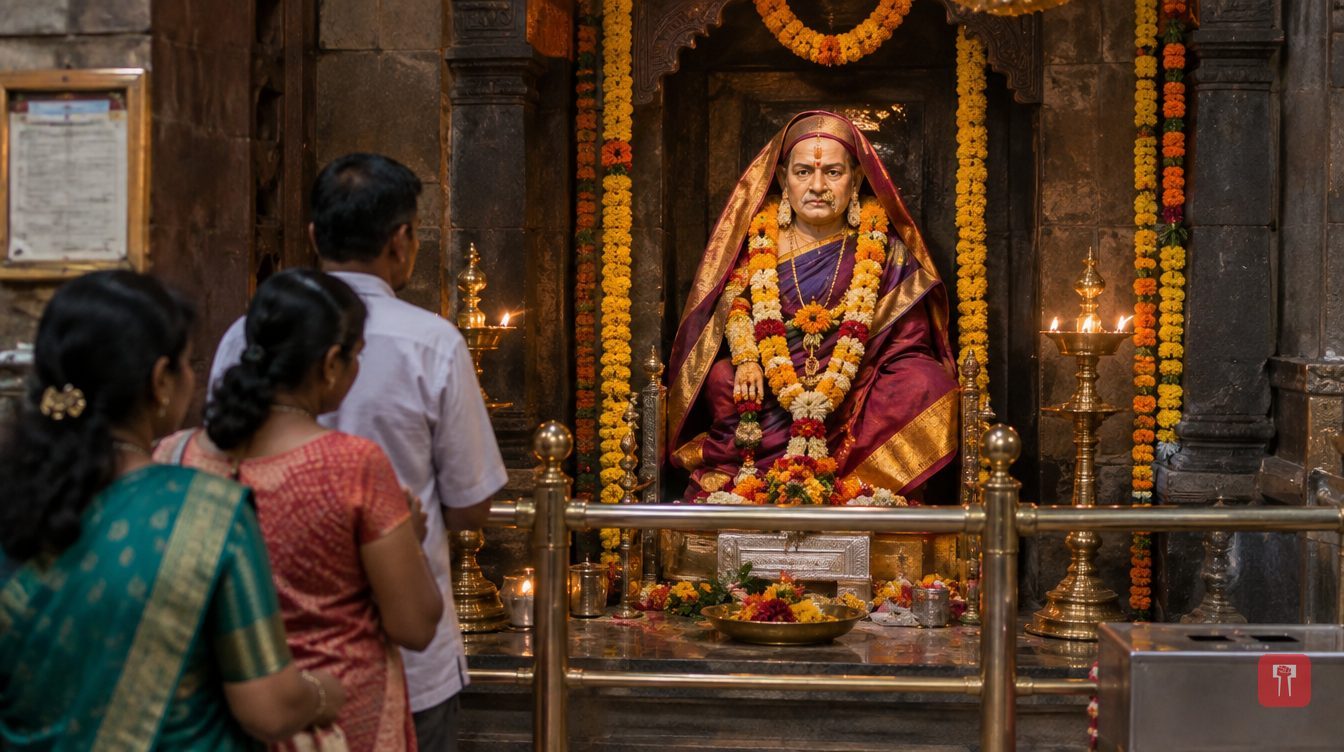 Images are not validated/verified
Shri Swami Samarth Maharaj is the centre of faith for lakhs of devotees in Maharashtra. His luminous personality, deep knowledge, immense love for devotees and compassion for the poor and suffering are the reasons he is known as "Akkalkot Swami Samarth".
In some pictures and idols of Swami Samarth, he appears in a goddess form, adorned with a saree, nath (nose ring), bangles and other women's ornaments. Seeing this form, many devotees wonder what the darshan of a great ascetic in a goddess form signifies and what spiritual philosophy lies behind it.
In the Indian devotional tradition, God is experienced not only as the Supreme Being or guru, but also through different relationships such as mother, father, friend and guide. The bond between devotee and God is not limited to worship; it rests on love, trust and surrender. In this spirit, many devotees address Shri Swami Samarth as "Swami Maa".
Devotees believe that just as a mother raises her child without selfishness, forgives its mistakes and supports it in difficult times, Swami Samarth also stands by his devotees. The significance of this maternal sentiment is seen in the darshan of his goddess form.
The mother's form is regarded as a symbol of affection, tenderness, compassion and protection. For many devotees, therefore, dressing an idol of Swami Samarth in a saree and adorning it with a nath and bangles is a symbolic darshan of the maternal power within him. In this form, devotees experience a mother who understands their sorrow and pulls them out of trouble.
Among the stories told about his goddess form is a tale of a leela in the form of Goddess Annapurna. According to a story from the devotional tradition, Swami Samarth was travelling with his attendants and devotees when everyone felt intense hunger. No arrangement for food could be seen in the deserted area. At that point an old woman appeared and fed everyone, as the story goes.
Some devotees believe that the old woman was Goddess Annapurna and that Swami Samarth himself appeased the devotees' hunger in her form. It would be right to view this story not as a historically proven event but as a tale linked to the faith of the Swami Samarth devotional tradition.
There is no firm historical evidence that can be assumed to exist for what purpose Swami Samarth himself gave for taking on the goddess form. While understanding the meaning of this form, it is therefore necessary to keep in mind the difference between devotees' faith, the tales of the tradition and the meaning of spiritual philosophy.
The Navratri festival is an important festival of worship of Adishakti. During this time Durga, Bhavani, Mahalakshmi, Annapurna and other forms of the goddess are worshipped in different ways. In many places, idols of Swami Samarth are also decorated with a saree, nath, bangles and flowers in goddess-like adornment.
Devotees' emotional faith lies behind this adornment. Devotees who see spiritual oneness between Swami Samarth and Adishakti see the swami's form of Shakti in these ornaments. In some places the adornment is done according to a particular temple tradition or local religious practice.
The goddess adornment is not mere outward decoration but a rite that expresses the faith, love and surrender in devotees' hearts. Traditional ornaments such as the saree, nath, bangles, flowers and kumkum reflect the auspiciousness of Indian culture and the worship of Shakti.
However, it is not the case that this adornment is done in every temple or tradition of Swami Samarth. It may vary according to the faith of particular groups of devotees and prevailing practices.
In the devotional tradition, the goddess form of Swami Samarth, adorned in a saree, nath and bangles, is regarded as a symbol of motherhood, compassion, the Annapurna principle and spiritual oneness with Adishakti. Some stories give this form the meaning of a divine leela, while from the Advaita viewpoint it is a reminder of God's all-pervading, undifferentiated nature.
Each devotee may experience the meaning of this form according to their own faith. But the most important message of this darshan is love, kindness, service and surrender. Whatever form God takes, true devotion is that worship should awaken compassion in a person's heart and show humanity in their conduct.
