

What sprouted Navratri jawara mean, and how are they immersed on the tenth day
Barley or wheat shoots grown in the ghat during Navratri are seen as signs of prosperity, though their height has no scientific link to fortune.
 Images are not validated/verified
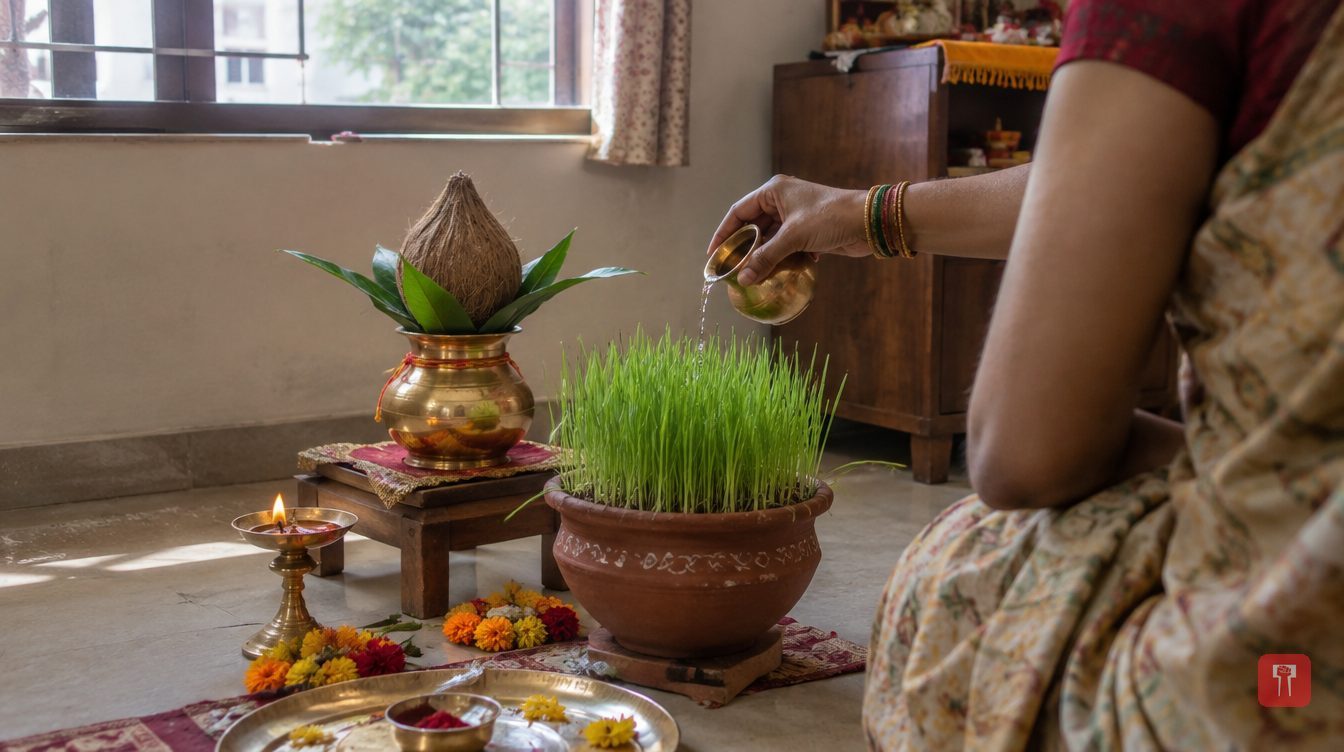
As Navratri begins, a ghat is installed in homes. Ghatsthapana carries great importance. On the first day, people install the ghat and worship the goddess. At the same time, grain such as wheat or barley is sown in an earthen pot. After a few days, small green shoots emerge, known as jawara. It is not just a plant; it has deep meaning in tradition. The green plant is regarded as a sign of prosperity, new life and positive change.
The method of sowing jawara is simple. While installing the ghat on the first day of Navratri, wheat is sown in an earthen pot. Some sow barley, while others use a different grain according to their village custom. A little water is sprinkled on it every day. Green shoots begin to sprout within three or four days. Watching the plants grow through the nine days of Navratri is a ritual in itself. The greenery gladdens the heart and is regarded as a symbol of new life and the strength of nature.
From a religious perspective, grain is regarded as anna, and anna means Lakshmi. Sprouting of the grain sown in the ghat is therefore taken as a sign that happiness and prosperity will come to the home through the goddess's grace. Goddess Durga, a form of Shakti, is worshipped in Navratri, and these plants too symbolise strength and creation. A small seed rises from the ground and becomes a plant, meaning a fresh beginning comes from what had ended. This also conveys the message that a person must rise again after a crisis and should not lose hope.
The green plant is regarded as a symbol of prosperity because Indian culture is tied to farming. It has long been understood that a good harvest fills the house with grain and brings well-being. Hence the belief that if the grain in the ghat grows well, the harvest will be good and the household will prosper. A plant needs water, air and sunlight, all in the right measure. A seed sprouts only when nature cooperates. This ritual is therefore linked not only to religion but also to the cycle of nature.
During Navratri, people look at these plants every day. Plants that grow lush and tall are considered auspicious. In reality, however, their growth depends on the quality of the seed, the soil, the amount of water and whether sunlight was available. There is no scientific basis for the idea that a tall plant will bring money or that a short one will bring bad luck. It should therefore be seen as a symbol of faith and positivity.
When the nine days are over, the ghat is immersed on the tenth day. The way of doing so differs from home to home. Some people offer the plants to the goddess. Some place them on a cap or on the head and take them as prasad. In some places, the plants are taken to a field and mixed into the soil. The custom varies from village to village.
On the whole, the jawara of the ghat are not merely a part of worship. They carry a message of the goddess's power, devotion and nature. Worship of the goddess gives strength to the mind, and the sight of these green plants inspires a new beginning. This tradition should therefore be seen not just as a ritual but as a symbol of the bond with nature.
