

Wardha agriculture department urges farmers to choose low-water rabi crops amid weak rainfall
 Images are not validated/verified
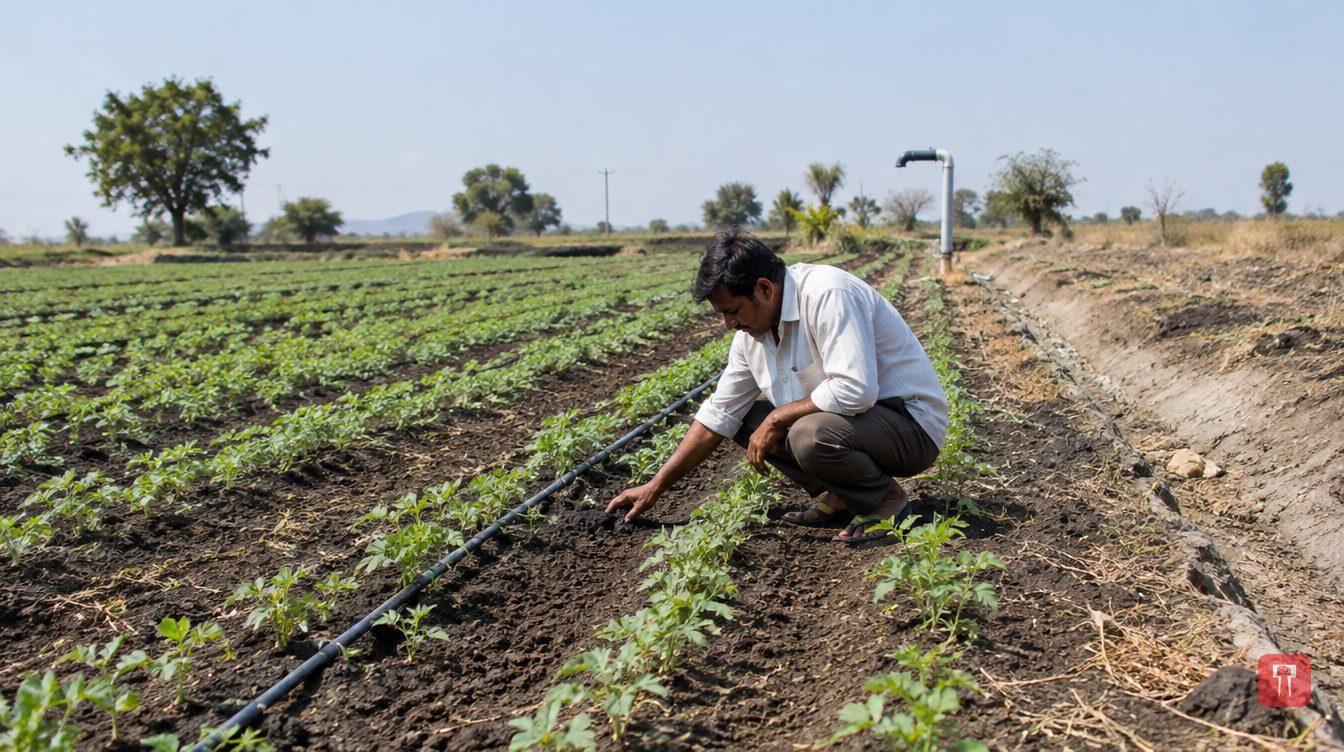
With rainfall low and groundwater down, Wardha's agriculture department has asked farmers to plan rabi sowing around the irrigation rounds they can expect.
Wardha district has received less rain this year, soil moisture has dropped and the water level in wells and borewells has fallen. The water stored in irrigation projects also has to be watched closely. In view of this, the agriculture department has appealed to farmers to estimate correctly how many rounds of irrigation water they will get when planning their rabi season crops, and to decide sowing and acreage accordingly. The department said crops that need less water and give higher returns should be given priority.
Though the weather is not favourable this rabi season, the agriculture department is offering guidance on crop planning, irrigation management, better farming practices and the benefits of government schemes, so that farmers still get a good yield. According to the department, every drop of irrigation water is precious. In villages that are to receive water, the emphasis is on getting irrigation planning information to the last farmer.
For the district's black and medium soils, gram, safflower, mustard, linseed, lentil and rabi sorghum have been recommended. While choosing, farmers should consider the soil type, available moisture and irrigation facilities. Safflower has deep roots and so tolerates drought relatively well. Gram makes good use of the moisture left in the soil. Mustard, linseed and lentil can also do reasonably well in low-water conditions.
Sunflower needs comparatively more irrigation, so it should be chosen only after checking water availability. To avoid water shortage at the critical stages of the crop, farmers should use drip or sprinkler irrigation. If needed, measures suited to the crop stage should be taken in line with the agriculture department's technical guidance. Products such as potassium nitrate or anti-transpirants should be used only on the crop for which they are recommended, in the correct quantity and on the advice of agricultural experts.
In the command areas of the Lower Wardha, Bor and Pothra irrigation projects, irrigation rounds are being planned according to water availability for rabi. The irrigation schedule will be decided by the irrigation department and the project advisory committee. The proposal is that the first round be given generally in the second or third week of November for sowing and early crop growth. Depending on crop needs, the second round is planned for the end of December or the first week of January.
Under the seed minikit scheme, minikits of sorghum and lentil are planned for distribution in rabi. Subject to availability, 1,000 sorghum and 700 lentil minikits will be given. Each farmer will get one minikit, containing 4 kg of sorghum seed or 8 kg of lentil seed. Farmers who applied on the MahaDBT portal and have been selected should contact their taluka agriculture officer's office.
Reach readers on the ward they actually live in.
Advertise with Prime Time 24Reach readers on the ward they actually live in.
Advertise with Prime Time 24Reach readers on the ward they actually live in.
Advertise with Prime Time 24
Comments
No comments yet. Be the first.