

Verses to recite at Lakshmi Puja on Diwali, from start of worship to lighting the lamp
 Images are not validated/verified
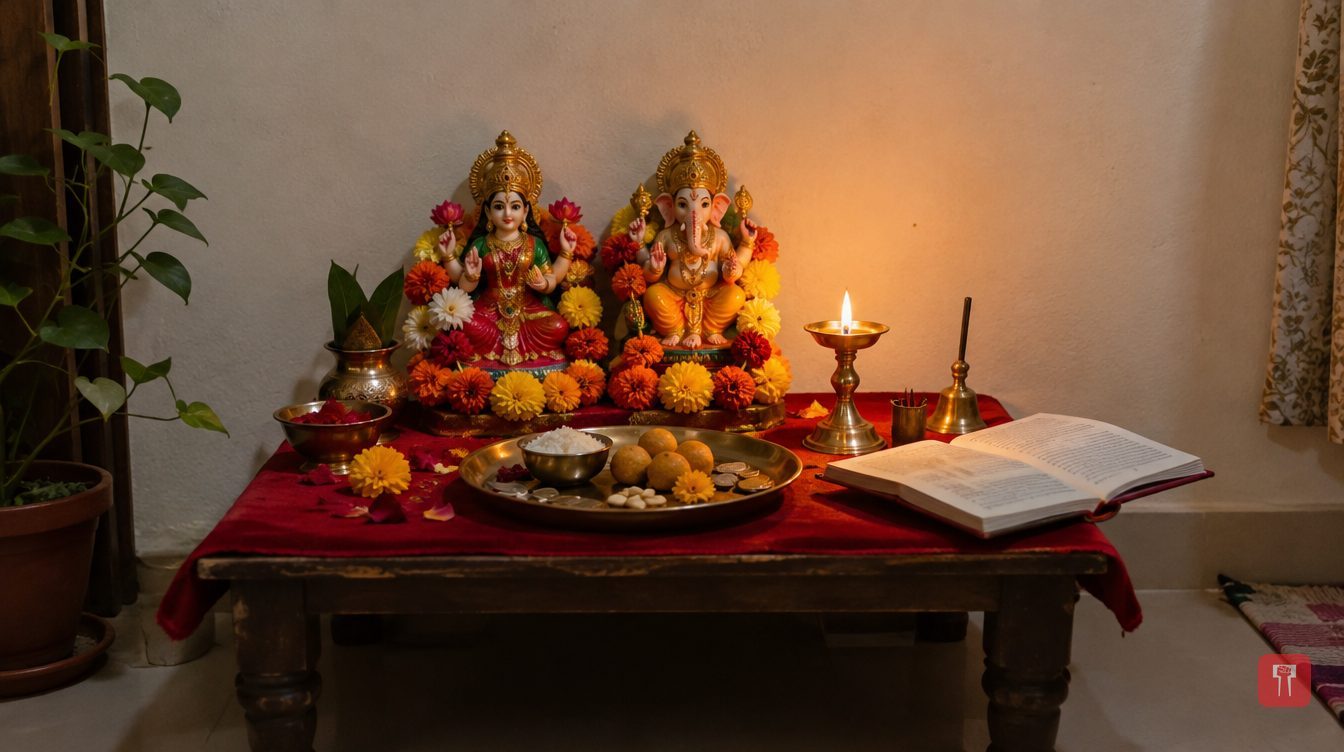
Devotees worship Goddess Lakshmi and Lord Ganesha at Diwali's Lakshmi Puja, and specific shlokas and stotras are recited from the opening to the close of the rituals.
At Diwali's Lakshmi Puja, Goddess Lakshmi and Lord Ganesha are worshipped for happiness, prosperity and opulence. It is said that reciting special shlokas and stotras on this day removes negativity from the home and brings positive energy. The verses to be recited from the start of the puja to its close are as follows.
It is traditional to begin any puja with a prayer to Ganesha, so that no obstacle comes in the way of the worship. This shloka is recited for it:
Vakratunda Mahakaya Suryakoti Samaprabha. Nirvighnam Kuru Me Deva Sarvakaryeshu Sarvada.
It means: O Ganapati Bappa, of the curved trunk and massive body, with the radiance of a million suns, may all my undertakings always be completed without any hindrance.
While meditating on Goddess Lakshmi during the puja, this well-known shloka is recited:
Namastestu Mahamaye Shripithe Surapujite. Shankhachakragadahaste Mahalakshmi Namostu Te.
Meaning: O Mahamaye, worshipped in the realm of the gods and seated on the Shripitha, you hold a conch, discus and mace in your hands. O Mahalakshmi, my salutations to you.
Chanting this mantra is considered highly rewarding for keeping wealth, grain, happiness and prosperity in the home:
Sarvamangalamangalye Shive Sarvarthasadhike. Sharanye Tryambake Gauri Narayani Namostu Te.
Meaning: O auspicious among all that is auspicious, giver of welfare, fulfiller of all human goals (dharma, artha, kama, moksha), protector of those who seek refuge, the three-eyed one, O Narayani (Lakshmi), my salutations to you.
This form of Goddess Lakshmi is prayed to for the destruction of poverty and troubles in the home:
Padmanane Padmavipadmapatre Padmapriye Padmadalayatakshi. Vishvapriye Vishnumano'nukule Tvatpadapadmam Mayi Sannidhatsva.
Meaning: O Lakshmi, lotus-faced, pure like a drop of water on a lotus leaf, lover of the lotus, with large eyes like lotus petals, beloved of the world and attuned to the mind of Lord Vishnu, may your sacred lotus-like feet remain steady in my heart and home always.
Diwali is the festival of lamps. The main lamp lit during Lakshmi Puja is a symbol of knowledge and prosperity. This shloka is to be recited while lighting the lamp:
Shubham Karoti Kalyanam Arogyam Dhanasampada. Shatrubuddhivinashaya Dipajyotirnamostu Te.
Meaning: My salutations to the flame of the lamp, which brings auspiciousness and welfare, gives health and wealth, and destroys the evil thinking of the enemy.
There is another shloka for the lamp:
Dipena Lokan Jayati Dipena Hanti Tamasam. Dipo Harati Papani Dipajyotirnamostu Te.
For those who want to recite a complete stotra and not just shlokas, three stotras are considered especially sacred on Lakshmi Puja. The Sri Suktam is a hymn taken from the Vedas, and its recitation at Lakshmi Puja is considered the best. The Mahalakshmi Ashtakam begins with "Namastestu Mahamaye" and is described as easy to recite and very effective. The Kanakadhara Stotram was composed by Adi Shankaracharya and is considered special for attaining wealth.
Devotees have been advised to keep a few things in mind while reciting. The shlokas should be read only after a full bath and in clean clothes. Pronunciation should be as clear and calm as possible, and the recitation should not be hurried. In mantras and shlokas, it is devotion rather than any miracle that pleases Goddess Lakshmi quickly.
Reach readers on the ward they actually live in.
Advertise with Prime Time 24Reach readers on the ward they actually live in.
Advertise with Prime Time 24Reach readers on the ward they actually live in.
Advertise with Prime Time 24Reach readers on the ward they actually live in.
Advertise with Prime Time 24
Comments
No comments yet. Be the first.