

Adi Shankaracharya composed Kanakadhara Stotram after poor woman offered him a dried amla
 Images are not validated/verified
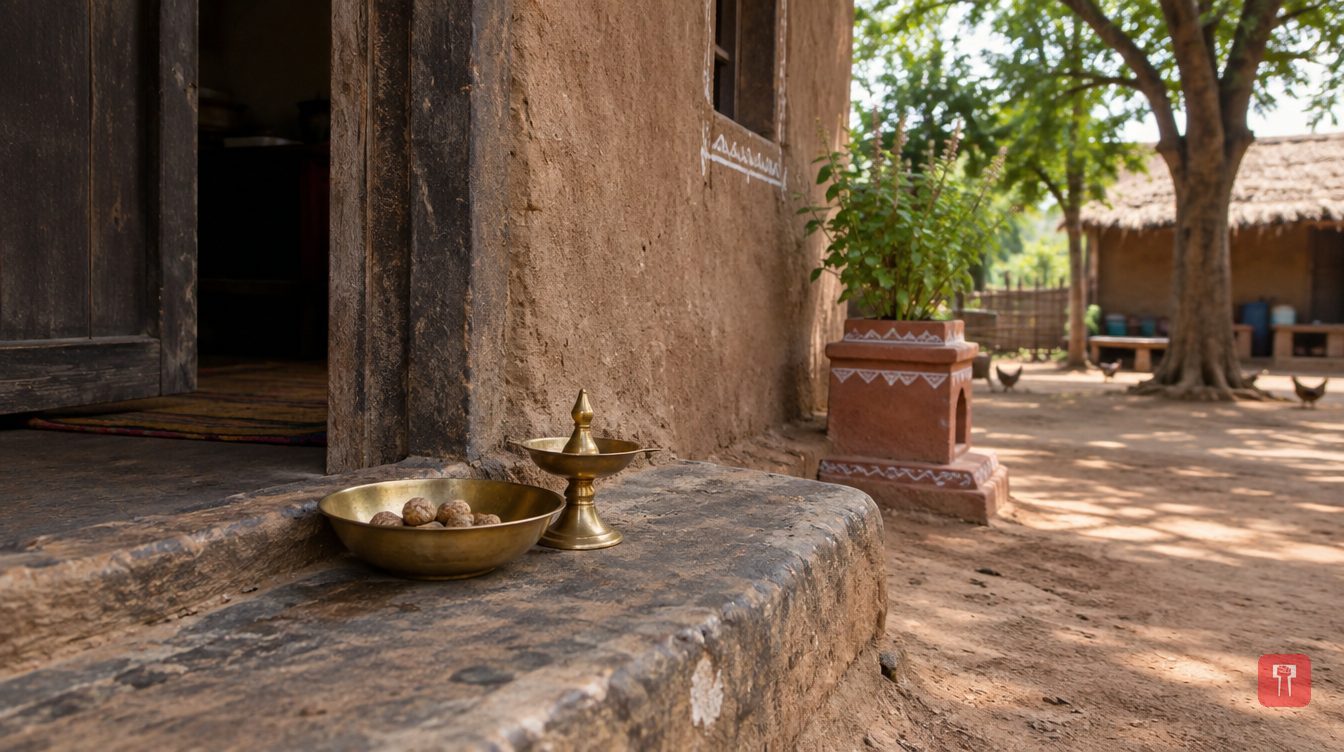
According to the tale, the young monk's hymn to Goddess Lakshmi brought a shower of golden amlas on the hut of an impoverished elderly woman who had nothing else to give.
Adi Shankaracharya holds a distinct place in India's spiritual and cultural history. Many supernatural episodes are told about his life. These include the composition of the Kanakadhara Stotram and the episode of a rain of golden amlas (Indian gooseberries) on the house of a very poor woman, which is cited as an example of selfless devotion.
According to the tale, Adi Shankaracharya took sannyasa at a very young age. As the rules of the sannyasa ashram required, he stayed at his guru's house every day to study the Vedas and went to villages to seek alms for his food. For a sannyasi, seeking alms is not considered merely a means of getting food. It is regarded as a way of erasing ego and living humbly in society.
Once, while seeking alms, the boy Shankar reached the door of a hut-like house. An elderly and very poor woman lived there. There was not a single grain of food in her house. When the radiant boy at her door called out "Om bhavati bhiksham dehi", meaning "Mother, please give alms", the woman was deeply distressed inside. She was grieved that a divine boy stood at her door seeking alms and she had nothing to give him. She began searching every corner of the house for something.
In her search she found an old, dried amla in one corner. It was the only thing she had left to eat or to give. Without hesitation, with complete respect and selflessness, she placed the dried amla in the young Shankaracharya's alms bowl. Her eyes held the sorrow of her poverty, but also gratitude that she had not sent the mendicant back empty-handed. Seeing her selfless devotion and her wretched condition, Adi Shankaracharya's heart melted.
It is said that, moved by the woman's poverty and her selfless generosity, Shankaracharya resolved at that very moment to remove her destitution. Standing right there, he began praising Goddess Lakshmi, the goddess of wealth, opulence and prosperity. The Kanakadhara Stotram, cast in Sanskrit verse and full of devotion, poured from his lips. "Kanak" means gold and "dhara" means flow, which is how the stotram got its name. In it he prayed that the grace of Goddess Lakshmi may rain down like gold.
Shankaracharya said in his prayer, "O Mother! Even if this woman has performed no meritorious deed in her previous birth, look upon her with your grace, seeing her selflessness and poverty in this birth."
According to the tale, Goddess Lakshmi was greatly pleased by this heartfelt hymn and honoured the Acharya's prayer. Within moments, golden amlas began raining from the sky into the poor old woman's hut. The whole hut filled with gleaming golden amlas. The woman's poverty ended in an instant and she gained great wealth. This is described as the fruit of her selfless spirit and of Adi Shankaracharya's infallible speech.
In the sphere of spirituality, the Kanakadhara Stotram is considered highly effective for removing poverty. It is believed that listening to or reciting it brings happiness and prosperity to the home. The episode also reflects Adi Shankaracharya's compassion, as he himself prayed to the Goddess for an unknown elderly woman after seeing her suffering.
(Articles and news on subjects such as religion, astrology, Vastu and Feng Shui are for readers' information only. Consult experts before trying any related practice.)
Reach readers on the ward they actually live in.
Advertise with Prime Time 24Reach readers on the ward they actually live in.
Advertise with Prime Time 24Reach readers on the ward they actually live in.
Advertise with Prime Time 24
Comments
No comments yet. Be the first.