

Underground coal mining seen as a way to balance energy security and the environment
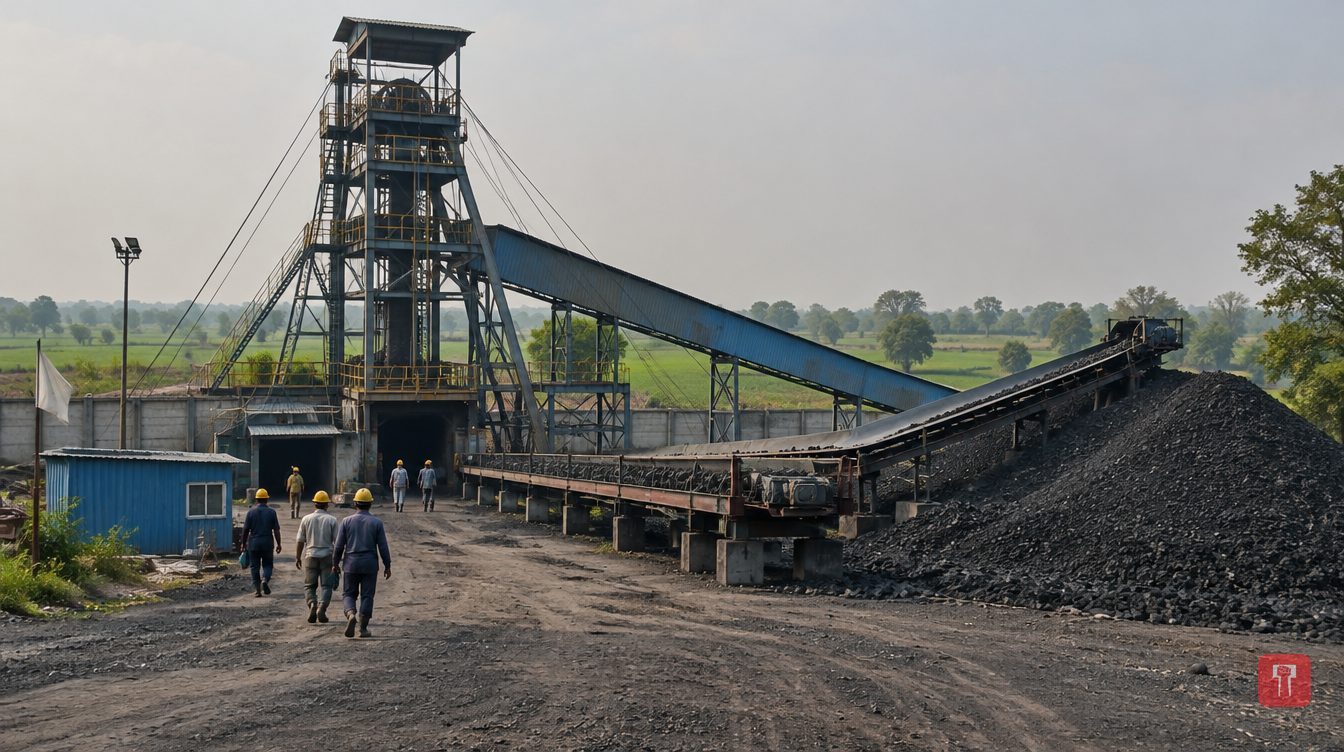 Images are not validated/verified
With coal set to stay central to India's energy system, underground mining can cut surface disturbance while raising domestic output, though it brings its own challenges.
India's demand for energy is rising steadily because of economic growth, the expansion of industry, urbanisation and growing use of electricity. The country is moving quickly towards renewable energy, but coal will remain an important support of its energy system for many years to come. The question, therefore, is not whether coal should be used. The real question is how coal should be extracted while balancing energy security with environmental responsibility. In this context, underground coal mining is emerging as an important policy option.
As the country moves towards the goal of "Viksit Bharat", it is essential to ensure a reliable supply of energy at reasonable prices. Coal remains the main source for generating electricity, running industry and keeping the energy system stable. The availability of renewable energy often depends on the weather and the time of day. Demand for coal is therefore expected to continue in the coming years. Higher domestic coal production will reduce dependence on imports and strengthen energy security.
How much coal is produced matters, and so does how it is extracted. In conventional open-cast mining, large quantities of soil and rock have to be removed, affecting a large area. Underground mining extracts coal through tunnels with the help of modern technology, so disturbance of the land surface is much smaller. This option can be more effective in areas where the land is used for farming, forests, settlements or other economic activity.
The proposed Gondkhairi underground coal mine project near Nagpur shows the potential of this approach. The project spans 862 hectares and has an annual production capacity of 2 million tonnes (20 lakh tonnes). This shows that coal resources can be used with less disturbance of the surface.
Prof. R. K. Sinha of the Indian School of Mines, Dhanbad, said that to make India's energy sector self-reliant and secure, natural resources must be used responsibly and with care for the environment. Underground mining is a good example of this. This method can bring out coal from below the ground and reduce the impact on farmland, forests and local people. According to him, modern technology, full attention to safety and scientific methods help meet the country's energy needs and also contribute to protecting the environment and to sustainable development.
From the energy security point of view, the biggest advantage of underground mining is that it gives access to coal reserves that may be difficult, costly or environmentally damaging to extract through open-cast mines. This makes better use of the country's coal reserves and provides different sources of production.
Modern technology is making underground mining easier and more effective. Continuous miners, longwall systems, remote monitoring and safety measures based on artificial intelligence (AI) are raising the pace of work and production, while also helping protect workers. The Government of India has changed policies to promote this method and has set ambitious targets for raising coal production in the coming years.
Underground mining has its own challenges. The risk of land subsidence, groundwater management, ventilation in the mine, workers' safety and proper care of the land after mining ends are important issues. These require continuous monitoring and scientific planning. Mining projects must also give priority to the needs and interests of local people. Job opportunities, proper rehabilitation, compensation, health facilities and social development initiatives are important for the long-term success of a project. Involving local people in the development process increases their trust in the project and also helps in securing their consent.
For India, it is necessary to pursue both energy development and environmental protection. The two must be balanced rather than one being favoured over the other. Underground mining is not an option that works everywhere, but where conditions below the ground and the facilities needed for mining are favourable, the method can be useful. It can strengthen the country's energy security while reducing damage to the surface environment.
Reach readers on the ward they actually live in.
Advertise with Prime Time 24Reach readers on the ward they actually live in.
Advertise with Prime Time 24Reach readers on the ward they actually live in.
Advertise with Prime Time 24Choose primetime24.com as a preferred source on Google Google shows more stories from your preferred sources in Top Stories.
Reach readers on the ward they actually live in.
Advertise with Prime Time 24
Comments
No comments yet. Be the first.