

Tadoba to fit sensors in waterholes so pumps switch on automatically when water level falls
Tadoba-Andhari Tiger Reserve in Chandrapur is trialling a sensor-based automatic system in artificial waterholes to conserve water and keep supply steady for wildlife.
 Images are not validated/verified
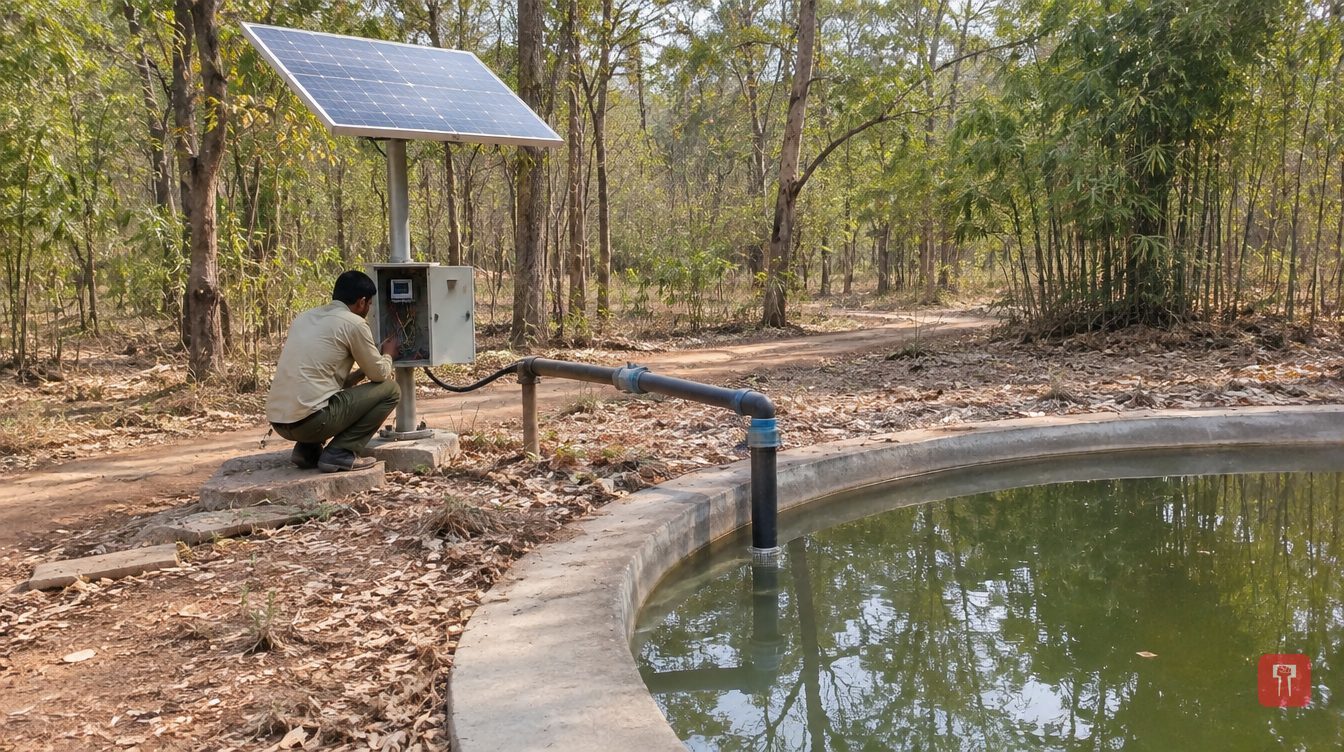
A new initiative is under way at the Tadoba-Andhari Tiger Reserve in Chandrapur to save water and ensure animals keep getting it. For the first time, a sensor-based automatic system is being introduced on an experimental basis in the artificial waterholes built for wildlife. The technology will keep water levels in the waterholes under control and ensure water remains available for wildlife even in extreme summer heat.
Tadoba has about 130 natural water sources and 350 artificial waterholes. Water is supplied to many of the artificial waterholes through solar-powered pumps. Under the current arrangement the pumps run continuously, so water sometimes overflows from the waterhole. Forest staff have to go to the site to switch the pumps off, and doing this work in the forest carries the risk of encountering wild animals.
To address this problem, the proposed system will use water-level sensors, a controller and a relay. The pump will start automatically as soon as the water in a waterhole falls below a set level and will switch itself off once enough water has filled. This will help prevent pumps from running needlessly and waterholes from overflowing.
Forest staff will no longer have to keep going to the waterholes to switch pumps on or off. This will save time and may also reduce unnecessary movement in the forest. The aim of the initiative is thus not only to stop wastage of water but also to protect forest staff.
Dr Prabhunath Shukla, Field Director, Tadoba-Andhari Tiger Reserve, Chandrapur, said the system would strengthen water conservation and help provide water to wildlife even in drought conditions.
Work is also under way on a plan to divide Tadoba's core area into grids and provide water sources for wildlife in each area. The target is to complete this work this year. Better management of water sources in the forest is considered important for wildlife conservation, especially in summer, when water in natural sources begins to run low.
According to the Tadoba management, tankers were not needed to fill the waterholes last summer despite the extreme heat. With the sensor-based automatic system now being introduced, it is hoped that monitoring of water sources and the use of water will become more effective. The initiative could prove an important step towards better coordination between technology and wildlife conservation.

Comments
No comments yet. Be the first.