

Punjab police refuse orders to deploy in Khyber Pakhtunkhwa, pressuring Munir and Shehbaz
Punjab police personnel have openly refused deployment orders for Khyber Pakhtunkhwa, where 40,000 of them were to be sent after the provincial government was suspended.
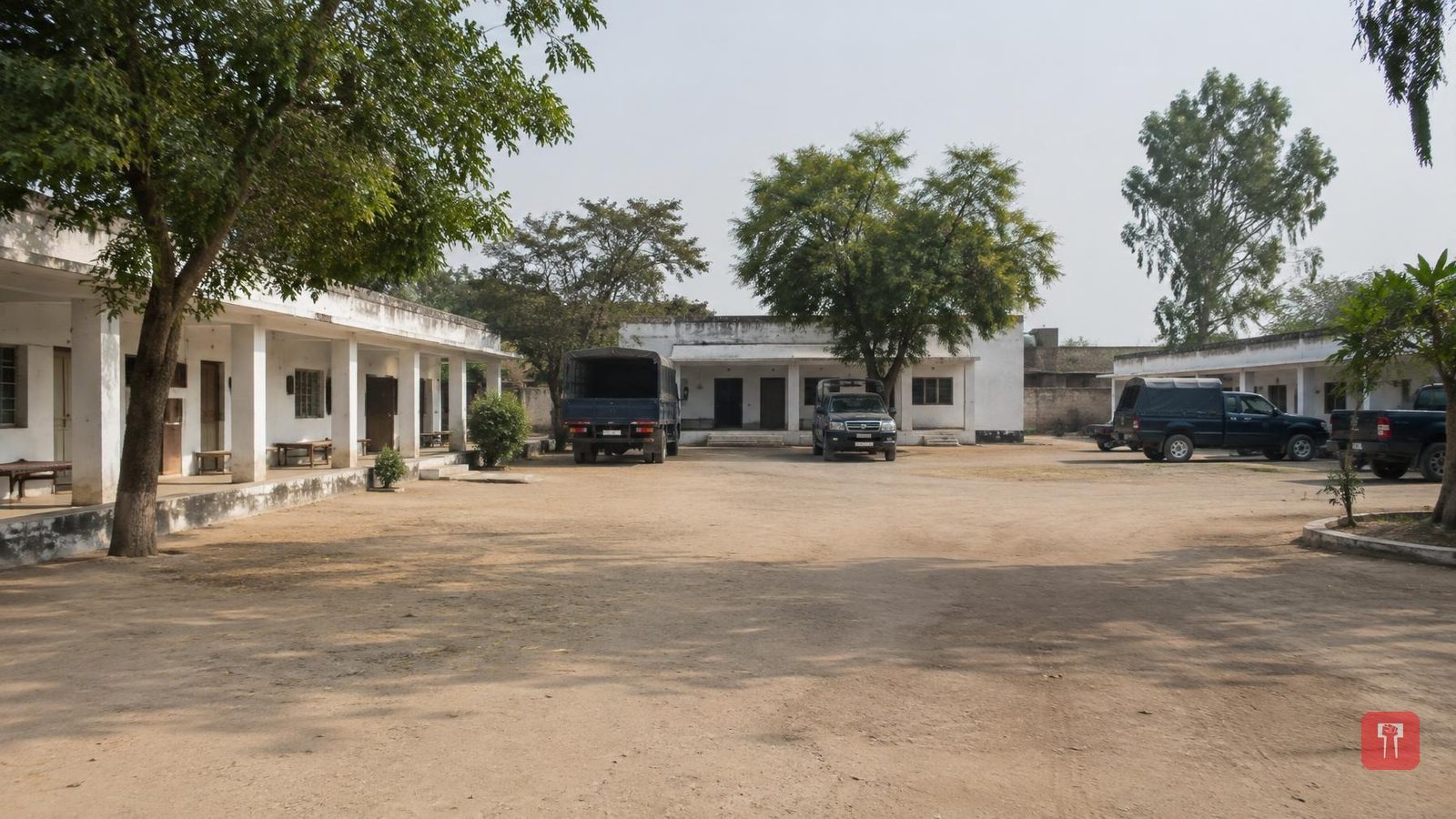 Images are not validated/verified
Pakistan's politics has reached an extremely volatile and uncertain turn. Army chief General Asim Munir and Prime Minister Shehbaz Sharif have begun taking harsh steps to finish former Prime Minister Imran Khan politically and break his stronghold. But the master plan drawn up at the army headquarters in Rawalpindi now appears to be weighing heavily on the government itself.
The only provincial government of Imran Khan's party, Pakistan Tehreek-e-Insaf (PTI), is in Khyber Pakhtunkhwa. A decision had been taken to suspend that government and deploy 40,000 Punjab police personnel there. But the very Punjab police on whom the government counted to enforce the crackdown have openly refused their seniors' orders and raised the flag of revolt.
The political drama began when Khyber Pakhtunkhwa chief Sohail Afridi announced a large march of lakhs of supporters from across the country to free Imran Khan from Adiala jail in Rawalpindi. Fearing the march, the provincial government was suspended immediately under the direct pressure of army chief Asim Munir. Several key provincial leaders, including Sohail Afridi, were arrested overnight and jailed indefinitely. Rattled by Imran Khan's popularity and his party's organisational strength, the Shehbaz-Munir duo tried to gain cantonment-like control over Khyber.
The question now is why Punjab police in particular are being sent to Khyber Pakhtunkhwa. In the 2024 general election, the army's entire machinery and Shehbaz Sharif's Muslim League (PML-N) together proved ineffective against Imran Khan's wave in Khyber Pakhtunkhwa. It was the only province where the PTI formed its government despite all the obstacles. Shehbaz Sharif and the army chief fear that Khyber's local police officers and administration are loyal to Imran Khan and so will take no strong action or open fire on his supporters.
For this reason, a plan was made to send a military-style contingent of about 40,000 police personnel from Punjab province, where Shehbaz Sharif's niece Maryam Nawaz is chief minister. The government intended to use the Punjab police as a weapon to suppress the movement of Imran's supporters and silence opponents. But because of the anger within the Punjab police, this gambit of Shehbaz and Maryam Nawaz appears to be failing.
According to senior sources in Rawalpindi and Lahore, the revolt in the Punjab police did not arise overnight. Police personnel earlier deployed in various border areas to control protests by Imran Khan's PTI supporters faced extremely inhuman conditions. Posted at the border in harsh heat and in remote areas, they were not given decent shelter and not even clean drinking water.
According to the sources, the most shocking thing is that these personnel were forced to eat stale and spoiled food. The poor food caused food poisoning, and five Punjab police personnel died for want of timely treatment. Seeing their own colleagues meet such an end, anger spread through the force. Now, when orders came to send them once again to Khyber's difficult and dangerous areas with a contingent of 40,000 personnel, junior staff and officers said plainly: "We will not be sacrificed like soldiers for the political interests of a government that does not care in the least for our lives and health."
Punjab police personnel have openly expressed their inability to follow any new deployment order from senior headquarters. The police say the provincial or central government is using the force like an army for its political gain and setting them against the public. On one side the people of Khyber stand firmly behind Imran Khan, and on the other, an attempt is being made to provoke a direct clash between two provinces by sending Punjab police there.
The Inspector General of Police (IGP) of Punjab, speaking to the media, tried to manage the situation. He clarified that the final decision on deploying 40,000 personnel has not yet been formally taken, and that whenever such a decision is made, all demands of the force and their safety will be seriously considered. Even so, the revolt has caused great unease at the army headquarters in Rawalpindi. If the very machinery that maintains law and order begins refusing orders, it will become almost impossible for army chief Asim Munir to prevent civil-war-like conditions in Pakistan in the coming days.
