

Percolation pond work begins at Basavantwadi under Jalyukta Shivar in Dharashiv district
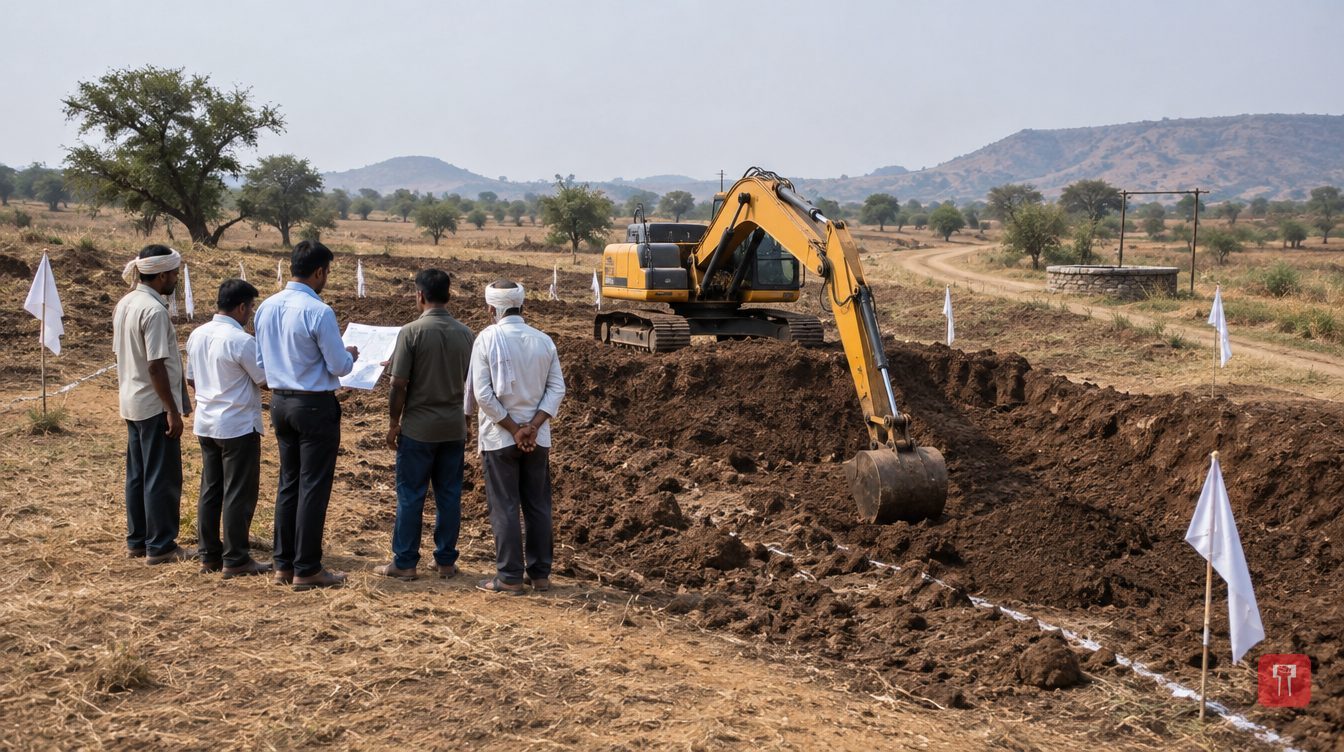
Work on a percolation pond began at Basavantwadi in Tuljapur taluka on October 18 in the presence of Guardian Secretary Dr Rajesh Deshmukh.
 Images are not validated/verified
Dharashiv, October 19: Work on a percolation pond has begun at Basavantwadi in Tuljapur taluka under the Jalyukta Shivar Abhiyan. It was inaugurated on October 18 in the presence of Guardian Secretary Dr Rajesh Deshmukh. The aim is that every drop of rain sinks into the ground, groundwater rises and farmers' fields have the prospect of year-round farming.
Farmers are troubled by water scarcity caused by erratic rain, a falling groundwater level and a lack of irrigation. Water conservation works are becoming a new ray of hope for them.
Dr Deshmukh was on a visit to the district on October 18 to take stock of drought conditions and see crop losses first-hand. During the visit, the work was started by the Soil and Water Conservation Department in his presence.
District Collector Kirti Kiran Pujar, Zilla Parishad Chief Executive Officer Priyamvada Mhaddalkar, Soil and Water Conservation Department Executive Engineer Vivekanand Magar, District Superintending Agriculture Officer Sagar Khatkale, Sub-Divisional Officer Omkar Deshmukh, Tahsildar Arvind Bolange, Deputy Engineers Sayli Jadhav and Jeevan Kakade, village development officer Smt Khopde, agriculture assistant Shri Holkar and farmers Dnyaneshwar Parve and Narso Parve were present at the event.
The percolation pond will be built over 55 hectares in the Basavantwadi area. It will hold rainwater that would otherwise run off and let it seep into the ground. This should help raise the area's groundwater level and make water available for farming. The pond stores water that seeps slowly into the ground, replenishing the aquifer below. This could benefit water levels in nearby wells and borewells. Such projects matter in areas that get little rain and face repeated drought.
In rain-fed farming, if the rain stretches out, crop growth is stunted, yields fall and farmers suffer financial loss. Works such as percolation ponds can be a major support to farming. With groundwater recharged, irrigation availability will improve and it will be easier to water crops as needed. With protective irrigation, potential crop loss could be reduced, yields could rise and farming could become more sustainable. With more water, farmers can also plan rabi crops along with kharif.
A percolation pond is not merely a means of storing water but a water conservation structure that serves groundwater recharge. Wells, borewells and other water sources around the pond could benefit. If the groundwater level improves, the severity of summer water shortages could also ease.
Given the drought in the district, holding back water, letting it sink into the ground and protecting existing water sources have become essential. The pond started at Basavantwadi under the Jalyukta Shivar Abhiyan will prove important in easing future water scarcity and strengthening farming. For a farmer, water in the field is not only a lifeline for the crop but also the basis of the family's financial stability. That is why water conservation works are regarded as a long-term remedy.
