

Paraguay President Peña resigns as Ueno Bank crisis freezes savings of about 3 million customers
 Images are not validated/verified
Santiago Peña quit on Thursday after the central bank took over Ueno Bank, leaving around 30 lakh customers unable to reach their deposits.
Paraguay, in South America, is in political and economic turmoil. Ueno Bank, one of the country's largest digital banks, suddenly neared collapse. Deposits and savings accounts of more than 30 lakh citizens have been frozen.
Taking responsibility for the banking crisis and facing intense public anger, President Santiago Peña resigned on Thursday. The sudden decision has caused political ripples across South America.
Two days earlier, Paraguay's central bank had announced that it was taking over Ueno Bank. It took the step citing a severe shortage of funds at the bank, money disbursed illegally and violations of financial rules. Transactions at the bank then came to a complete halt, and about 30 lakh customers cannot reach their own money.
The trapped money does not belong only to businesspeople or the wealthy. It includes the hard-earned savings of ordinary people who manage daily expenses, salaried workers, the elderly and pensioners. The central bank has said the bank was taken over only to protect the financial system and safeguard depositors. Even so, the lack of immediate access to money has created fear and anger across the country.
President Peña's name is at the centre of the crisis. He held shares in the holding company that runs Ueno Bank. He has claimed that he sold his shares last year. The opposition nevertheless alleges that the bank was given several illegal concessions during his tenure.
Opposition lawmakers have alleged that, under the President's patronage, funds worth crores of rupees were moved around in violation of rules. They also say the central bank repeatedly drew attention to irregularities at Ueno Bank, but Peña ignored the warnings. He has been accused of endangering the country's banking system for personal gain.
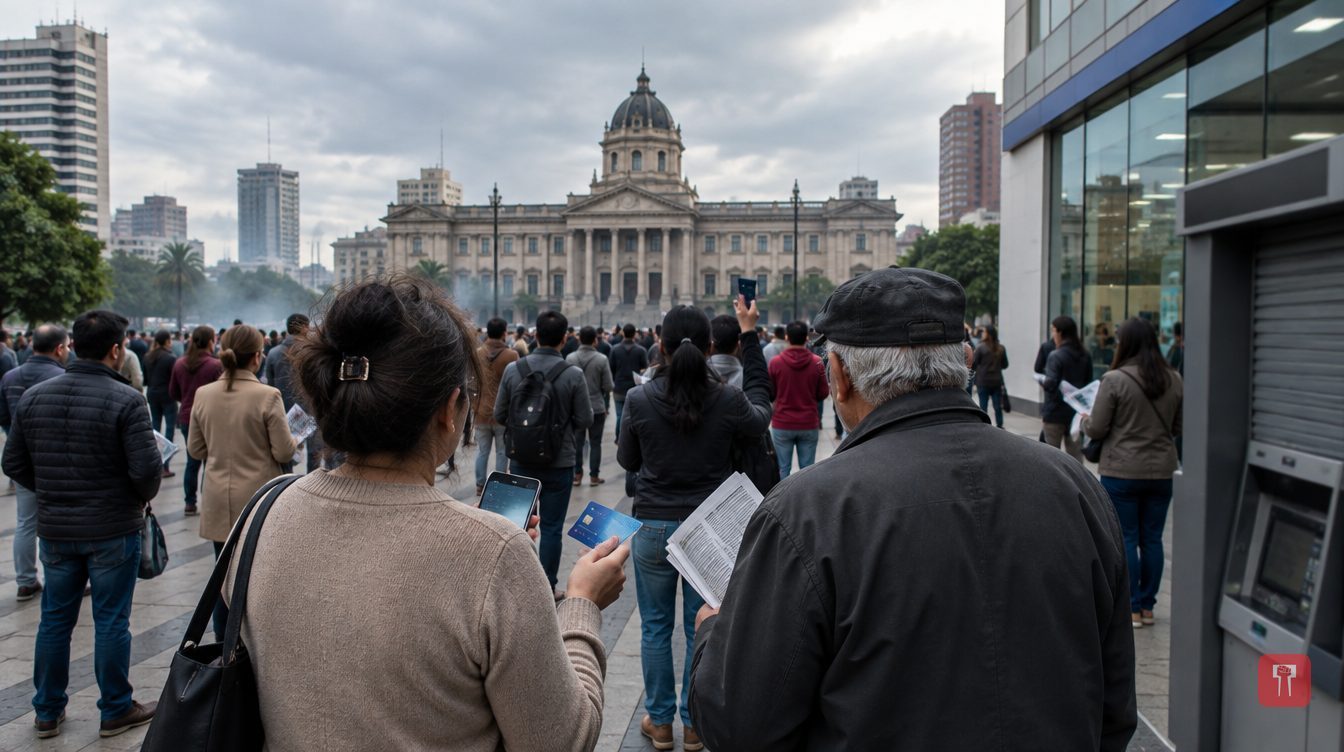
Thousands of people angered by the sudden freeze took to the streets of the capital. On Thursday, thousands of protesters gathered outside Parliament and chanted "Give us our money back!" Police fired tear gas and used water cannon to disperse the crowd.
Many families have been unable to pay for household expenses, medical treatment and home loan instalments. A 21-year-old student said, "Our family no longer has money even for daily food. The President has betrayed us." A woman customer said the bank had sanctioned a loan for her to buy a house, but the money was never transferred, leaving her facing the prospect of being on the street.
As protests grew, lawmakers in Parliament unanimously decided to begin impeachment proceedings against President Peña. As the crisis deepened, Peña took the resignation of central bank chief Carlos Carvalho and promised to return citizens' money within five days. This did not calm public anger.
Finally, Peña formally announced his resignation in a video message on social media. Vice-President Pedro Alliana will hold additional charge of the presidency for now. The central bank has meanwhile begun returning small depositors' money in phases, but it remains uncertain when the full amount will be paid.
Reach readers on the ward they actually live in.
Advertise with Prime Time 24Reach readers on the ward they actually live in.
Advertise with Prime Time 24Reach readers on the ward they actually live in.
Advertise with Prime Time 24Reach readers on the ward they actually live in.
Advertise with Prime Time 24
Comments
No comments yet. Be the first.