

Paraguay's Ueno Bank collapses overnight, trapping deposits of 3 million customers; protests erupt
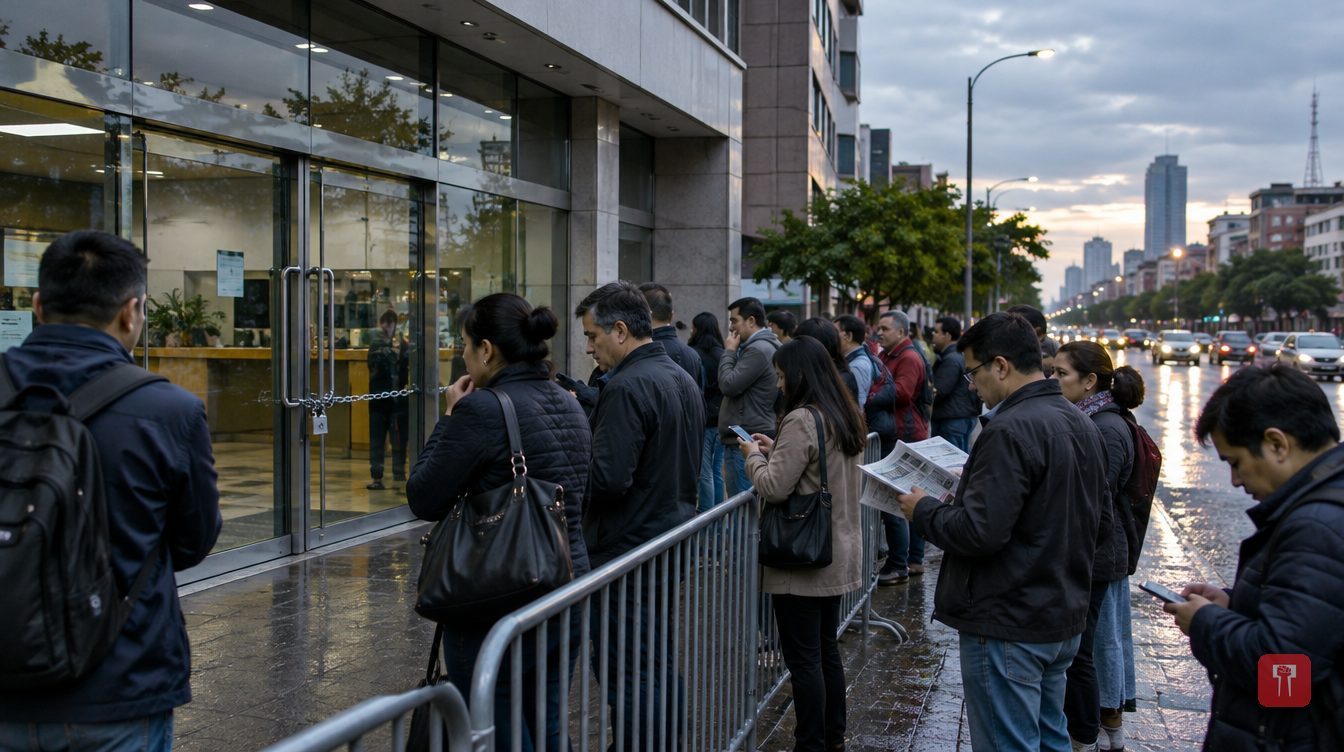 Images are not validated/verified
Paraguay's central bank chief has resigned and eight senior Ueno Bank officials are in custody after the lender shut suddenly at midnight, leaving millions unable to access their money.
Paraguay, in South America, is facing a major financial crisis. Ueno Bank, regarded as the country's leading bank, collapsed suddenly at midnight. Nearly half the population has been affected, and people's lifetime savings are stuck in the bank.
Panic spread as soon as news of the closure emerged. Within hours, millions of angry citizens were out on the streets. Barricades have been put up on main roads to keep the situation under control. The government is struggling to handle the political and economic turmoil.
Paraguay's total population is about 7 million, of whom 3 million were customers of Ueno Bank alone. That means about 40 per cent of the country's citizens and more than 60 per cent of its adults depended entirely on this bank for financial transactions. The bank managed public funds of about 850 million US dollars (roughly more than Rs 7,000 crore).
Because services stopped abruptly at midnight, people cannot withdraw even a rupee-equivalent from their accounts. Buying groceries, paying rent and meeting daily needs has become difficult.
Following the crisis, Carlos Carvalho, president of the Central Bank of Paraguay, has had to resign immediately. The government could not face the growing public anger. Police also acted at once, taking eight senior officials linked to Ueno Bank into custody, and orders have been issued to seize their assets.
Investigation reports say the collapse was not merely a technical problem but the result of major misconduct and financial irregularities. Investigators have cited three main reasons.
The first is a steep fall in the solvency ratio. The ratio, which measures the ability to repay debts, must be at least 12 per cent under the rules. According to the central bank's report, Ueno Bank's ratio had fallen below 5.56 per cent. The bank's deposits had run out.
The second is illegal and irregular lending. The bank's controllers and officials gave huge loans to institutions they knew and to people with political connections. As the loans were not repaid, the bank's balance sheet collapsed.
The third is a liquidity crisis. The bank did not have enough cash left to pay customers, so it had to shut its doors at midnight.
The trail of the bank's fall is reported to lead directly to the president. Local media have alleged that powerful figures close to the president were involved. Opposition parties have taken an aggressive stand and have begun strong preparations for impeachment proceedings to remove the president from office.
Meanwhile, the government has passed a special resolution and promised to return citizens' money in phases. Even so, the anger of the millions on the streets does not appear to be subsiding.
Reach readers on the ward they actually live in.
Advertise with Prime Time 24Reach readers on the ward they actually live in.
Advertise with Prime Time 24Reach readers on the ward they actually live in.
Advertise with Prime Time 24Reach readers on the ward they actually live in.
Advertise with Prime Time 24
Comments
No comments yet. Be the first.