

NCERT adds Class 9 social science chapter on business and startups
The chapter aims to help children grasp business basics early, build risk-taking ability and take an interest in startups.
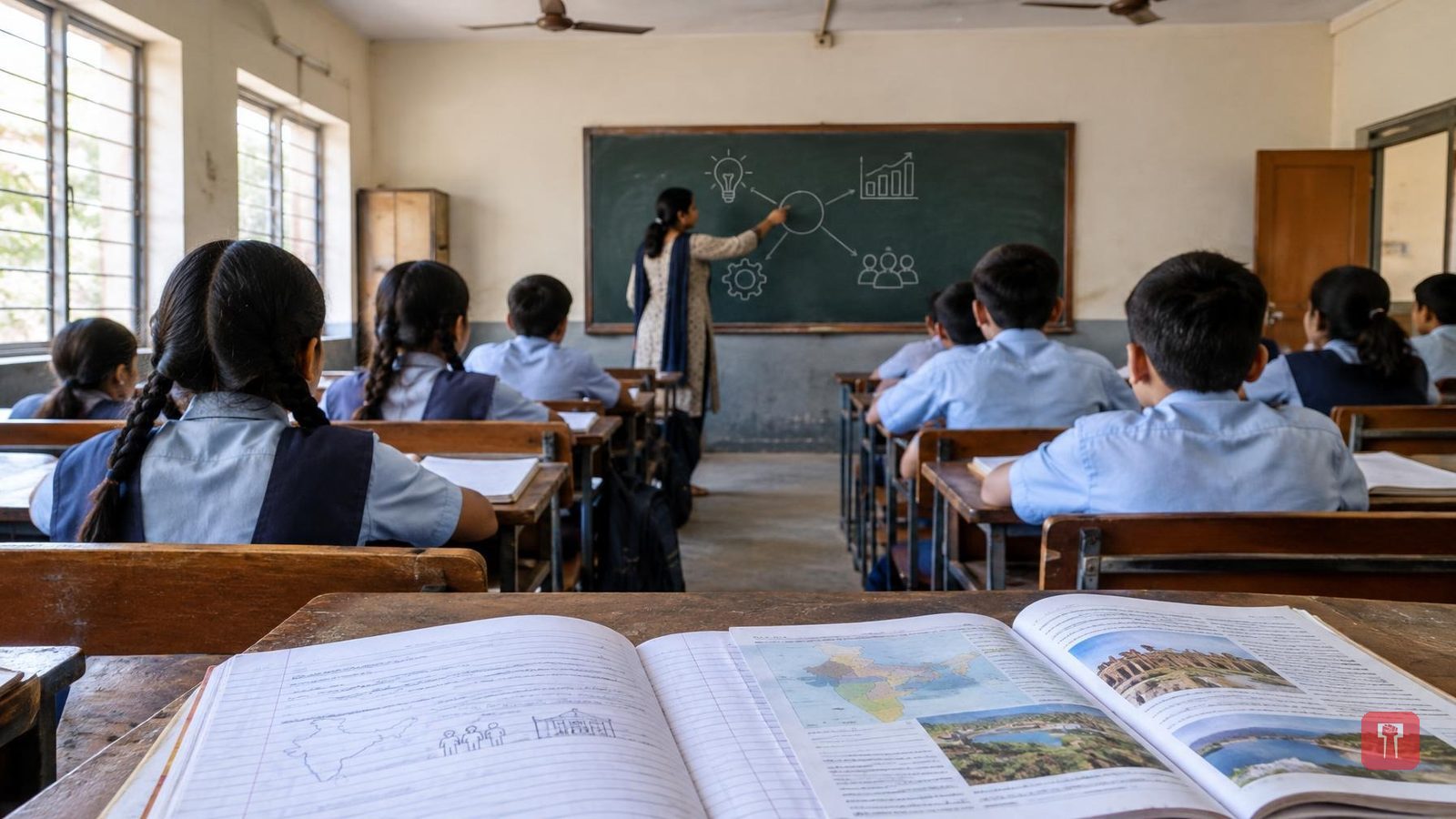
School textbooks now carry lessons from the world of business alongside mathematics, science and history. To make learning more practical, the NCERT has added a new chapter to the Class 9 social science syllabus.
The chapter's main aim is to help children understand the basic rules of business at a young age, build the capacity to take risks and develop an interest in startups.
It is presented in a direct and engaging manner. It explains the effect of entrepreneurship on society and the economy, and the main areas of business activity. It also sets out how an effective business plan is prepared.
Current technology finds a place too. Schoolchildren are being given an early introduction to how new technology such as artificial intelligence (AI) can be used for market analysis.
The chapter also details the rapid growth of India's startup ecosystem. It says a decade ago the country had only a handful of startups, while the number has now reached 2.3 lakh. It also says India has become the world's third-largest startup nation.
To make the lessons more interesting, the journeys of two major Indian brands have been added. The first is Lijjat Papad. In 1959, seven homemakers in Mumbai started the venture by borrowing just Rs 80. Through hard work and discipline, the enterprise has made a place for itself across the world.
The second story is that of Mohan Singh Oberoi. Born in Punjab, Oberoi began with a job paying Rs 50 a month. He later mortgaged his wife's jewellery to buy his first hotel and went on to become a giant of India's hotel industry.
It is hoped that this step by the NCERT will ensure children do not grow up merely to seek jobs, and will instead be inspired to become job providers.
