

NASA kept 12.5 million tomato seeds in space for 6 years, then had schools plant them
NASA's 1984 SEEDS project sent tomato seeds into orbit for six years and had 40,000 schools worldwide grow them alongside earthbound seeds.
Scientists regularly run experiments to understand the relationship between life in space and on Earth. But an experiment NASA began in 1984 is considered the world's most unique and largest educational experiment. The project was called SEEDS, or Space Exposed Experiment Developed for Students.
In this experiment, NASA sent about 1.25 crore (12.5 million) seeds of the Rutgers California Supreme variety of tomato directly into space using a special device. The aim was to see what effect the extremely harsh conditions of space, radiation and microgravity, would have on the seeds' ability to germinate and grow.
NASA headquarters, the Langley Research Center and the well known American seed supplier company George W. Park Seed worked together to carry out the project. The seeds were kept in space in a 12 sided, cylinder shaped device weighing 9.7 tonnes, called the Long Duration Exposure Facility (LDEF). This device was sent into orbit on 5 April 1984 aboard the Challenger spacecraft.
According to the original plan, the seeds were to be brought back within a year, but the 1986 Challenger disaster delayed NASA's missions, and the seeds ended up orbiting in space for a full 6 years, or 69 months. The seeds were finally brought back safely to Earth on 12 January 1990 aboard the Columbia spacecraft.
Once the seeds reached Earth safely, NASA began the second and most important educational phase of the experiment. Rather than keeping it confined to the lab, NASA decided to take it to students around the world. For this, NASA prepared about 1,32,000 special planting kits, which were distributed to 40,000 schools in 40 countries, including all 50 US states. In this way, about 33 lakh (3.3 million) students took part directly in this historic experiment.
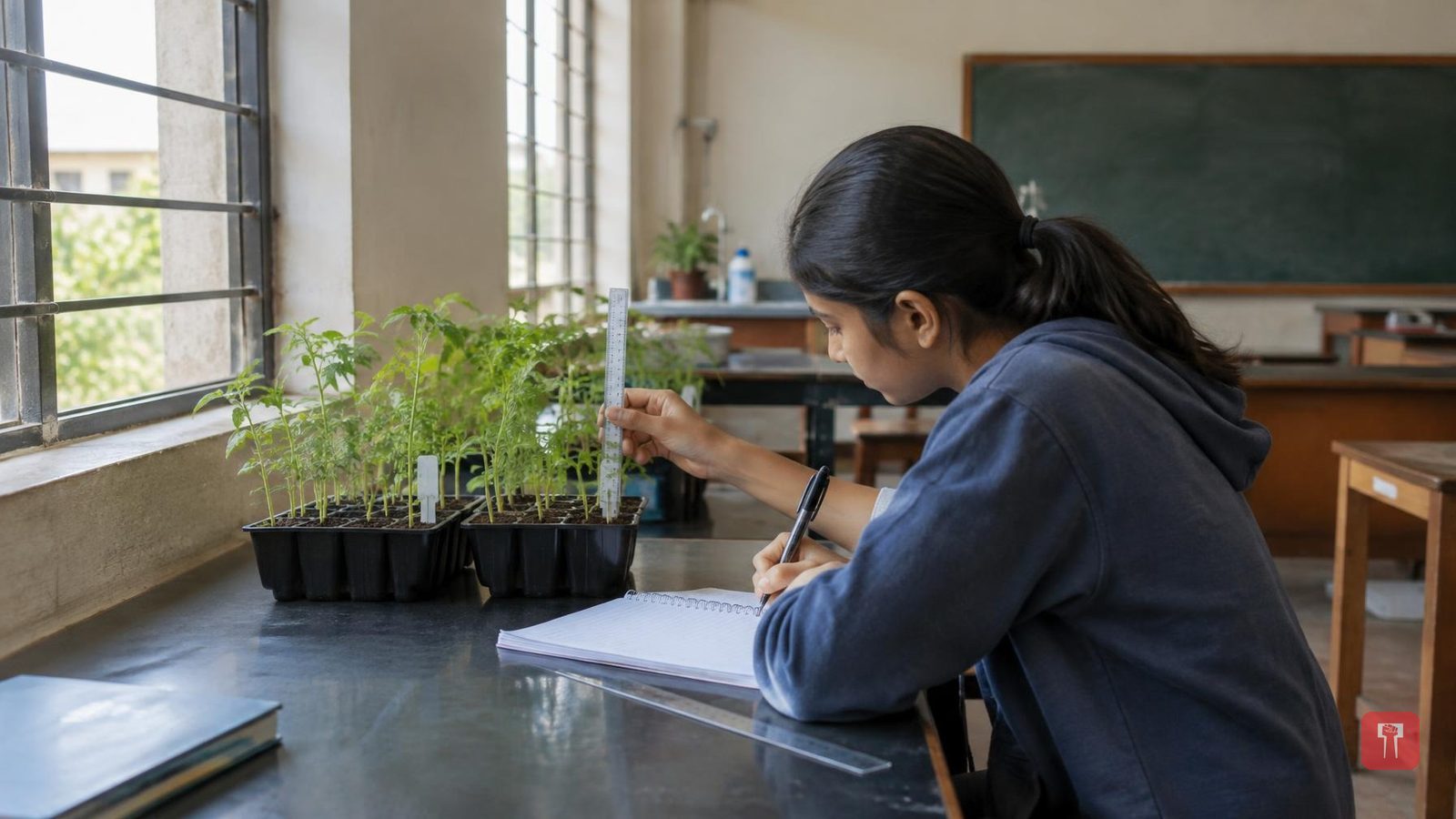
Each kit contained two sets of seeds. The first set had seeds that had spent 6 years in space, and the second set, called the control group, had the same seeds kept on Earth under controlled conditions for the same length of time. Children planted both sets of seeds at the same time in identical soil, and began daily observation of their growth, the first sprouting, and the appearance of leaves and flowers. This exercise greatly helped build interest in science and a habit of research among children from an early age.
Information and reports on the plants grown by students in classrooms around the world were collected and sent to NASA for analysis. NASA received about 8,000 complete reports from schools, and in depth analysis of these threw up some striking and surprising figures. It emerged that the seeds that had returned from space had a germination rate of 73.8 percent, while the seeds kept safely on Earth had a germination rate of 70.3 percent. In other words, the space seeds germinated at a slightly higher rate than the Earth seeds.
There was also a difference in the speed of germination. The space seeds took an average of 8 days for the first sprout to appear, compared with 8.3 days for the Earth seeds. In the first 3 to 4 weeks, the plants that grew from the space seeds grew considerably faster. Examination under an electron microscope showed researchers that radiation in space had likely created tiny holes in the outer covering of the seeds, allowing them to absorb water and nutrients faster. However, once fully grown, no permanent or genetic changes were found in the shape of the plants or in the taste of their leaves, flowers and fruit.
NASA's SEEDS project is counted among the largest and most successful classroom experiments in human history. The experiment proved that despite such difficult conditions and such a long time spent in space, plant seeds can remain safe for human use and retain their ability to germinate.
Today, as space agencies around the world dream of establishing human settlements on Mars and the Moon, this old NASA experiment is proving to be a foundation for space agriculture, or farming in space. The knowledge gained from this experiment is being used today to grow fresh fruits and vegetables on the International Space Station (ISS). In this way, these 1.25 crore tomato seeds that spent 6 years in space showed a new direction in science not just to the world of science, but to millions of students around the world.
