

Mumbai Mayor's Office gets another threat email naming a school and Mahalaxmi Racecourse
The email threatens a grenade attack on a school on October 31 and a bomb blast in the Mahalaxmi Racecourse area on November 27; police and security agencies are on alert.
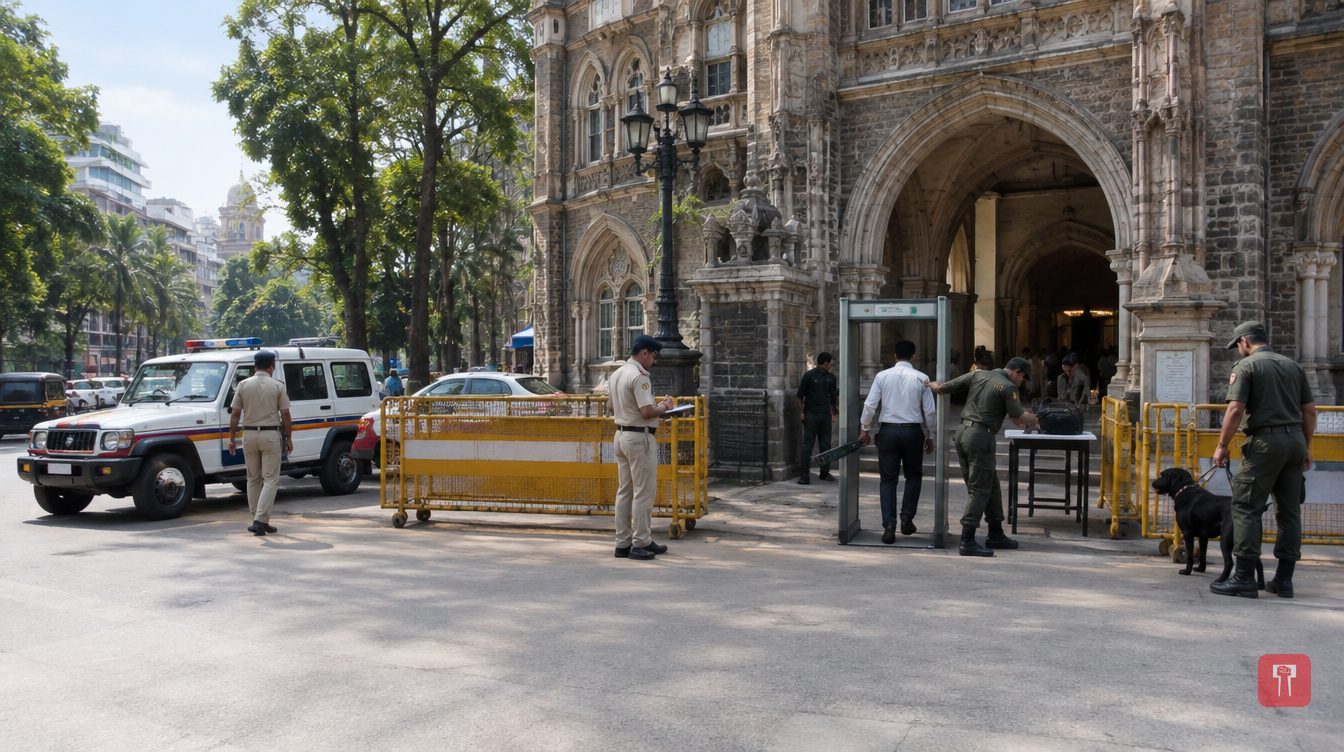 Images are not validated/verified
The Mumbai Mayor's Office has received a threat email, setting off a flurry of activity among the administration and security agencies. The email threatens a grenade attack on a school on October 31. It also speaks of a bomb blast in the Mahalaxmi Racecourse area on November 27.
The email is said to mention Khalistan and some organisations. However, these mentions do not allow it to be said with certainty that any organisation is linked to the case. Mumbai Police and the other security agencies concerned have been put on alert.
The threat email is being taken seriously. Investigators are trying to establish who sent it, what its source is and what the real motive behind it is. They are also examining whether the threats are genuine or were made to spread fear among people.
With a school and Mahalaxmi Racecourse named, checking the possible security risks has become necessary. Investigating agencies are going through digital evidence and technical details linked to the email. Assessing security at the places concerned and taking the necessary precautions are the first priority.
This is not the first time the Mayor's Office has received a threat email. On June 10, 2026, emails threatening blasts were received at the Mayor's Office, the Chief Minister's Office and some other important places, including the Bombay Stock Exchange. Police and bomb disposal squads checked those places then. No suspicious object or explosive was found during the checks.
On August 7, 2026, the Mayor's Office received another threat email. It threatened to disrupt Independence Day events. That email also mentioned the Mumbai Metro, a school and the Bombay Stock Exchange. These incidents have brought the question of security at Mumbai's important government offices and public places back into discussion.
Because the emails keep coming, tracing the sender has become important for the investigating agencies. In such cases, attempts are made to identify the sender from the technical details of the email, the IP address if available, and digital evidence. If a VPN or other technical means has been used in some cases, finding the real source of the email can be harder still. Cyber investigation and technical analysis are therefore particularly important. No official conclusion has so far emerged on where the email was sent from, who the sender is and what the motive for the threat is.
Whether the claims in the email are true or only an attempt to spread fear will become clear only after the investigation is complete. Receiving a threat email does not mean that the danger of an explosive or an attack has been confirmed. People should therefore rely on official information instead of being needlessly afraid.

Comments
No comments yet. Be the first.