

Mumbai drag artist Sanskruti Sawant speaks of journey from Sanket to 'Gentleman Gaga'
In a Navratri podcast, the Mumbai drag artist spoke about self-acceptance, her choice of name, her 13 years in entertainment and the city that embraced her.
 Images are not validated/verified
Building an identity amid social norms, the gaze of others and questions about one's own existence is not easy. Mumbai-based drag artist Sanskruti Sawant has shown the courage to accept her feelings and share them with the world. "I was born a boy, but I wanted to be a girl," was how her story began. Her journey from Sanket Sawant to "Gentleman Gaga" and then Sanskruti Sawant is not only about a name or appearance. It is a journey of art, self-discovery and self-expression.
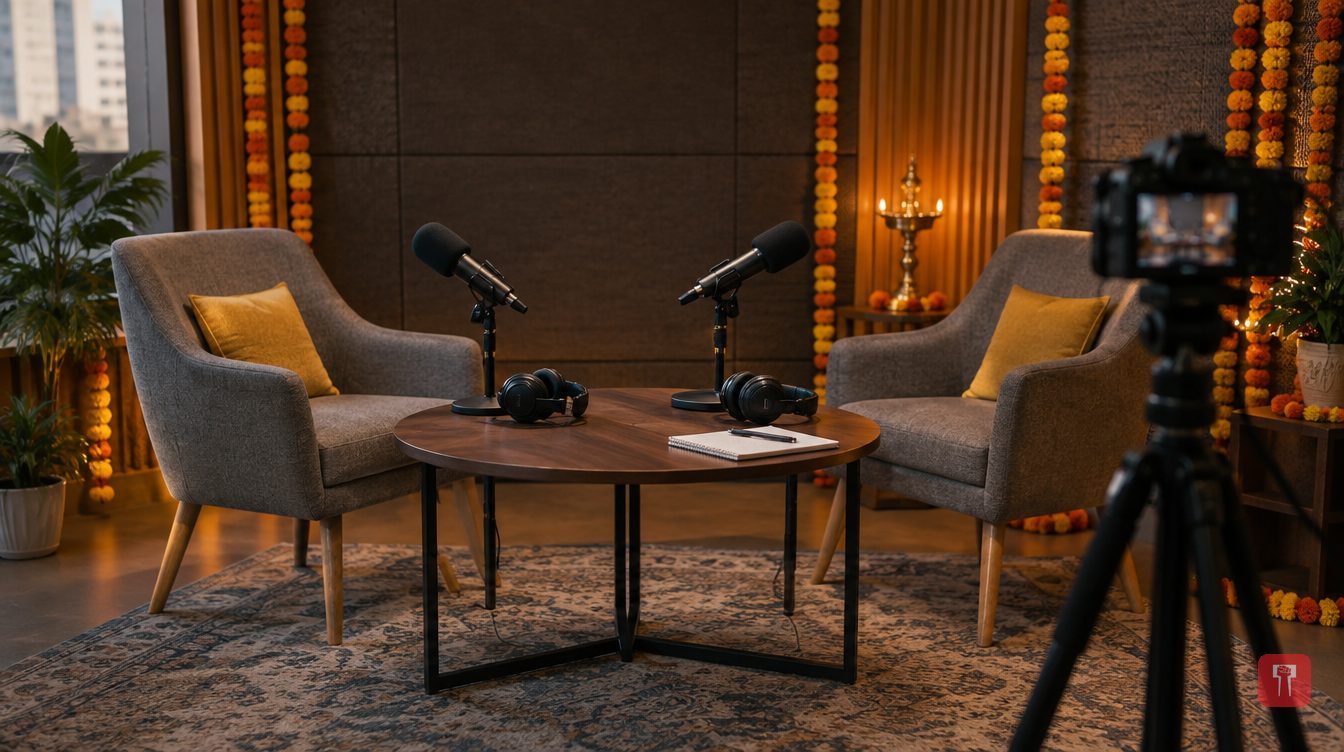
On the sixth day of Navratri, host Leenal Deshmukh spoke to Sanskruti Sawant in the special podcast Navdurga. She spoke about the journey that began under the name Sanket, the identity she gained as "Gentleman Gaga" and her reasons for adopting the name Sanskruti. She also spoke openly about her feelings since childhood and her experiences in the world of drag art.
Speaking about her name, she underlined her bond with Marathi culture, tradition and family. She said she comes from the Sawant family and is proud of her cultural roots. The values taught at home, religious traditions and the influence of Indian culture have shaped her personality since childhood. After she began working as a drag artist, she developed an interest in bringing different elements of Indian culture into her performances. She explained that this is why she chose the name "Sanskruti", which is tied to her personality and roots.
She is also known as "Gentleman Gaga". The distinctiveness of the word "Gaga" and a touch of wild spirit match her personality. The name gave her an identity on her artistic journey. Even after she adopted the name Sanskruti, many people still lovingly call her "Gaga". In Sanskruti's view, it is more important to embrace what makes one different than to hide one's personality.
The most important point of the conversation was acceptance of one's own existence. Sanskruti Sawant said that whether society accepts a person matters less than whether the person accepts themselves. "Whether the world accepts you or not, the most important thing is that you accept yourself," was the message she gave through the podcast. Speaking about sexual identity, freedom of expression and society's expectations, she stressed having confidence in one's own existence.
Sanskruti became emotional while speaking about Mumbai. She said the city gave her love and accepted her along with her differences. She also made it clear that even if she has to go elsewhere for work, she will return to Mumbai. She said Mumbai is not just a city of work but an important part of her life and identity.
She has been in the entertainment industry for about 13 years and has had the chance to do many kinds of work in that time. She said she has not had any personally distressing experience in the industry. She said her art, hard work and personality were valued as she worked.
Sanskruti has loved dance and art since childhood. In her school and college days she took part in various dance and painting competitions. Saying "There is no word called shame in my dictionary," she described her fearless nature. She said that since dance and music are an integral part of her life, working as a drag artist is part of the same artistic journey. In her view, drag is not merely the art of wearing a different costume. It includes music, dance, acting, fashion and expressing oneself creatively.
She has been doing drag shows for the past seven to eight years. Besides drag performances, she is also active in hosting, styling and social media influencing. She said she also hosts a programme called "Gully Fashion". She explained that while pursuing their passion, artists have to do different kinds of work to earn a living, and all of this is part of her professional journey.
In the podcast, Sanskruti also mentioned the concept of Ardhanarishvara in Indian culture. The form of Ardhanarishvara is accepted in Indian tradition, and the unity of feminine and masculine principles appears in various religious and cultural contexts. Yet she pointed to the contradiction that people with a different sexual identity or expression are not easily accepted in actual society. Her remarks conveyed that society should develop more understanding, sensitivity and respect towards such people.
During Navratri, different forms of feminine power are worshipped. The conversation put forward the idea that acceptance of a person's identity and existence should not remain limited to the festival but should be visible in real life too. Sanskruti Sawant's experience carries the message that how we see ourselves and how much we respect our own existence matters more than what society will say.
