

Maharashtra sanctions Rs 10 crore to repair 600 defunct CCTV cameras in Nagpur
The money will revive idle cameras, while 1,300 new ones are planned within NMC limits and an ITMS is expected at 170 key locations by December.
 Images are not validated/verified
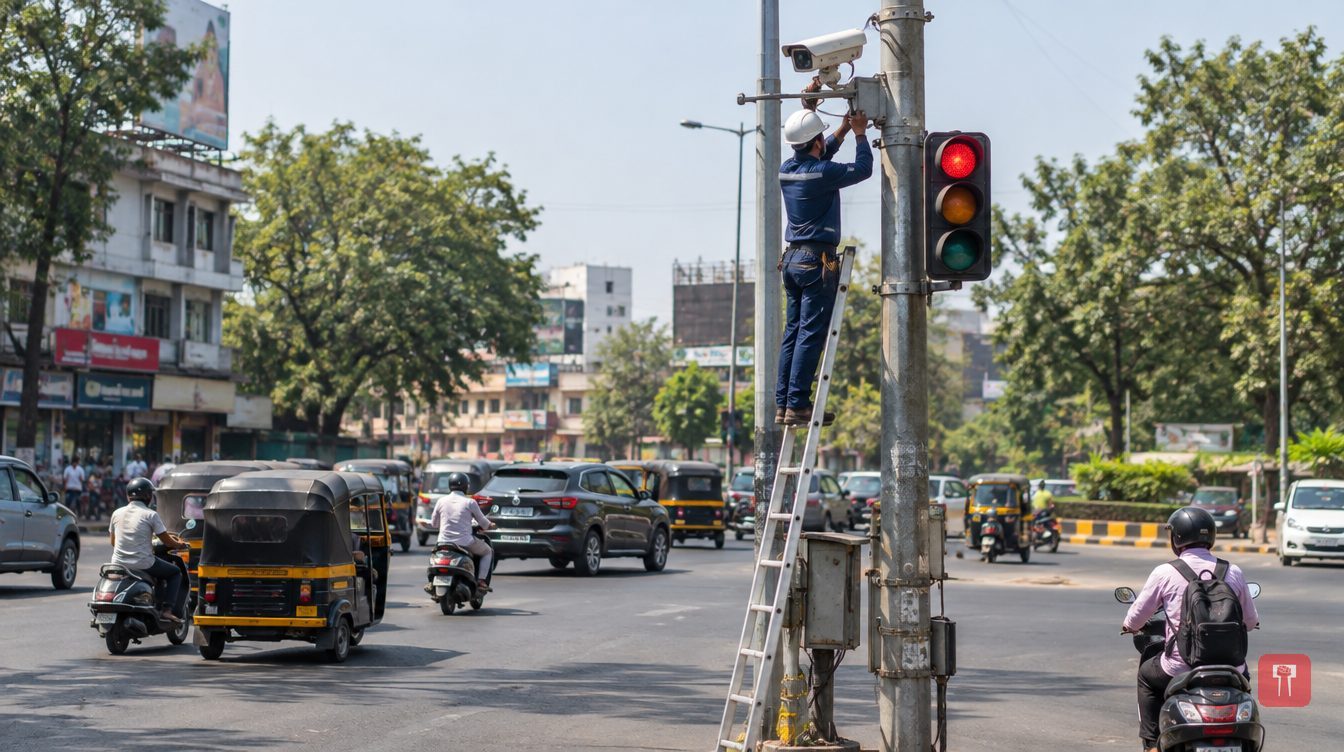
The Maharashtra government has sanctioned Rs 10 crore to strengthen security, traffic control and surveillance in Nagpur. The amount will be spent on repairing 600 CCTV cameras in the city that are currently not working.
Besides this, 1,300 new CCTV cameras are planned within the limits of the Nagpur Municipal Corporation (NMC). As the third part of the plan, an Integrated Traffic Management System (ITMS) is expected to be operational at 170 key locations by December.
The aim of these steps is to close gaps in the city's surveillance network, keep watch on traffic violators, and help police and civic agencies reach emergencies and crime scenes faster. With the defunct cameras working again, many key locations will come under continuous watch once more, and the existing infrastructure will be put back to use instead of relying wholly on new cameras.
For the police, CCTV footage helps identify suspects, trace vehicle movements, reconstruct incidents and gather evidence in investigations. Cameras at intersections and public places can also help spot crowding and traffic problems. However, the impact of the repairs will depend on how quickly the work is completed and whether regular maintenance is arranged. It will be essential that cameras stay operational, footage is recorded properly and the control room receives an uninterrupted feed.
The 1,300 new cameras within NMC limits will allow more public places, roads and intersections to be monitored. It is important to decide where and by when they will be installed, so that they fill gaps in the network and avoid duplication in areas that are already under surveillance. The expanded network could help tackle vehicle theft, chain snatching, other street crimes and traffic violations.
For a growing city like Nagpur, the challenge is not only to install more cameras but to run the entire system as one connected network. Reliable connectivity, uninterrupted power, effective monitoring and timely access to recorded footage will determine how much benefit the expansion brings.
An ITMS uses technology to monitor and control traffic. Depending on the equipment installed and its configuration, such systems can watch traffic in real time, catch certain violations, monitor congestion and help officials manage vehicle movement at busy intersections. Traffic police could get better tools to identify congestion points, check road conditions and enforce rules.
To meet the December target, installation, integration, testing and other preparations will have to be completed on time. Coordination among the traffic police, the municipal corporation and the agencies running the system will also be necessary.
The three-part initiative of repairing 600 defunct cameras, installing 1,300 new ones and setting up ITMS at 170 locations is a plan for a major investment in Nagpur's surveillance and traffic management. The real challenge now is to turn these announcements into a reliable, citywide system, which will need regular maintenance, adequate staff at monitoring centres, secure handling of footage and prompt action on the information received. For citizens, the test will be whether policing improves, roads become safer and incidents get a quicker response.
