

Karwa Chauth: the tales of Karwa the washerwoman and Veervati behind the fast
 Images are not validated/verified
Two traditional stories, of Karwa the washerwoman and of Veervati, are recited on Karwa Chauth, when married women fast for their husbands' long lives and well-being.
Karwa Chauth, also called Karak Chaturthi, is regarded in Hinduism as an important fast for married women. On this day women fast through the day for their husbands' long lives, good health and a happy married life. The fast holds particular significance in north India and is observed as a symbol of devotion, love, fidelity and the mutual commitment of husband and wife. Two stories linked to the fast are well known in the Indian religious tradition: that of Karwa the washerwoman and that of Veervati.
According to the traditional account, a devoted washerwoman named Karwa lived with her elderly husband on the banks of the Tungabhadra river. She loved her husband dearly. One day, when he went to bathe in the river, a crocodile seized him. The moment she learnt that her husband's life was in danger, Karwa ran to help him.
It is said that Karwa, through the power of her chastity, bound the crocodile with a raw thread. She then went to Yamraj, the god of death, and begged him to spare her husband's life. She also demanded that the crocodile that had seized him be punished.
Yamraj was pleased by Karwa's devotion to her husband, her courage and her firm resolve. According to the belief in the story, he punished the crocodile and blessed Karwa's husband with a long life. The account brings out a wife's prayers for her husband's welfare, her fidelity and her strength in facing hardship.
The second well-known story linked to Karwa Chauth is that of Veervati, the daughter of a moneylender. She was the only and much-loved sister of seven brothers. After her marriage, she resolved to keep the Karwa Chauth fast for her husband's long life.
On Karwa Chauth, Veervati fasted without even water. Having taken neither food nor water all day, she grew very weak. Distressed to see her condition, her brothers devised a ruse to make her break the fast early. Showing a lamp or a light behind a tree, they created the illusion that the moon had risen. Veervati took the light the brothers showed her for the moon and broke her fast.
According to this folk tradition, because she broke the fast without seeing the moon, trouble befell her husband. Some versions of the story mention his death. Veervati was deeply grieved. She realised her mistake and decided to follow the rules of the fast with devotion.
Veervati then kept the Karwa Chauth fast in the proper manner and with complete devotion. The popular version of the story says that, pleased with her fidelity and prayers, the goddess restored her husband to life. The account underlines the importance of devotion, restraint and resolve behind the fast.
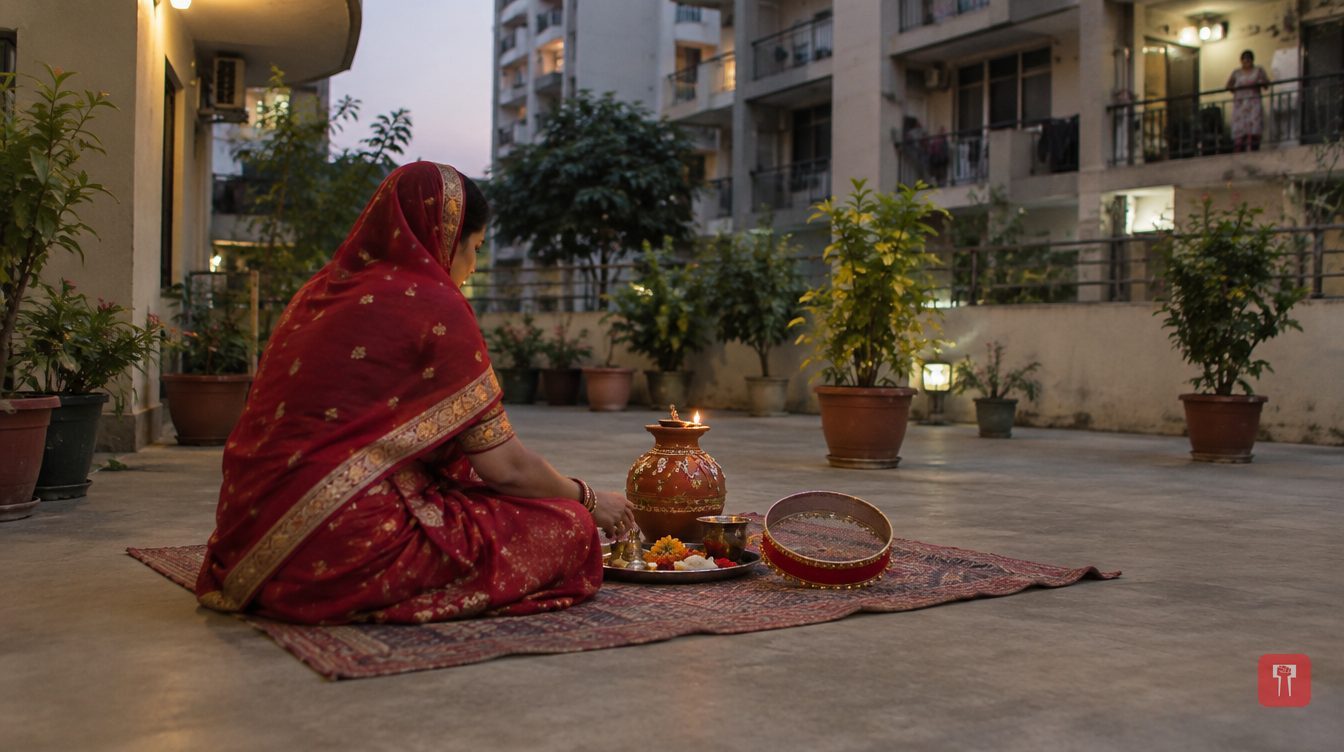
On Karwa Chauth, women begin the fast by eating before sunrise. They then observe it through the day without food or water. In the evening, women gather to perform the Karwa Chauth puja, listen to the story of the fast and break the fast after sighting the moon and offering it arghya, an offering of water. The karwa, a clay pot, is regarded as an important symbol in the worship. Worshipping the moon, listening to the story and praying for the husband's well-being hold special significance.
Karwa Chauth is not only a day of fasting but a symbol of love, trust and fidelity in the relationship between husband and wife, and of prayers offered for each other's happiness. The courage in Karwa's story and the firm resolve seen in Veervati's story both reflect a woman's devotion. On the occasion, women gather, perform the puja, wear traditional dress and pray for the happiness and prosperity of the family. The fast therefore has cultural as well as religious significance. Ways of celebrating festivals change with time, yet care for one another, trust and the commitment to living together remain the core values of this tradition.
Reach readers on the ward they actually live in.
Advertise with Prime Time 24Reach readers on the ward they actually live in.
Advertise with Prime Time 24Reach readers on the ward they actually live in.
Advertise with Prime Time 24
Comments
No comments yet. Be the first.