

Italy to ban burqa and niqab in schools, cap foreign student numbers
PM Giorgia Meloni announced a bill barring full-face veils in Italian schools and limiting foreign students per classroom.
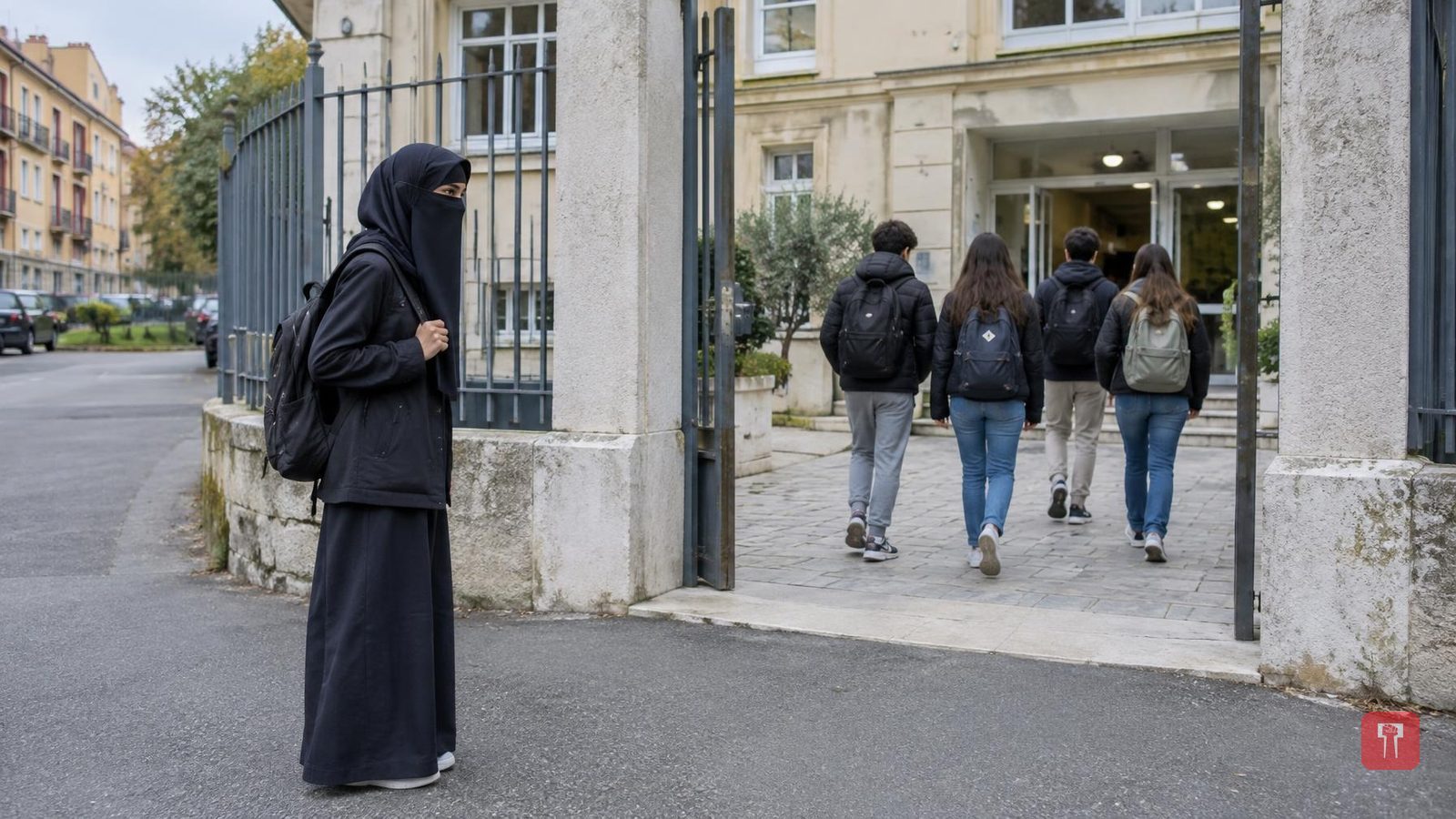
Amid an ongoing debate in Europe over immigration and cultural integration, Italy's government has taken a major decision. Looking at policies in countries like France, Belgium and Austria, Italian Prime Minister Giorgia Meloni has announced that the burqa and niqab will be completely banned in the country's schools. Along with this, a limit will also be placed on the admission of foreign students. A new bill on this will soon be placed before Italy's parliament and cabinet for approval.
Italy, on the shores of the Mediterranean Sea, is considered a major entry point geographically for migrants coming into Europe. In recent years, large-scale migration from Muslim-majority countries has fuelled ongoing debate in Italian society over cultural integration, the local language and citizenship rules. Meloni's government has now decided to make schools a centre of this cultural integration and has suggested major changes to the education system.
Meloni explained the policy in detail at a national festival called Phoenix, organised by Gioventu Nazionale, the youth wing of her party Brothers of Italy. She said clearly, "Everyone must keep their face uncovered while going to school in Italy. In the name of any real or imagined tradition or religion, no young woman or girl can be forced to hide her face."
The proposal mainly speaks of banning the burqa and niqab, which cover the face completely. According to Meloni, this step is necessary not just for discipline but to protect women's freedom, individual rights and gender equality. Students' faces being visible in schools is considered basic for communication and safety.
The second important aspect of the new bill is that a legal limit will be set on the number of foreign students in each class. According to Italy's education data, around 11.6 percent of students in its schools are non-Italian nationals. The government claims that in many classes, the rising number of students who do not understand the Italian language is affecting the quality of teaching and communication in the classroom.
On this, Meloni said, "If there is only one child in a class who does not understand the Italian language, they can easily learn the language and connect with everyone else with the help of the teacher and the other children. But if the number of children who do not understand the language becomes very large, or they become the majority, we cannot call this integration, it is a kind of negligence." She also warned that Italian children feeling like a minority or being ignored in classrooms in their own country will not be accepted under any circumstances.
Under the new policy, social responsibility has been placed not just on children but on their parents as well. Foreign students whose parents are having serious difficulty integrating into Italian society and the education system will be legally required to learn the Italian language.
Meloni said, "Those who come to Italy to build their future will have to learn our language, understand our culture and respect our rules. This is the only serious and respectful way to welcome newcomers." The Italian government aims to get the bill approved and turned into law within 60 days of it being introduced in parliament.
