

Hyderabad dietitian on when night-shift workers should eat dinner, and what the research shows
Dietitian Vinay Kumar Nevatia says no clean rule exists for a 2 am dinner, and that most of the evidence rests on associations and small samples.
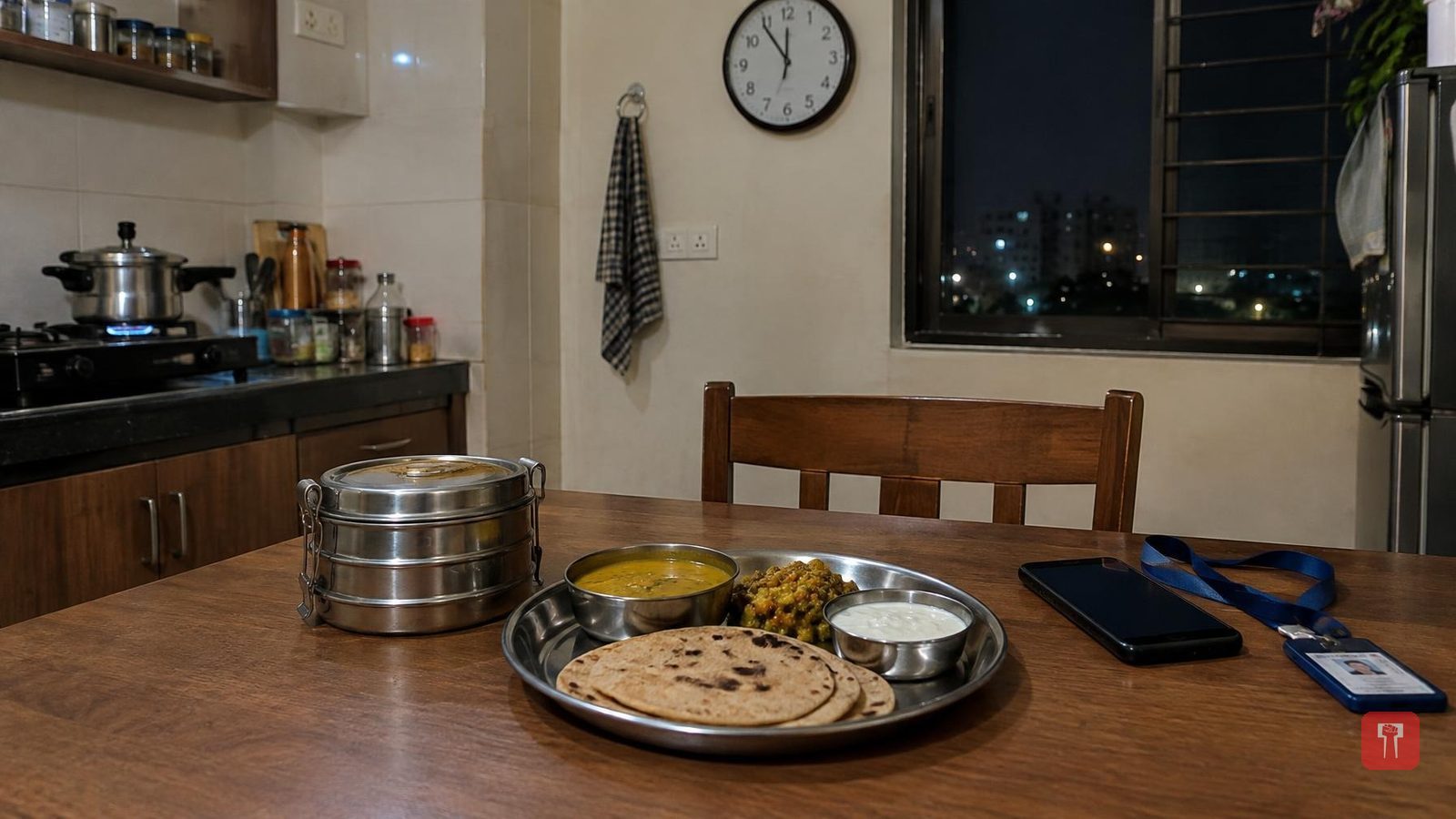 Images are not validated/verified
A 2025 study of 345 employees in Hyderabad's IT hub found that 89 of them worked outside the standard 9 am to 5 pm shift, and 241 said they slept fewer than seven hours a day. Hyderabad dietitian Vinay Kumar Nevatia builds diet plans around everyday Indian food. People keep coming to him with the same question: when should they have dinner?
"Most diet advice assumes the day starts at seven. Breakfast, lunch, dinner, then sleep. If someone on a client shift asks what dinner at 2 am means, I do not have a neat rule. I do not think anyone has the full answer," Nevatia says.
He is careful when talking about what the research says. A 2015 meta-analysis pooled 226,652 participants from 12 observational studies. It found an odds ratio of 1.09 for diabetes among people who had ever done shift work (95 per cent confidence interval 1.05 to 1.12). The authors, who are from China, describe this as an association, and the abstract has no separate figure for India. Another study, by Loden and colleagues, suggests that some metabolic problems among shift workers may be linked to the quality of their food and the erratic timing of meals. Stress, a disturbed body clock, lack of sleep, little movement and little rest may also play a part.
In Nevatia's words, "A ratio like that tells you about a crowd. It is a reason to take night-shift eating seriously, not a verdict on the person sitting in front of me."
The most direct test on timing is also small. In a randomised study at a laboratory in the United States, 19 healthy adults aged 18 to 35 followed a 14-day protocol that included a simulated night shift. Among those who ate on the night schedule, the post-meal blood sugar response in the test meal rose 19.4 per cent from baseline (95 per cent confidence interval 4.7 to 34.2 per cent). Among those whose eating was limited to daytime hours, the change was not significant. The authors say studies on real shift workers are still needed. Would he tell a night-shift worker to eat only in the daytime on the strength of 19 people? Nevatia's answer: "No. I have not seen how this looks in a Gachibowli flat, with a family, a pressure cooker and an 8.40 cab."
On official advice, he keeps two documents apart. The ICMR-National Institute of Nutrition's Dietary Guidelines for Indians speak of eating two to three times a day and not snacking in between. Its healthy plate has plenty of vegetables, adequate whole grains and pulses, a few nuts or seeds, some fruit and plain curd, with little sugar, oil and salt. A page from NIOSH, a body under the US CDC, written for night-shift nurses, says to delay or reduce eating between midnight and 6 am, to eat three times in 24 hours (more often if energy dips), and, when staying awake matters, to avoid sugary and low-fibre carbohydrates because, it says, these can increase sleepiness. This is foreign advice, and it was written for nurses.
Nevatia says, "I disagree most with the 'don't eat after eight' advice. It is written for someone who is asleep by ten. If you are on a 9 pm shift and follow the midnight to six rule, the middle of your working night goes empty. Some people manage it, many cannot. From both documents I take not the clock time but the structure: a few fixed meals. I may well be wrong about this."
On what should be on the plate at 2 am, he asks what you would actually eat at 3. According to him, dal, a vegetable, a wheat or bajra roti, curd and, if there is time, moong pesarattu work well. A salad box that needs a plan and a fork does not last the week. On tea, he worries less about the number of cups than about what goes with it. The habit of packet biscuits with Irani chai is one he would look at.
He also reminds people that the national guidelines are prepared in Hyderabad itself, and that ICMR-NIN publishes them from Tarnaka. The same document does not count eating out as a single category. Street food is generally described as healthy and fresh, with a warning on hygiene. Most made-to-order fast food is described as fresh, but items such as milkshakes, chips, pizza, burgers and fries are called unhealthy because of fat, sugar, salt or heavy processing.
Nevatia builds every plan around the person's own clock: when they sleep, how long the commute is, when the cab leaves, when the canteen shuts, and what shows up on the delivery app at 1 am. He fixes two or three main meals around sleep time, then asks what happens on the night these fall apart. Biryani is not banned; he asks what comes with it and when. A "never eat out" rule, he says, does not survive a shift in which the canteen closes at midnight.
Most of this rests on associations and small samples, or on guidelines written for other professions. The Hyderabad study mentioned at the start was cross-sectional. According to its authors, 85.2 per cent of the sample were men, the behavioural information was self-reported and could not be verified, selection and information bias are possible, and longitudinal studies are needed to establish cause and effect.
According to Nevatia, none of this tells a person with a medical condition what to do on a Tuesday night. A rotating roster has no single sleep window, so planning is hardest there. Meals tied to medication or insulin timing, pregnancy and a history of eating disorders each change the question. On the last of these he is clear that a rule of not eating between midnight and 6 am could be entirely wrong.
In his view, a night-shift plan counts only if it holds on the fourth night, when the cab is late, the canteen is shut and the dal in the tiffin has gone cold. "A cold-dal plan is a plan with no future, and I have written a few of those myself," he says. The plans that pass are often dull: the same handful of everyday Indian meals, packed before the cab arrives.
This is general information, not medical advice. People with diabetes, pregnant or breastfeeding women, those on regular medication and those with a history of eating disorders should consult a qualified doctor or dietitian before changing meal timing or foods.
