

Study finds 77% of 406 MBBS students at a Delhi government medical college under moderate to high stress
A study in the Indian Heart Journal found most MBBS students at a government medical college in New Delhi reported moderate or high stress.
 Images are not validated/verified
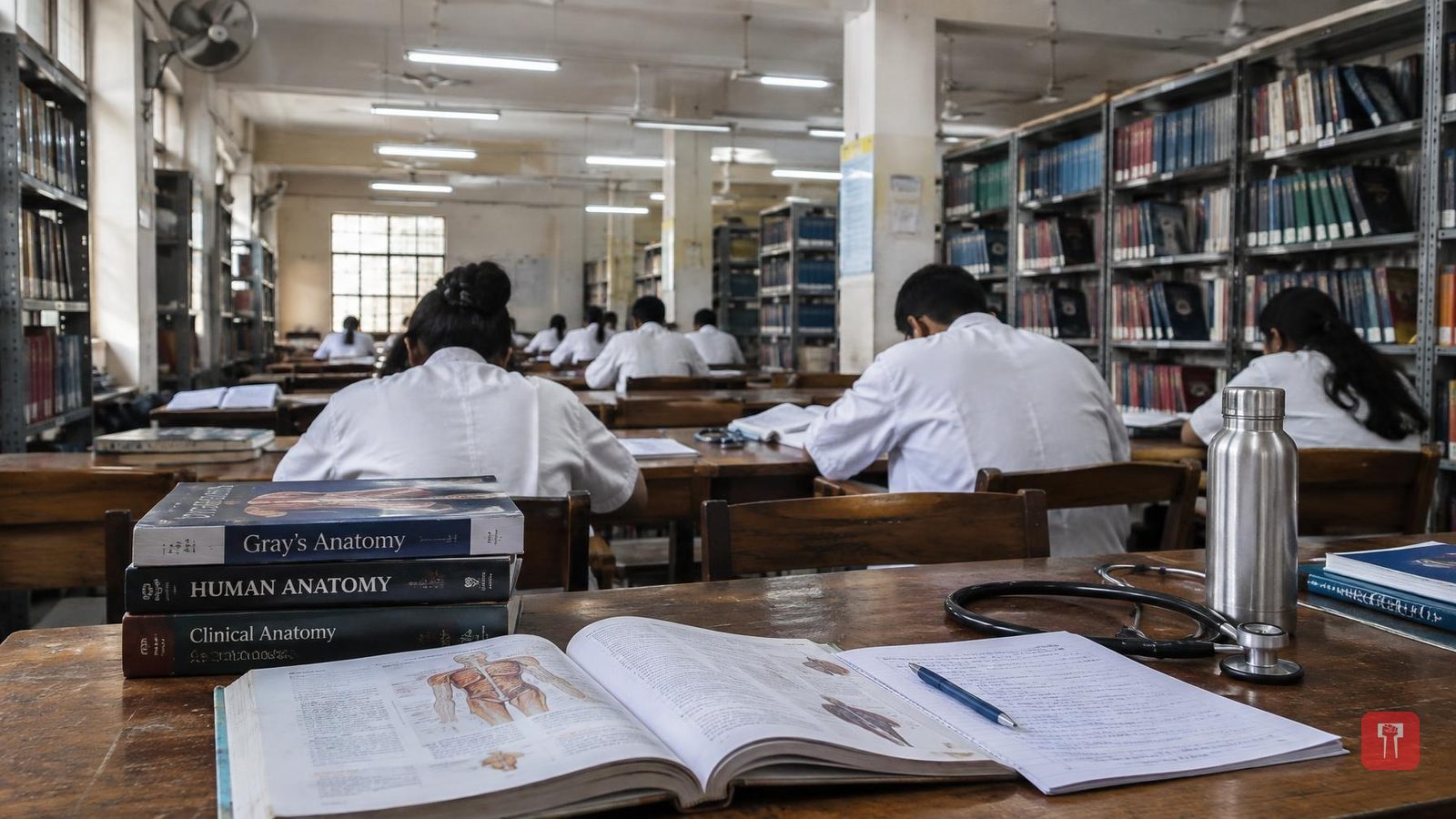
A new study of students pursuing MBBS at a government medical college in New Delhi has found startling levels of stress. The study, published in the Indian Heart Journal, found that 77 per cent of the students were under moderate to high stress.
The research covered 406 students across all four years of the MBBS course, all aged between 18 and 25. The study also listed the causes of stress. Worry about scoring well in examinations, fear of low marks and fear of being unable to answer teachers' questions emerged as the main reasons.
According to the study, 54.43 per cent of the students said they had moderate stress, while 22.66 per cent were highly stressed. About 22.9 per cent showed mild stress. In other words, more than three-quarters of the students are studying under moderate or high stress.
The study found that the pressure to perform consistently well in academics was the biggest problem for students. Being unable to answer teachers' questions, getting fewer marks than expected and the tension of completing a very large syllabus on time also repeatedly unsettle them. Many students also feel that their hard work does not get due recognition.
Year-wise, second-year MBBS students recorded the highest share of high stress, at 30.11 per cent. However, according to the researchers, this could be due to differences in lifestyle among batches. It cannot, therefore, be directly concluded that stress keeps rising throughout medical studies. The study also examined the relationship between students' stress and heart rate variability (HRV).
Dr Mohit Gupta, the lead author of the study, said that merely asking students whether they are stressed is never enough. He said it is essential to assess stress in medical education in a systematic way and to include strategies for coping with and managing it in the course.
Dr Gupta stressed the need to make medical education more inclusive, practical and balanced, so that students get room for recreation and other arts alongside their studies. In his view, it is not enough to make students strong only in academics; keeping them emotionally stable is equally important, so that they can seek the right help when needed and cope well with stress.
