

Girls' schooling has transformed in India, but dropouts after Class 8 and the digital gap remain
On International Day of the Girl Child, a look at how far girls' education has come in India and the hurdles that remain.
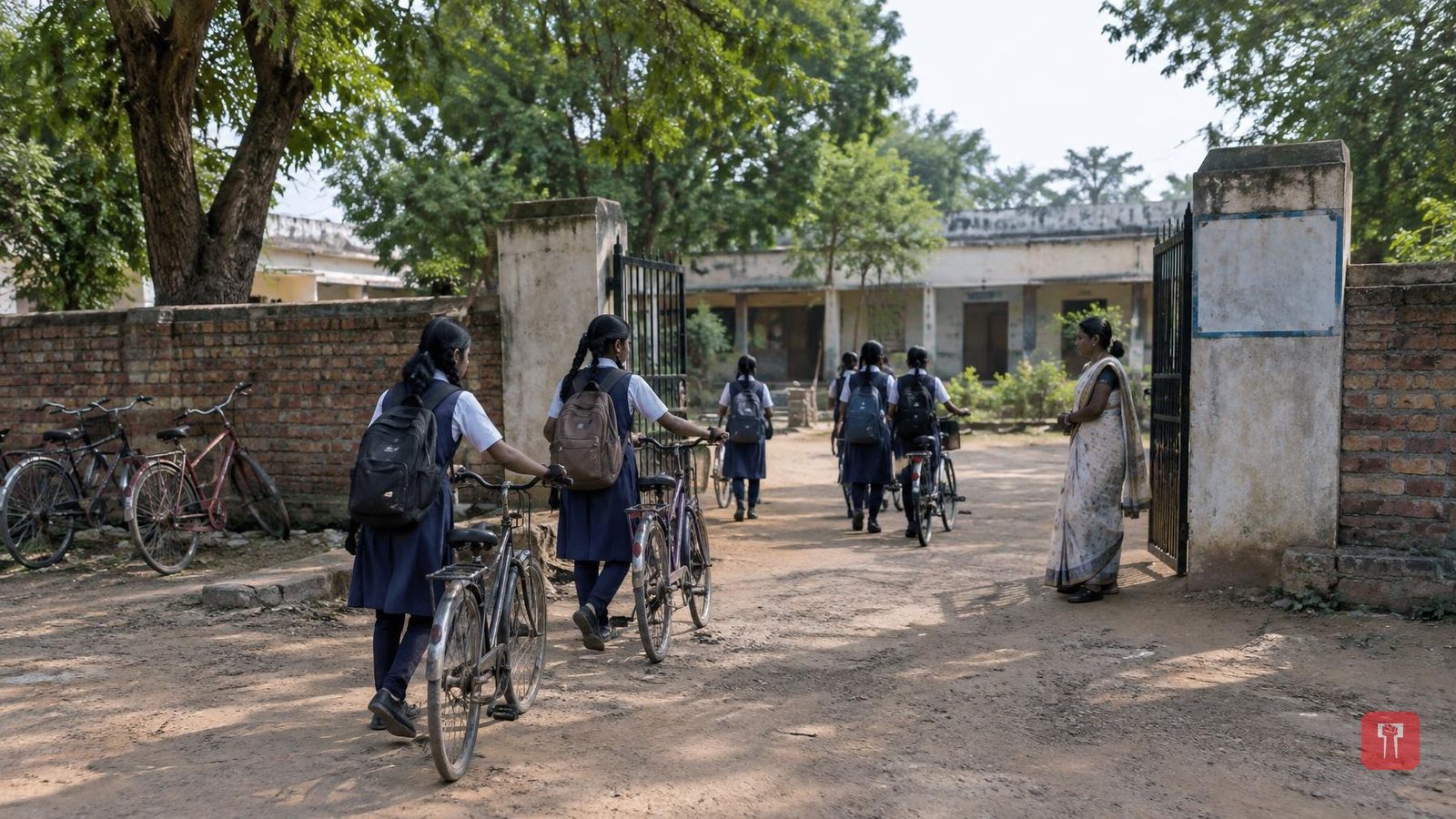 Images are not validated/verified
International Day of the Girl Child is observed across the world on October 11 every year. The aim of the day is to spread awareness in society about girls' rights, health, safety and education. In a large country like India, there was a time when girls were not even allowed to step outside the threshold of their homes. Today, the same girls are making their mark through education, from space research to the corporate world.
Over the past two to three decades, there has been a genuine revolution in girls' primary and secondary education. Thanks to campaigns such as the Sarva Shiksha Abhiyan, the Right of Children to Free and Compulsory Education Act (RTE) and Beti Bachao, Beti Padhao, girls from every corner of the country are now climbing the steps of schools. The gross enrolment ratio (GER) in primary schools has improved sharply. Girls' numbers in primary classes are now on a par with boys', and in some places appear to exceed them. Whether in Maharashtra, which carries forward the legacy of Savitribai Phule's thinking, or in other states, parents' attitudes towards girls' education have changed.
The change is not limited to enrolment. Initiatives such as Kasturba Gandhi Balika Vidyalaya, bicycle distribution schemes, free textbooks and uniforms, and the mid-day meal have played a major role in bringing girls to school regularly. Several states have launched savings schemes in girls' names, such as the Sukanya Samriddhi Yojana, which have eased the path to higher education. Today, girls are topping the medical, engineering, law and civil services examinations.
Girls' share in higher education, especially in STEM, the modern fields of science, has risen considerably. Whether as rocket scientists at ISRO or software engineers in the IT sector, Indian girls have brought honour to the country the world over with their ability.
But there is another side to this picture. When girls move on to Classes 9 to 12 after completing primary school, the rate at which they drop out of school remains a matter of concern. In many rural areas, girls leave school once they grow older because of the lack of a separate toilet and poor hygiene during menstruation. The long distance from the village to the high school and concerns over safety are also factors, because of which many parents are afraid to send girls to distant schools.
Child marriage and the burden of household chores are another major challenge. After the Covid pandemic, and because of financial hardship, many families still put boys' education first and hurry to marry off girls. In the digital age, a new problem of the digital gender gap has also emerged. If a household has only one smartphone or computer, the boy uses it first and the girl is left away from the technology.
The real change in girls' education will be complete only when they not merely get a degree but earn and stand on their own feet. For this, providing vocational training, digital literacy and life skills in schools has become the need of the hour. Emphasis should also be laid on a safe environment in schools, free availability of sanitary pads and safe arrangements for travel to and from school.
Educating a girl means empowering the whole family and, in turn, the country. On the occasion of the Day of the Girl Child, it must be remembered that every girl has a basic right to safe, dignified and good-quality education. Only when the wall of discrimination in society falls completely and every girl is able to fulfil her dream will the dream of a Viksit Bharat truly be realised.
