

Ganeshotsav 2026: Bombay HC petition seeks strict curb on DJs, loudspeakers, dhol-tasha noise
A PIL in the Bombay High Court says noise pollution rules for DJs, loudspeakers and dhol-tasha during Ganeshotsav are not being enforced properly.
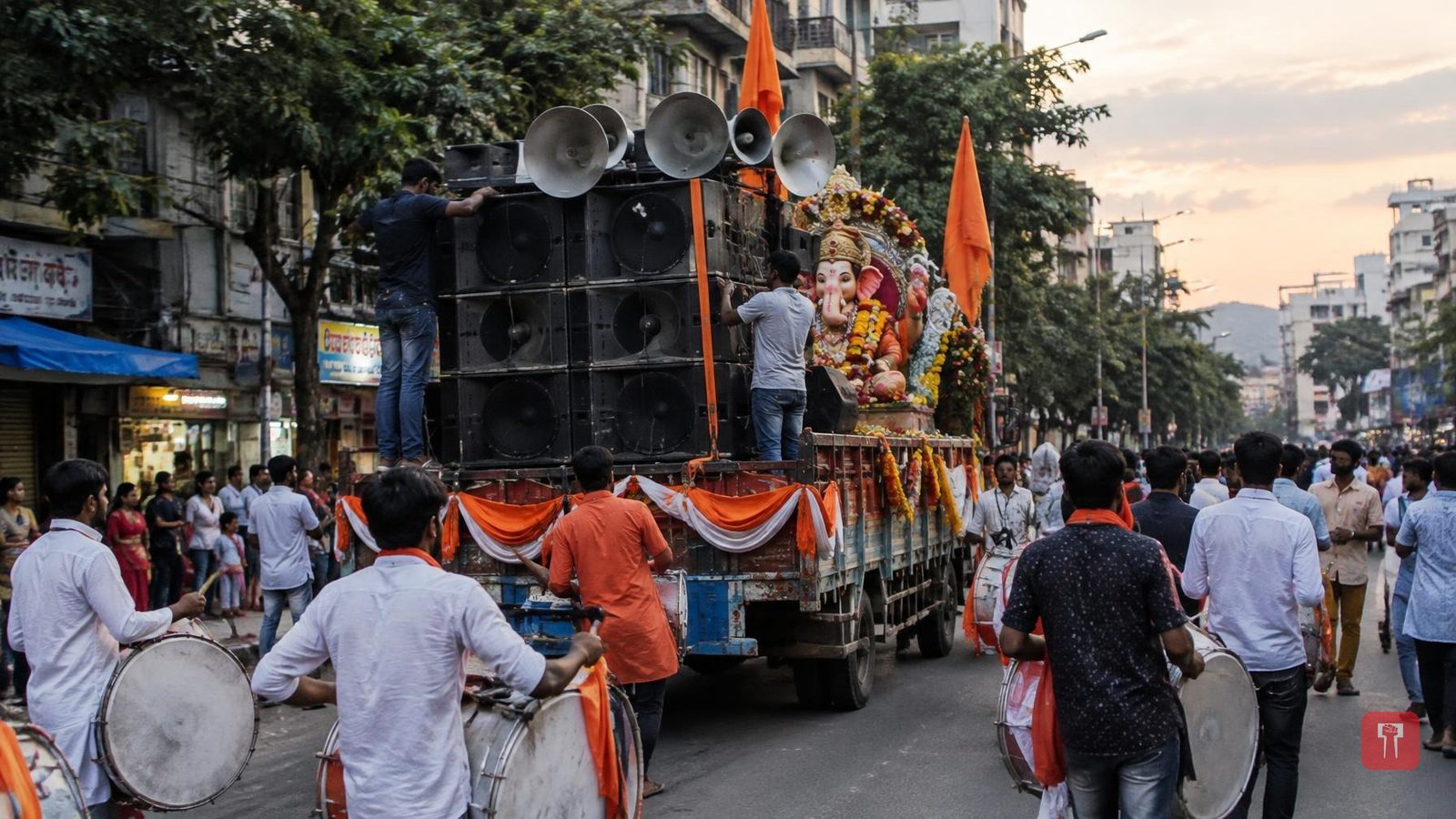
Ganeshotsav is observed across Maharashtra as a festival of faith and tradition, but the blaring sound of DJs and Dolby systems during Bappa's processions has once again become a talking point. The issue of noise pollution caused by DJs, loudspeakers and dhol-tasha during the festival has reached the Bombay High Court once again, with a public interest litigation filed alleging that the court's earlier directions are not being effectively implemented. The petition demands strict enforcement of noise pollution control rules during Ganeshotsav and other festivals to come.
The petition relies on the Bombay High Court's 2016 verdict in Dr. Mahesh Vijay Bedekar versus State of Maharashtra, in which the court had made clear that enforcement of the Noise Pollution (Regulation and Control) Rules is mandatory. That verdict had also stated that written permission from the relevant authority is required to use a loudspeaker or public address system, meaning any mandal or organiser must obtain such permission in writing before using such equipment.
Under the same 2016 verdict, the use of loudspeakers, public address systems or noise-generating equipment is restricted between 10 pm and 6 am. However, the state government has the power to grant a limited relaxation, extending this to midnight, on up to 15 notified festival days in a year. Even during such relaxation, the prescribed noise limits must still be observed, meaning there is no complete freedom on sound even during the relaxed hours.
Stricter rules apply to silence zones around hospitals, schools, colleges and courts. The 2016 verdict had also spelt out restrictions on the use of loudspeakers, dhol and other instruments in open silence zones, meaning such areas are expected to observe tighter restrictions than general areas.
The petitioner has raised the question of these rules existing on paper but not being enforced in practice. The petition demands that prescribed noise limits be observed across residential, commercial, industrial and silence zone areas, and that firm action be taken on complaints of violations. As per the 2016 verdict, the limit for residential areas is 55 dB(A) during the day and 45 dB(A) at night, while for silence zones it is 50 dB(A) and 40 dB(A) respectively. This Ganeshotsav too, the enforcement of these noise rules in Maharashtra has brought the issue of DJs and loud sound systems back into discussion.
This story has published but the live thread has not started. Updates appear here the moment the desk files one.
