

Gadchiroli police, PIB hold workshop for journalists on a Maoist-free India
 Images are not validated/verified
Speakers said coordination and positive dialogue among police, government, media and society are needed to meet the challenges that follow the end of armed Maoism.
Gadchiroli Police and the Press Information Bureau (PIB), Nagpur, a central government office, jointly held a workshop for journalists on Wednesday. The subject was "Maoist-free India". Speakers said this is possible through mutual coordination and positive dialogue.
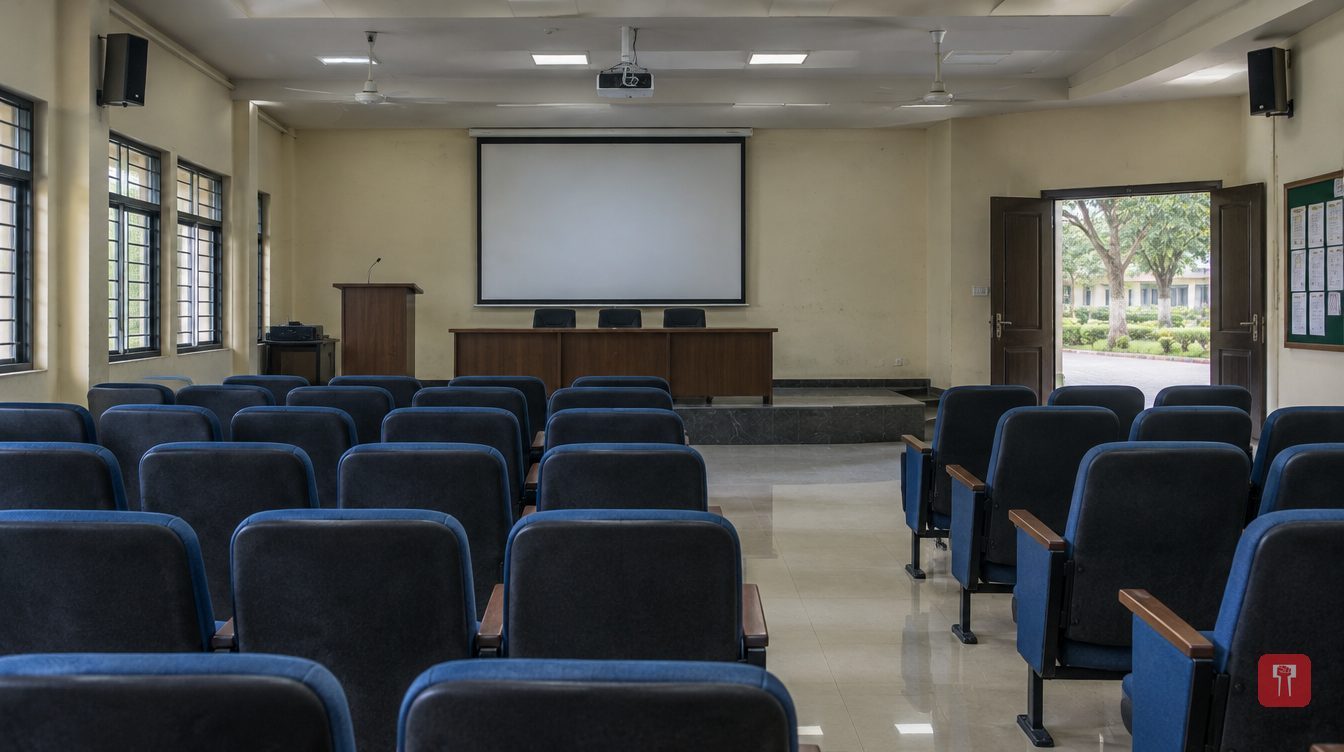
The workshop took place at the Eklavya auditorium at the police headquarters. Special Inspector General of Police (Anti-Naxal Operations) Sandip Patil joined online from Nagpur. Deputy Inspector General of Police (Gadchiroli Range) Yogesh Kumar and Superintendent of Police M. Ramesh were present, along with several senior police officers.
Also present were P.V. Ramana, a writer, policy analyst and expert on Maoism; senior journalist Kartik Lokhande; Additional Superintendent of Police (Operations) Kartik Madhira; and Additional Superintendent of Police (Administration) Gokul Raj G. Saurabh Khekade and Devprakash Dubey also came from PIB Nagpur.
The workshop covered how Maoism spread and what efforts have been made so far to end it. Discussion took in the origins and spread of Maoism, the present situation, the Maoists' way of working and their ideology. The challenges faced during anti-Maoist operations were also listed. The main speakers shared views drawn from their experience and study.
Journalist Kartik Lokhande asked whether, with the Maoists gone, Maoism itself had ended. He speculated on how any remaining Maoism could obstruct development work.
Sandip Patil gave detailed guidance on the challenges the police will face after the end of armed Maoism. Yogesh Kumar and M. Ramesh described the course of the anti-Maoist fight in Gadchiroli district. They spoke about the strategies the police adopted, the contribution of security agencies and the participation of local residents. Efforts to reduce Maoist influence through development initiatives were also mentioned.
It was underlined at the event that Maoism has ended in Gadchiroli district. To deal with the challenges ahead, coordination and positive dialogue among the police, government, media and different sections of society are essential. In this context, senior officials, experts and journalists discussed experiences of the anti-Maoist campaign, successful methods and challenges to come. Journalists took part in the discussion by asking questions.
It was also said that the Maoist problem should not be viewed only as a law-and-order issue. It also needs to be seen from social, economic, educational and development perspectives.
The dialogue gave journalists factual information on the Maoist problem. They also got a chance to learn in detail the background, present position and way forward in the efforts towards a Naxal-free India. At the event, tribute was also paid to the memory of the 214 security personnel who laid down their lives in the anti-Maoist campaign.
Reach readers on the ward they actually live in.
Advertise with Prime Time 24Reach readers on the ward they actually live in.
Advertise with Prime Time 24Reach readers on the ward they actually live in.
Advertise with Prime Time 24Reach readers on the ward they actually live in.
Advertise with Prime Time 24
Comments
No comments yet. Be the first.