

Evening puja: what to keep in mind on the lamp, mantra chanting and offering
For those who cannot do a full morning puja, a simple evening worship with a lamp, a mantra and an offering keeps daily devotion going.
 Images are not validated/verified
Worship of the deities is considered very important in Hinduism. Many people want to begin the day with darshan of the deity, prayer and chanting of the divine name. But in today's rush of jobs, business, household duties and travel, it is not possible for everyone to worship unhurriedly in the morning. Often people have to leave home after only a quick salutation to the deity. This can leave a feeling that the puja was not done properly and that the deity was not given full time.
However, the real basis of devotion is not the time spent on worship but faith, dedication and feeling from the heart. In the Bhagavad Gita, too, Lord Krishna gave the message that he accepts a leaf, flower, fruit and water offered with devotion. So if a detailed puja cannot be done in the morning, there is no need to carry guilt.
If the morning puja is kept short for lack of time, and in the evening one sits calmly before the deity for chanting of the name, recitation of a stotra or an aarti, the routine of daily worship continues. Some traditional points are worth remembering for the evening puja.
After a day's work, both body and mind are tired on returning home. It is therefore important to calm and refresh oneself before the puja. Wash hands, feet and face thoroughly after coming home, and change clothes if possible. Then clean the puja room and sit for worship. If the lamp in the puja room could not be lit in the morning, light it in the evening and pray. Before starting, sit quietly for a few moments and remember your chosen deity. Set aside the day's work, worries and stress and try to focus the mind. Puja is not only a religious act but also a practice that brings peace of mind.
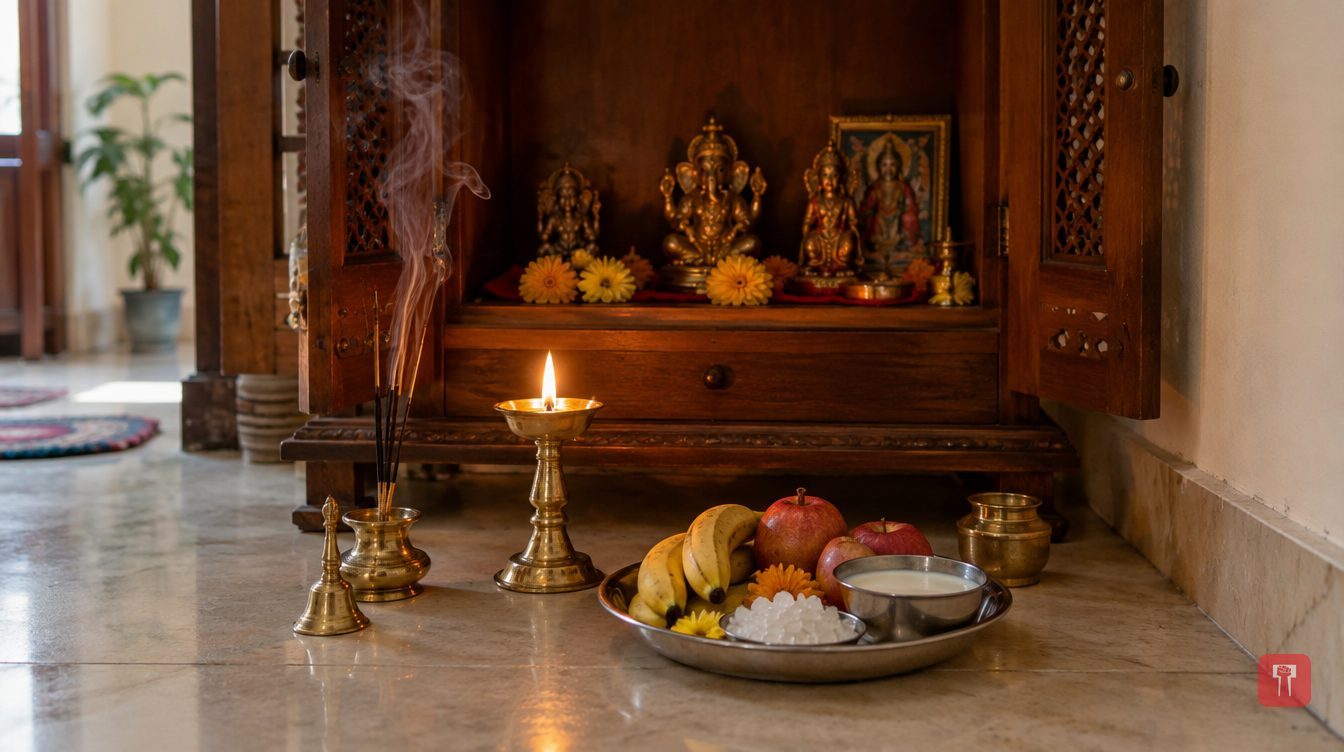
Lighting a lamp in the evening has special significance in Hindu tradition. After sunset, a lamp is lit in the puja room at home or in another suitable and safe place, and the deity is remembered. The lamp is regarded as a symbol of knowledge, auspiciousness, hope and positivity. Its light makes the atmosphere of the puja room pleasant and makes the mind receptive to worship. The family tradition (kulachar), the deity worshipped and the method of puja can differ from home to home, so worship according to your own household's tradition.
Evening puja does not always need elaborate ritual or long recitation of mantras. A simple puja can be done according to the time available. The mantras are given as follows: Om Namah Shivaya for Lord Shiva, Om Gam Ganapataye Namah for Lord Ganesha, Om Namo Bhagavate Vasudevaya for Lord Vishnu, Shri Swami Samarth for Shri Swami Samarth, Shri Ram Jai Ram Jai Jai Ram for Lord Ram, and Om Dum Durgayai Namah for worship of the Goddess. Choose the mantra of your chosen deity from these and chant it for a while. After that, a favourite stotra, shloka or aarti can be recited. While chanting, focus on keeping the mind concentrated rather than on completing a count. A few minutes of chanting the name daily keeps the habit of worship alive.
Offering naivedya to the deity is an important part of devotion in puja. In the evening puja, fruit, sugar, rock sugar, milk or any sattvik item available at home can be offered as naivedya, according to one's tradition. It is not necessary to prepare a special dish every time. Offer what is at home with cleanliness and faith. While showing the naivedya, remember your chosen deity, and then take it as prasad according to the family tradition.
In the morning puja, many people bathe the deity, perform a panchamrit abhishek or worship with various upacharas. But there is no universally accepted rule that abhishek must be done every time in the evening puja. In the daily evening puja, worship can be done with a lamp, incense, salutation, chanting of the name, recitation of a stotra and aarti. If the worship of a particular deity, a fast or the family tradition has separate rules for abhishek, follow them. Also follow the family tradition on cleaning the idol and the method of worship.
In the evening puja, instead of rushing through it, keep the mind calm for a few minutes. Keep the puja room free of dirt. Take care of fire safety while lighting a lamp, incense or incense sticks. During the puja, do not let the mobile phone or other things repeatedly distract you.
Many people wonder whether the deity will be displeased if the lamp could not be lit in the morning or the daily puja was missed. In the devotional tradition, faith, love, honesty and surrender of the heart are regarded as important in worship of God. So if a puja is missed for unavoidable reasons, there is no need to carry constant guilt.
A five-minute morning puja routine has also been suggested for office-goers. Those who have little time in the morning should do a simple worship suited to the circumstances rather than give up puja entirely. Salute the deity and remember the chosen deity, light a lamp according to your tradition, say a mantra or a short prayer, offer a flower or naivedya if possible, and leave home after praying for the happiness, health and welfare of the family and all. This is an easy routine, not a binding rule of the scriptures. Some of these steps can be done as circumstances allow, or one can simply offer a salutation and remember the divine name.

Comments
No comments yet. Be the first.