

Even a dog's lick can spread rabies, not just a bite, doctors warn
Doctors say rabies can spread through a dog's scratch or lick on broken skin, not only through a bite.
Rabies is a dangerous virus, but most people believe it spreads only through a dog bite. This is not entirely true. Even a simple scratch from a dog can prove fatal. Incidents involving dogs, such as bites or scratches from claws, often frighten people emotionally, and when it comes to a disease as deadly as rabies, that fear grows further. Most people know that rabies can be caused by a dog bite, but many wonder whether the disease can also spread simply through a dog's lick.
Besides a bite, a scratch from a dog can also create a risk of rabies, especially if the scratch has torn the upper layer of the skin. If the dog is infected with rabies and its saliva is on its paws or claws, the virus can enter the body through that scratch. Whether or not the scratch bleeds, any injury or wound on the skin should not be ignored. According to the World Health Organization, even a minor scratch or abrasion without bleeding can create a risk of rabies infection.
The risk of rabies from a dog's lick depends on which part of the body the dog's saliva comes into contact with. If a dog licks a person's healthy, unbroken skin, it is generally not considered a risk of rabies infection. But if an infected dog's saliva gets onto a cut, wound or scratch, the virus can enter the body. Similarly, if an infected animal's saliva gets into the eyes, nose or mouth, there can also be a risk of infection. So this should not be taken lightly just because the dog only licked and did not bite.
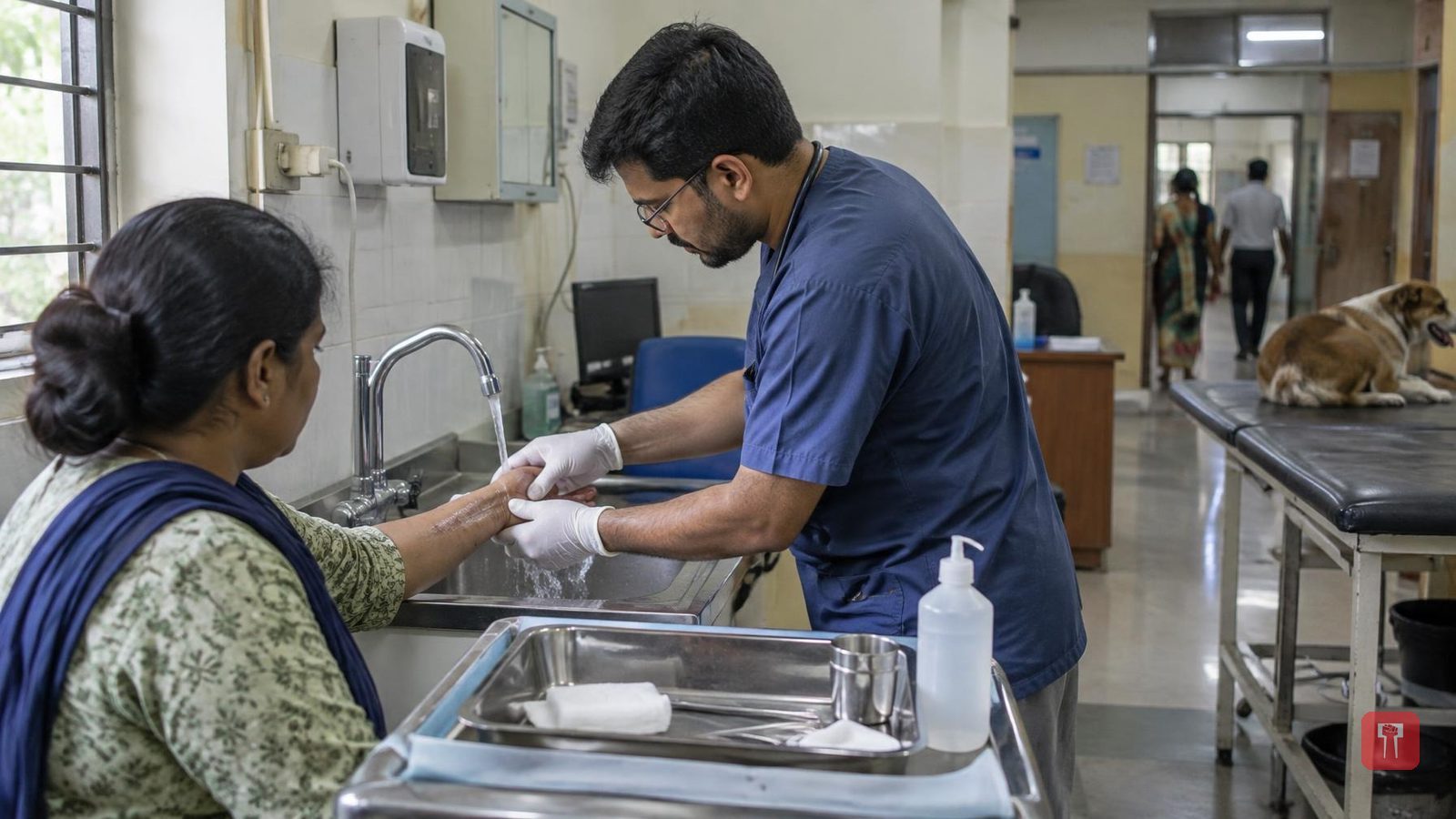
If bitten or scratched by a dog, the wound should be cleaned immediately. The affected area should be washed thoroughly with soap and running water for at least 15 minutes. The wound can be lightly covered with a clean cloth, but chilli, oil, mud, ash or any household substance should not be applied to the wound without a doctor's advice. Even if the wound is small or not bleeding, it is still necessary to consult a doctor.
Doctors decide, after examining the condition of the wound, whether a rabies injection is necessary. In some serious cases, rabies immunoglobulin or other necessary treatment may also be given. One should not wait for symptoms of rabies to appear, because once symptoms begin, the disease becomes extremely severe and is almost always fatal. Therefore, timely medical advice and preventive treatment after exposure are very important.
