

Costa Rica's mysterious stone spheres were carved by the ancient Diquis people, researchers say
Once blamed on aliens and Atlantis, the hundreds of near-perfect stone spheres of Costa Rica's Diquis Delta are the work of an ancient local culture.
 Images are not validated/verified
Costa Rica, a country in Central America, is known for its natural beauty, but it has another claim to fame around the world: a mystery that has long puzzled scientists and archaeologists. It concerns the round stones found there.
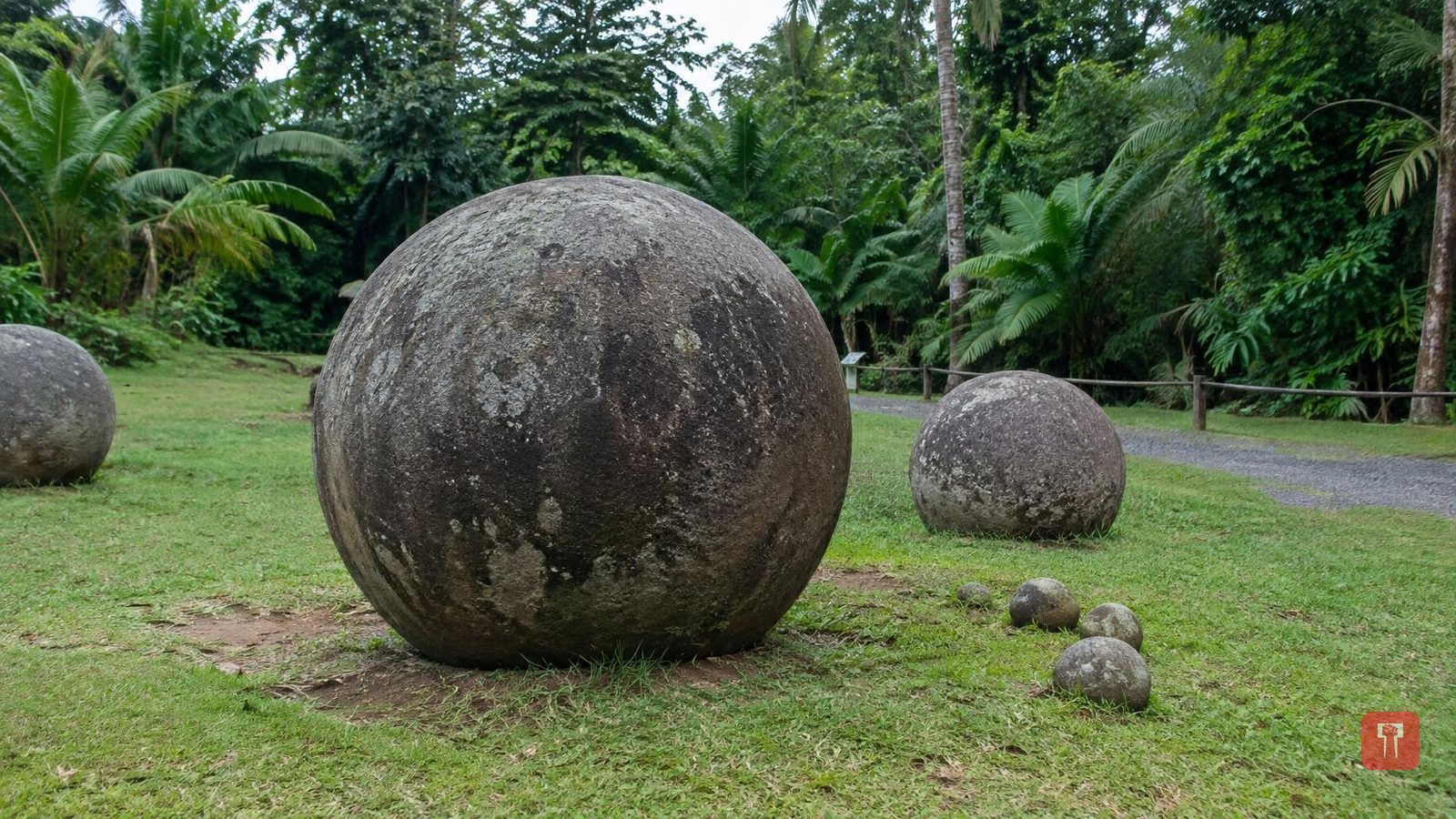
About a hundred years ago, forests in the dense rainforests of the Diquis Delta region of southern Costa Rica were being cleared for banana plantations. Workers found hundreds of stones buried under the ground and in the forest. They were perfectly round and so smooth that onlookers were astonished. In the local language they are called "Las Bolas de Piedra", meaning "the stone balls".
The spheres are not all the same size. Some are as small as a tennis ball, a few inches across. Others are very large, 6 to 8 feet in diameter and weighing 15 to 16 tonnes. They are made of gabbro, an extremely hard volcanic rock. How such round stones were made hundreds of years ago, without modern technology and machines, has been a puzzle for researchers for the past hundred years. Their shape is so precise and smooth that they look as if they were cut on a state-of-the-art lathe.
When the stones became known to the world, many tales grew up about how they were made and why. Some people claimed that such precise and heavy spheres could not have been made by human hands, and that beings from another planet (aliens) must have placed them on Earth or set them up to guide their spacecraft. Another popular story held that they are remains of the advanced city of Atlantis, said to have sunk into the sea in mythical times.
A dangerous superstition spread along with these stories. A rumour went around the area that heavy treasure of gold and silver lay hidden at the very centre of the spheres. Out of this greed, many local people and treasure hunters blasted open and broke several spheres, hundreds of years old, with dynamite. When the stones broke, only stone and soil were found inside. The lust for treasure caused irreparable damage to a major heritage of human history.
When archaeologists set aside the superstition and the alien stories and studied the area closely, an interesting human history emerged. According to researchers, the spheres were carved between roughly 700 CE and 1535 CE by people of an ancient local culture called the Diquis, who lived in the area. They would strike large rocks with smaller stones and then grind them with sand and water to make them smooth and perfectly round. It was an art of human patience and skill.
In the 15th century, the advanced Diquis culture came to an end because of Spanish invaders and other factors, and people abandoned the area. With time, dense forest grew over the settlements, and the historic stones remained hidden from the world for centuries. It is estimated that they were used to adorn the homes of tribal chiefs of that era, as an astronomical calendar based on the positions of the planets, or for religious rituals.
To stop repeated vandalism, theft and damage, the Costa Rican government declared the entire area national property in the 1980s. In 2014, UNESCO, the United Nations body, officially declared these stone spheres of the Diquis a World Heritage Site, which keeps this historic legacy protected today.
