

Citizenship checks in US could strike about 2 lakh Indian-origin voters off rolls, report says
The Trump administration's drive to verify voter citizenship has raised fears that many lawful Indian-American citizens could be wrongly removed from voter lists before the November 2026 midterms.
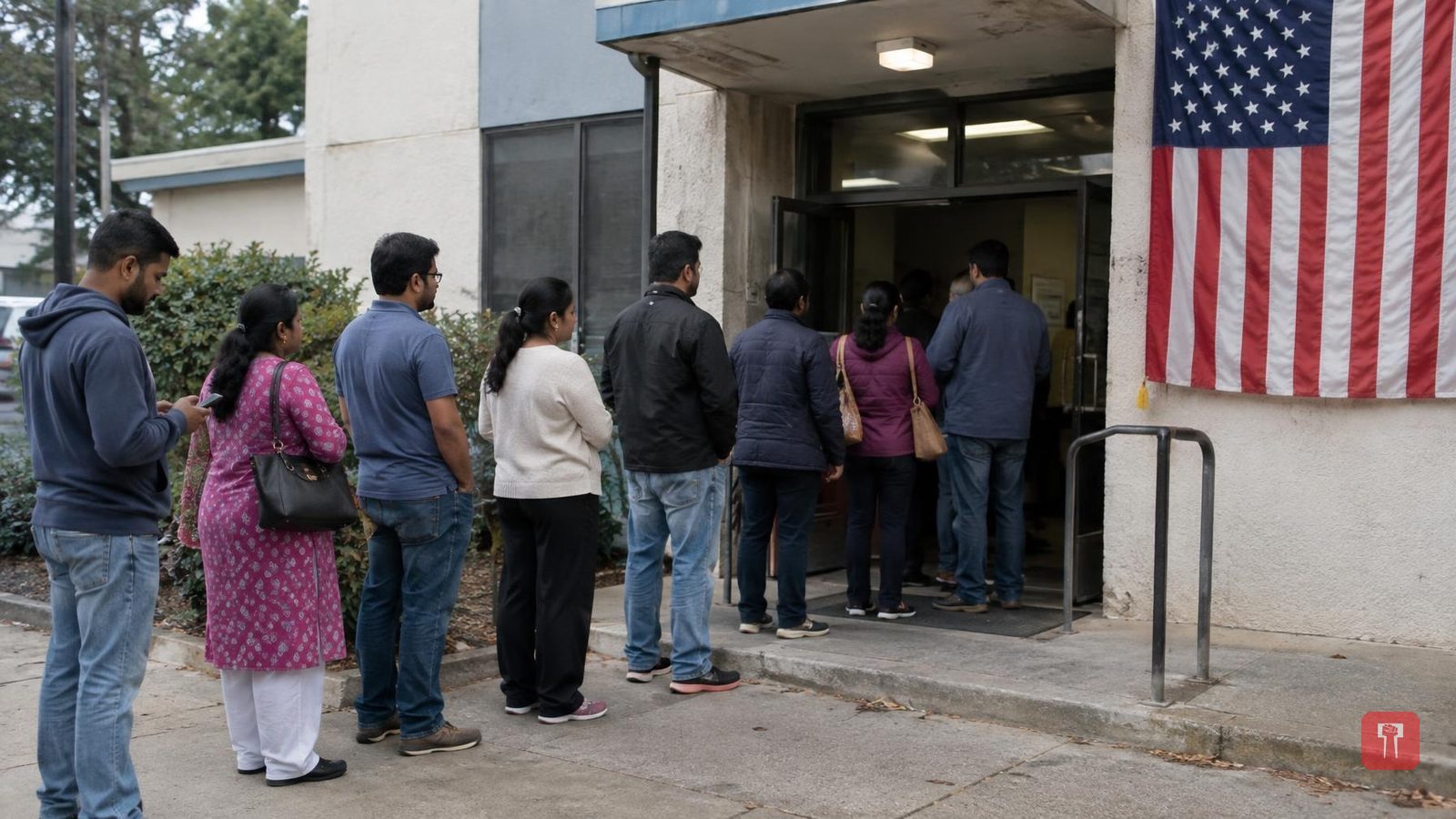 Images are not validated/verified
A fresh controversy has erupted in US politics over the review of voter rolls and citizenship checks. The administration of President Donald Trump has begun a major drive to increase transparency in voter lists and to ensure that only lawful citizens hold the right to vote. There are fears, however, that Indian-origin American citizens will be affected the most.
According to a recent report, about two lakh Indian-origin voters could have their names removed from US voter lists because of the checks. The figures in the report have not yet been officially confirmed, but the news has spread concern among the Indian community in the US.
To verify citizenship, the administration is using a federal government database called SAVE (Systematic Alien Verification for Entitlements). The database helps various government bodies get accurate information on a person's citizenship and immigration status. The administration's main argument is that the checks are essential to prevent irregularities in elections and to keep non-citizens from voting.
The problem, it is said, is that the system has technical flaws and outdated data. Millions of people of Indian origin live legally in the US for years and complete the entire process before taking citizenship. Once they have it, they also vote responsibly. But when someone goes from a green card to US citizenship, government records or the SAVE database are not updated immediately. At times, because of old entries, the system shows such citizens as "aliens" or non-citizens.
Because of such errors or record mismatches, genuine and lawful Indian-American citizens may have to submit additional documents, government certificates and passports to prove their citizenship. If they fail to provide the papers in time, their names could be struck off the voter list directly. The Indian community is not being specifically targeted in this process, but given the large number of immigrants and delays in updating government databases, there is a fear that Indian-Americans could get caught up in the scrutiny in large numbers.
Indian-Americans are described as one of the fastest-growing, best-educated and economically most advanced communities in the US. In several states, especially swing states where results are very close, Indian voters play a decisive role. Historically, about 65 per cent of Indian-American voters are seen as traditional supporters of the Democratic Party. If large numbers of Indian voters are dropped from the lists in the name of verification, the Democratic Party could suffer directly and the Republican Party could gain politically.
Even so, the move could also prove a double-edged sword for Trump's Republican Party. In the past few years, a large section of business owners, professional bodies and highly educated Indian-Americans had been drawn to the Republican Party's economic and tax policies. If the voting rights of lawful citizens remain under threat, sharp resentment against the administration could spread in the community, and it could backfire on the results.
The episode is often compared with the Election Commission's Special Intensive Revision (SIR) process in India. Under SIR, the Election Commission in India runs a drive to remove dead people, voters who have moved elsewhere, duplicate names and ineligible entries, and a single Election Commission handles the whole process at the central level. The US, by contrast, has no single central election commission. Each state has its own election system and its own voter registration rules. Scrutiny of voter lists and citizenship checks therefore become quite tangled and varied from state to state, and reliance on a federal database increases the room for technical errors.
The US is to hold crucial midterm elections in November 2026. All 435 seats of the House of Representatives and 35 key Senate seats will go to the polls. The results are seen as decisive in shaping the policies of the rest of President Trump's term, his ability to pass bills and the direction of his political future.
If the Republican Party loses its majority in Congress, it will become difficult for the Trump administration to implement its economic, immigration and foreign policies. For this reason, the administration is in no mood to leave any stone unturned in the strict scrutiny of voter lists. But if the names of lawful Indian-American voters are struck off in the process, it will raise a big question mark over American democracy and the rights of immigrant communities.
