

Chinese researchers find 11,700 new viruses on Pacific Ocean seabed
The viruses turned up in a metal-rich seabed zone while a Chinese team was surveying minerals, and the team says they pose no direct threat to humans.
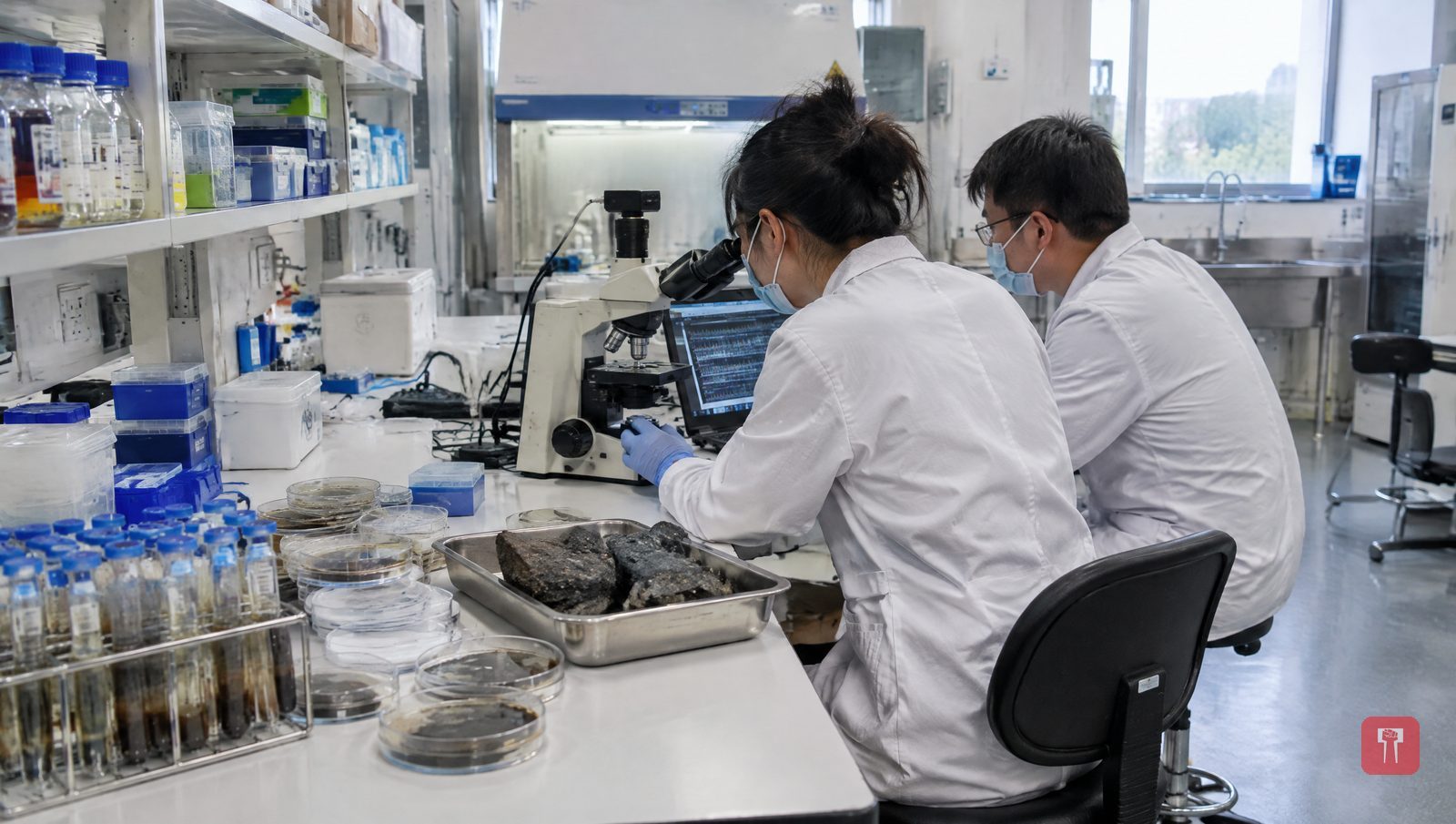 Images are not validated/verified
A team of researchers from China has identified 11,700 new varieties of virus in the very deep seabed of the Pacific Ocean. All of the viruses were found in an area of polymetallic nodules, that is, deposits of metals, lying on the ocean floor. The information has emerged at a preliminary stage.
Interestingly, the team was not looking for viruses at all. The Chinese researchers were examining deposits of precious metals and minerals beneath the sea. While studying these minerals, they suddenly came upon species of these extremely small but very numerous viruses.
When the study of the viruses' genetic structure began, the researchers were themselves taken aback. All 11,700 viruses are genetically very closely related to one another, which means they are considered to belong to a single family or biological class. In microbiology, they all fall in the class Caudoviricetes.
According to the report, these viruses have a sharp, needle-like structure at one end, which has been called a tail structure. With this needle-like structure, the viruses can inject their genetic material directly into the cells of any bacterium.
Laboratory studies showed that these viruses are capable of completely wiping out very important bacteria present in the human body or in the environment. Their method of spreading infection has been described as very aggressive.
Do they pose a direct danger to humans? The Chinese research team has immediately clarified that, under present conditions, the 11,700 viruses pose no direct threat to human health or to ordinary citizens. According to the team, the viruses live thousands of metres below the sea, under very high pressure and in cold temperatures, so the chance of their reaching human settlements is for now almost nil.
However, in the international scientific community, the journal Nature in particular has voiced concern. According to Nature, although these viruses are not attacking humans at present, they can kill bacteria that are useful to the human body or the environment. The journal says that if the viruses mutate in future, or reach the human food chain through marine life, this could become a serious challenge. Nature therefore says China should place all the data from this research before the world in a transparent manner.
China has been accused around the world of hiding, at the start, the seriousness of the threat when the coronavirus emerged from the Wuhan laboratory. The coronavirus that spread from Wuhan in 2019 caused devastation across the world, killed more than 7.1 million people and left crores of people needing hospital treatment. For this reason, the international health organisation and the scientific community have become alert now that news of 11,700 new viruses has come. Experts have warned that billions of such unknown viruses lie buried on the seabed and that, if they come out through human interference, the world may have to face new biological challenges.
