

Chandrapur collector orders flying squads to stop illegal water drawing as deficit rain raises drought fears
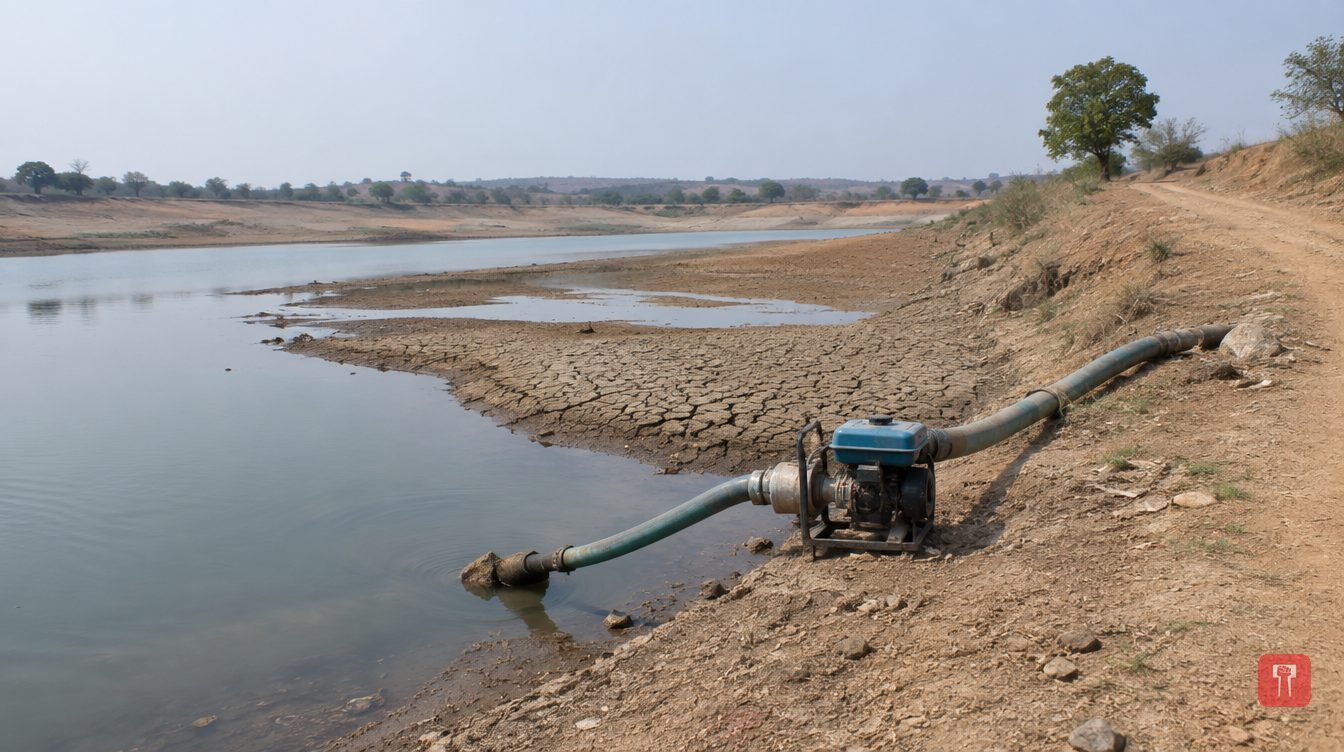
District Collector Vasumana Pant has asked for flying squads in every revenue circle to curb unauthorised drawing of water from reservoirs, rivers and canals.
 Images are not validated/verified
Chandrapur district faces the risk of drought-like conditions because of low rainfall, and the district administration has taken a firm stand to ensure the availability of drinking water. District Collector and chairperson of the District Disaster Management Authority Vasumana Pant has directed that flying squads be formed in every revenue circle to stop unauthorised and indiscriminate drawing of water from reservoirs, rivers, ponds, Kolhapuri-type bandharas, canals and other water sources.
The directions call for regular and surprise inspections, and for a report on action taken to be submitted every Monday. The administration's aim is to conserve the existing water stock and ensure people get enough drinking water.
The directions have raised several questions in the district. People are watching whether the action will remain limited to unauthorised pumps, motors and pipelines, or whether large industrial projects, construction work, commercial water supply and other water-using units will also be checked, and whether the drive will bring relief to ordinary citizens or commercial use of water will continue as before.
Chandrapur is an important industrial district. In view of the low rainfall and likely shortage, a review of water use by large industries, expanding companies, construction projects and other commercial establishments is considered necessary. There is an expectation that the administration will clearly state, for areas where people are struggling for drinking water, the source, quantity and permission under which water is being drawn for industry and commercial work.
Questions are also being raised on whether temporary limits or cuts will be placed on water use in non-essential construction and expansion projects, and whether the departments concerned will examine companies' daily water use, sources of supply, groundwater extraction permissions and arrangements for recycling used water. However, the Collector's available directions do not make clear that all industries or construction have been ordered to shut down automatically. A review of necessary restrictions, based on reservoir levels, the permissions held and the rules in force, will be important for the administration.
Monitoring of sand mining and transport has also been called for, especially of excavation in the Wardha and Painganga river areas and near other water sources. The question is whether the administration will review the condition of sand ghats, mining permissions, environmental conditions and activity in river areas, and whether action will be taken immediately if illegal excavation is found. On the basis of the available order, however, it cannot be said that sand mining has been automatically banned across the district. Any ban must be imposed only in accordance with the rules, environmental conditions and orders of the competent authority.
Inspection of RO plants, packaged drinking water and the tanker business is also being sought. Questions are being asked whether commercial establishments are taking water from the municipal council supply, authorised groundwater sources or another legal source, whether they hold the necessary permissions, whether RO plants comply with groundwater extraction and water quality standards, and where private tankers fill water, whether they have permission and whether records of the quantity supplied are kept. It is also being asked whether the competent authority will regulate commercial use as needed where there is serious drinking water shortage in an area. It would not be right to assume that all RO plants, packaged water industries or tanker services will be directly banned. Action in accordance with the rules is needed, distinguishing legitimate business from illegal water extraction.
Questions also remain over the work of the flying squads. Whether squads have been appointed in every revenue circle, how many water sources have been inspected so far, how many complaints were received, how many unauthorised pumps, motors and pipelines were found, how much equipment was seized and in how many cases further legal action was taken should be made public, so that citizens can understand whether the orders are being implemented. The administration should also spell out a clear complaint mechanism, timelines for action and the responsibilities of departments.
The entire responsibility for water conservation cannot be placed on ordinary citizens alone. Alongside appeals to cut domestic use, there should be an impartial check on the use and permissions of large water consumers. If information on the present condition of water sources, available stock, likely demand and needs in the coming months is made public, people can understand the situation on the basis of facts rather than rumours. In a water crisis, issuing orders is not enough; impartial implementation, transparent action and getting adequate drinking water to ordinary people will be the real test of the administration.
