

CAMIT backs Karjat pumped storage project, seeks funded forest restoration plan
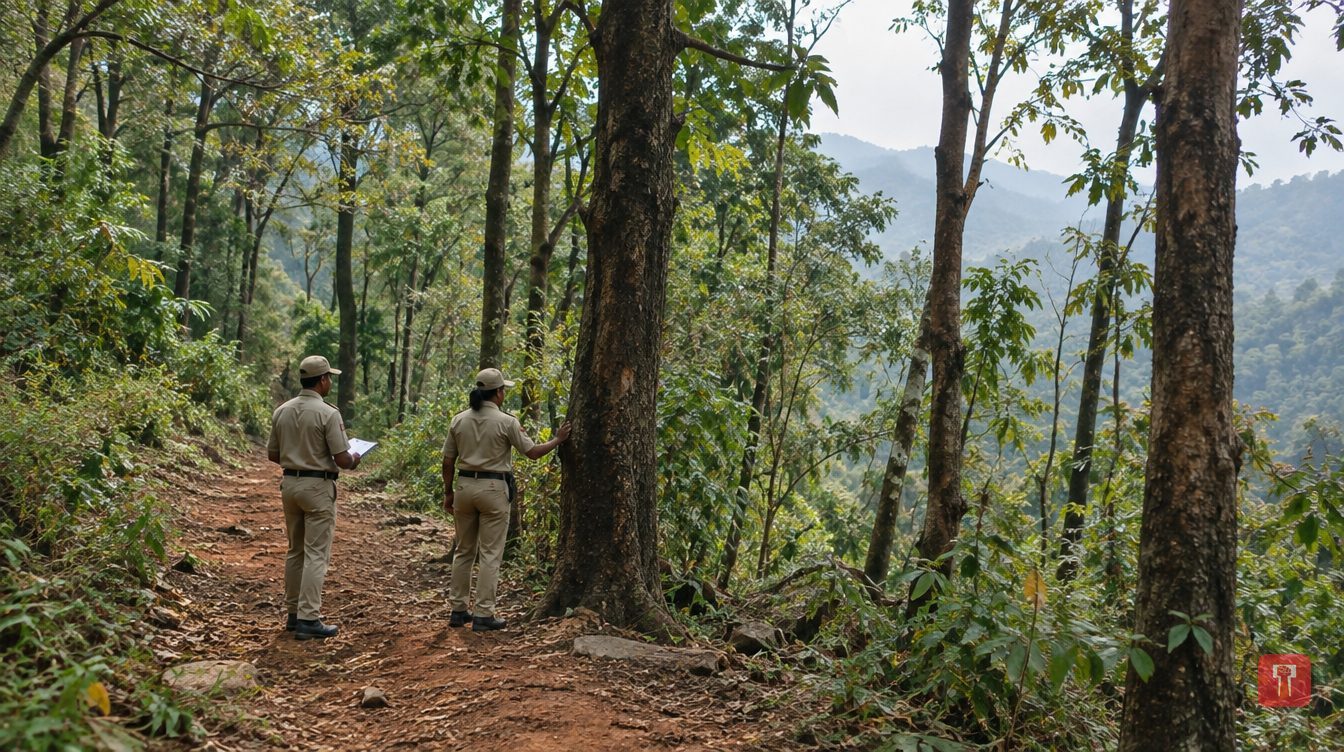 Images are not validated/verified
The Chamber of Associations of Maharashtra Industry and Trade (CAMIT) has put forward its views on Torrent Power's 3,000 MW Saidongar pumped storage hydropower project at Karjat in Raigad district. The proposal to fell 32,490 trees for the project is the subject of a dispute. CAMIT said industrial development and environmental protection are not opposed to each other and must go together.
Dr Dipen Agarwal, president of CAMIT and national vice-president of the Bharatiya Udyog Vyapar Mandal (BUVM), said Maharashtra's growing industrial economy needs reliable power, modern energy infrastructure, fresh investment and jobs. Projects that help integrate renewable energy and add to energy security are essential to strengthen the competitiveness of the state's industries, he said.
"CAMIT strongly supports the implementation of the Karjat hydropower project, because of its strategic importance for Maharashtra's energy security and industrial growth. But development must be matched by an equally strong commitment to protecting our natural resources and environmental heritage," Dr Agarwal said. He said the real question is not whether development should happen but how it is carried out responsibly, and that environmental damage that cannot be avoided should be scientifically assessed, minimised and properly compensated.
Under the government's reported proposal, about 90,000 saplings would be planted as compensation. Dr Agarwal said such an initiative is welcome, but planting saplings alone cannot be an adequate environmental remedy for the loss of old trees and established natural forests. "A natural forest is not just a cluster of trees. It is a complex ecosystem built over decades, which supports biodiversity, wildlife habitats, groundwater recharge, soil conservation and climate balance. Planting new saplings in place of old trees cannot restore these functions immediately," he said. Environmental compensation, he said, should be measured not by the number of saplings planted but by the ecological value restored, the biodiversity saved and long-term outcomes.
CAMIT has suggested that the project developer, in coordination with the Maharashtra government and the forest department, run a scientifically designed, adequately funded and independently monitored environmental protection programme alongside the project. The chamber has made six proposals.
First, conservation of existing natural forests. Instead of relying only on compensatory plantation, the developer should bear the cost of protecting, rejuvenating and conserving over the long term degraded and vulnerable forest areas identified within the same ecological zone, wherever possible. Priority should go to protecting existing forest ecosystems, preventing further degradation and restoring their natural biodiversity.
Second, comprehensive ecological restoration. A scientific programme should be drawn up based on the project's actual environmental impact, covering biodiversity conservation, wildlife habitats and corridors, soil stability, erosion control, catchment area management and restoration of native vegetation.
Third, a dedicated environmental protection fund. CAMIT recommended a separate Environmental Protection and Restoration Fund, financed by the developer and run under a suitable mechanism overseen by the government. It should cover ecological restoration, forest protection, biodiversity monitoring and maintenance for at least 10 to 15 years, with a longer commitment if needed.
Fourth, outcome-linked environmental obligations. Environmental commitments should be tied to measurable results, not just spending or the number of saplings planted. These should include survival and growth of native vegetation, regrowth of forest cover, restoration of wildlife habitats, soil and water conservation outcomes and improvement in biodiversity. Independent third-party assessments should be held periodically and reports made public.
Fifth, defined responsibilities for the company and the forest department. The developer should bear the cost and carry out the prescribed environmental relief and restoration. The state government and the Maharashtra forest department should identify suitable conservation areas, approve scientific restoration plans, independently monitor implementation and strictly enforce environmental commitments. Clear accountability, enforceable milestones and corrective action for non-compliance should also be part of the framework.
Sixth, participation of local communities. Local people, especially those who depend on forest resources, should be actively involved in conservation, protection and monitoring. This would create sustainable livelihood opportunities and also strengthen the community's own sense of ownership in protecting the environment.
Dr Agarwal said CAMIT has written to Chief Minister Devendra Fadnavis. The letter backs this strategically important energy project and urges the state government to adopt a broader, outcome-based approach to environmental responsibility. The chamber has asked the government to consider including the proposed conservation framework in the project's environmental conditions, with the responsibilities of the developer and the forest department clearly defined. It also suggested that the framework be drawn up in consultation with qualified environmental and ecological experts, so that restoration measures are scientifically sound, independently verifiable and sustainable.
"We believe that under Chief Minister Devendra Fadnavis's progressive leadership, Maharashtra can create a model where large infrastructure projects contribute not only to economic growth but also to measurable, long-term ecological conservation," Dr Agarwal said.
He reiterated that trade and industry are committed to supporting the government's vision of attracting investment, building infrastructure, creating jobs and making Maharashtra a leading industrial power. But protecting the environment should not be treated as a mere legal formality or an exercise in compensatory planting, he said. "Industry needs power, investment needs infrastructure and society needs jobs. Equally, every citizen needs clean air, water, biodiversity and a healthy environment. These are complementary needs, not conflicting priorities," he said.
He concluded: "Let the project go ahead, let industry thrive and jobs grow, but let us also ensure that nature is protected through meaningful, measurable and sustainable conservation efforts. True development is not only the prosperity we build today, but also the natural heritage we保 save for tomorrow."
Reach readers on the ward they actually live in.
Advertise with Prime Time 24Reach readers on the ward they actually live in.
Advertise with Prime Time 24Reach readers on the ward they actually live in.
Advertise with Prime Time 24
Comments
No comments yet. Be the first.