

Caller's registered name to appear on phone screens as CNAP service starts from November 1
 Images are not validated/verified
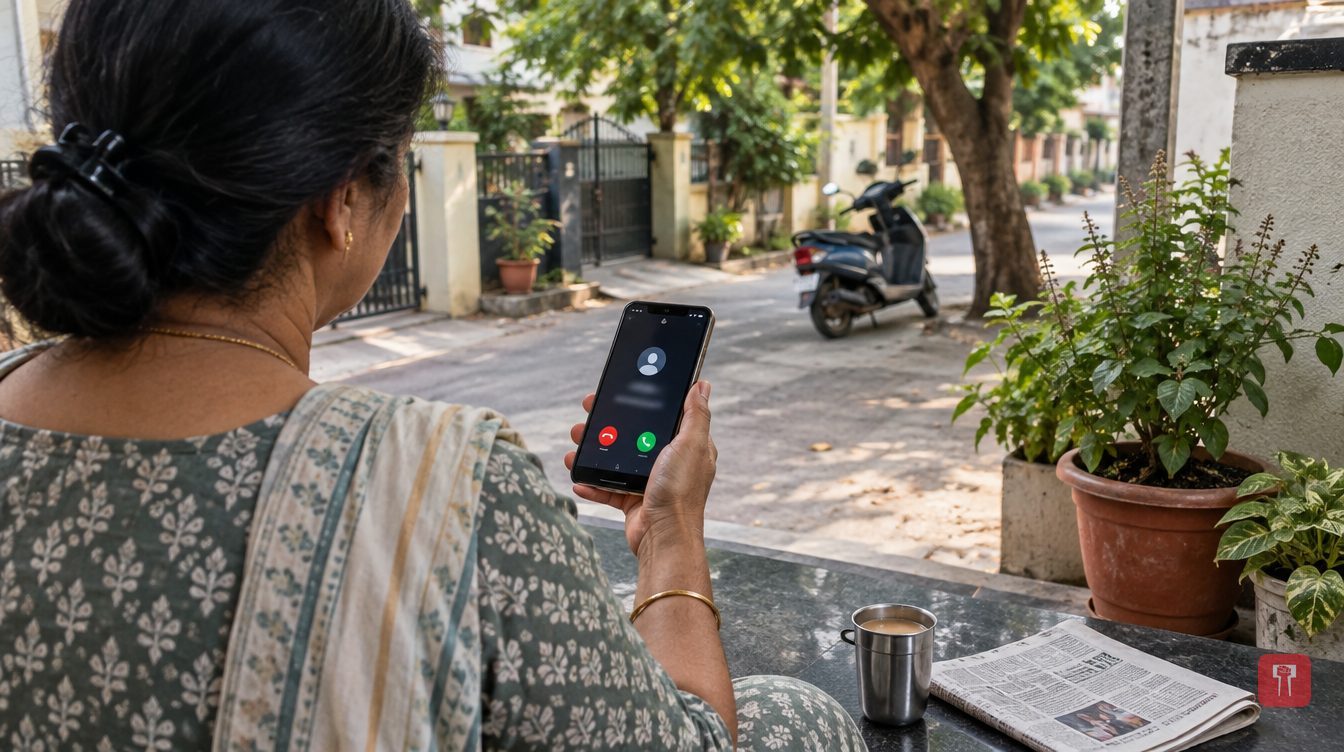
The Department of Telecommunications has told operators to start Calling Name Presentation from November 1, 2026, initially on 4G and newer networks.
Mobile users across India can now expect to see the name of an unknown caller on their phone screen, with no extra app needed. The Department of Telecommunications (DoT) has directed all telecom service providers to begin the Calling Name Presentation (CNAP) service from November 1, 2026. Reports say the rule has come into force on that date. How widely it works in practice, and under what conditions, is still to be seen, and a nationwide switch-on for every user should not be taken as settled without an official announcement from the DoT.
Until now, people unsure about a call from an unfamiliar number have relied on third-party apps such as Truecaller, or searched for the number online. CNAP changes the source of the information. The name shown will come from the subscriber records that telecom companies hold, namely the name registered when the SIM card was issued and the KYC was completed. Apps like Truecaller often depend on details supplied by their users, so the name displayed by an app and the name shown by CNAP can differ. Some observers are asking whether Truecaller will become redundant. Dependence on such apps for basic name identification may fall, since CNAP does not draw on crowd-sourced data.
The service will work in a few set ways. If the caller's number is already saved in your contacts, your phone will keep showing the name you saved. If the number is not saved and the call comes from within India, the name in the telecom company's records will appear along with the number. If the call is from an unknown international number, the screen will show "International Call" instead of a name.
At the start, CNAP is meant for 4G and newer networks, which includes 5G. Whether it will extend to 2G, 3G and landline connections will be considered separately. Users need not download anything or apply for it, because telecom companies must provide it automatically under the DoT directive. Even so, the early phase may be uneven, as the experience can vary with network availability and how each operator has implemented the system.
Behind the screen, operators will keep a database linking customers' mobile numbers to their registered names. When a call arrives, the name will be fetched from the relevant network through a query and response and shown to the person receiving the call. It is expected that the name obtained this way will not be stored anywhere once the call ends.
The DoT has outlined some privacy safeguards. Customers who have opted for the Calling Line Identification Restriction (CLIR) facility will not have their names displayed. That does not mean every kind of data is completely secure, and users should not read it that way.
Businesses and bulk connections may also be able to show their registered business name or trademark, provided they meet certain conditions. The necessary documents, including records of the trademark registry or the GST portal, will be checked. Business users should hand the operator the required papers if they want the registered business name to appear.
There are practical points for ordinary users too. If a SIM is still in an old name, or in the name of another family member, that registered name is what the person receiving the call will see. Anyone who finds a wrong name showing should contact their telecom service provider and verify the KYC details.
The main caution is that a name on the screen is not a certificate of safety. Fraudsters can reach people through other routes, and they can also deceive victims using genuine or hacked mobile connections. People should never share an OTP, bank details or a password with anyone, whatever the screen shows. The facility is meant to make it easier to identify callers and to curb spam calls, impersonation and phone fraud. But it does not automatically block spam or fraud calls. For crores of mobile users, the change means knowing a delivery executive, a business representative, a service provider or a stranger before picking up, but care is still needed with every unknown call.
Reach readers on the ward they actually live in.
Advertise with Prime Time 24Reach readers on the ward they actually live in.
Advertise with Prime Time 24Reach readers on the ward they actually live in.
Advertise with Prime Time 24
Comments
No comments yet. Be the first.