

Asthma or COPD? You cannot tell without a test, say doctors
Cough and breathlessness could mean asthma or COPD, and doctors say only proper tests can tell the two apart
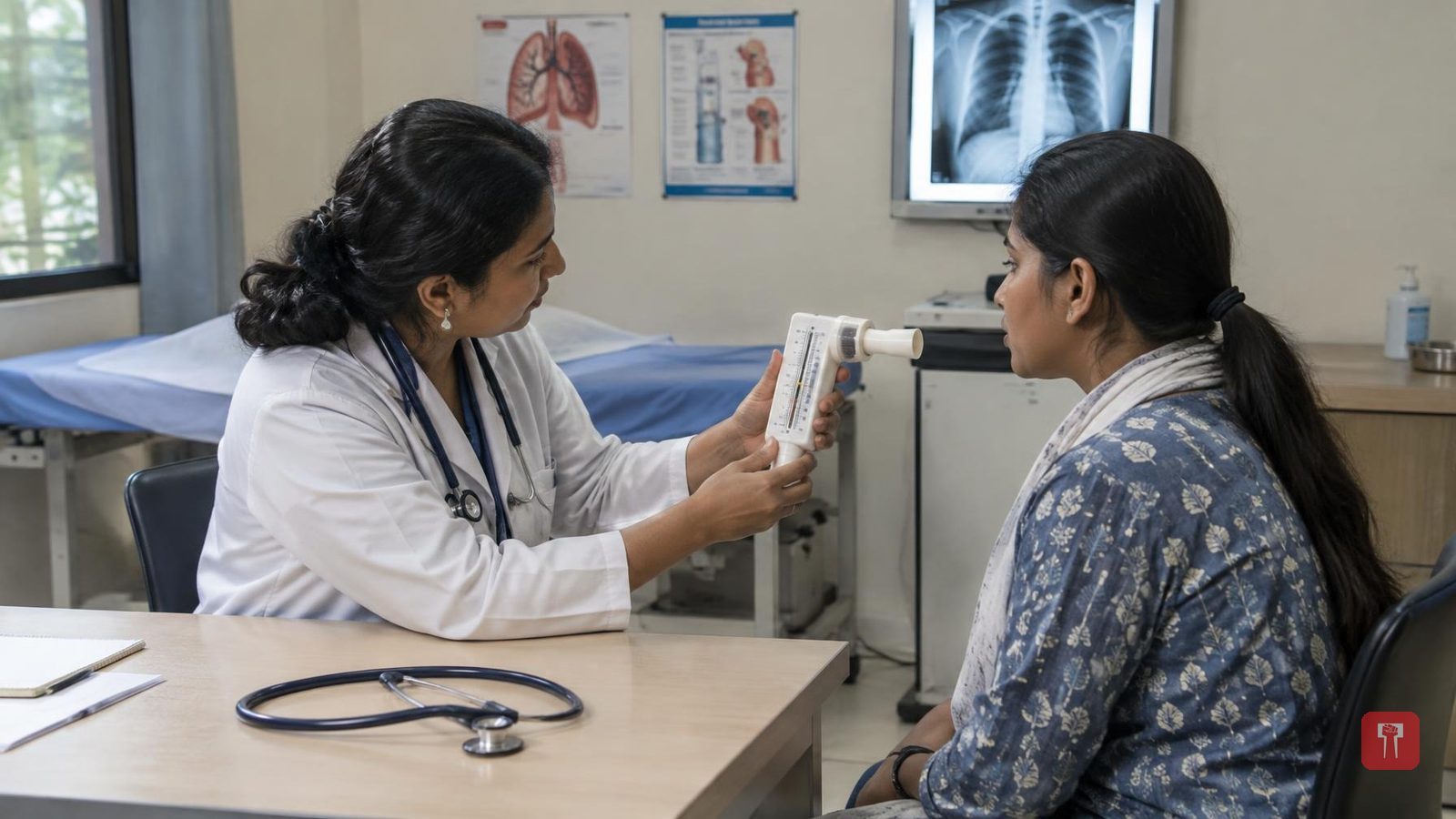
Cough, breathlessness and wheezing in the chest lead most people to assume they have asthma. But doctors say that is not always right. The same symptoms can point to another condition called COPD (Chronic Obstructive Pulmonary Disease). The two conditions look similar but are quite different underneath, which is where most people get confused. Dr Geeta Chopra, a senior official at Metropolis Healthcare, has explained the key facts.
According to Dr Chopra, asthma and COPD together are the second leading cause of death in India, accounting for about 10.9 percent of all deaths. Outdoor pollution, indoor smoke, cigarette and tobacco smoke, and past infections are cited as the main causes. Because pollution levels are high in India, these diseases are also seen more often. The risk of death from these conditions is even higher among the elderly.
Explaining what actually happens in both conditions, it was said that the airways become inflamed. The muscles around the airways contract, narrowing the passage and preventing air from moving in and out properly. During an attack, more mucus builds up inside, making breathing even harder.
Explaining the difference between asthma and COPD, it was said that asthma can start even at a young age, and is seen even in small children, while COPD usually begins after the age of 40. Asthma symptoms vary through the day, sometimes feeling fine and sometimes worsening at night or in the morning. Exposure to dust, cold, exercise or stress can worsen asthma, while the lungs work completely normally when there is no flare-up. If one family member has asthma, other members are also at risk of developing it, and most importantly, an inhaler brings immediate relief.
This is not the case with COPD. Its symptoms remain constant and do not fully ease even after medication. Breathlessness sets in after walking a little or climbing stairs, along with persistent cough and mucus. The condition worsens gradually rather than easing, and an inhaler provides only partial, not complete, relief.
Wheezing in the chest alone cannot confirm whether it is asthma or COPD, for which doctors carry out tests. Doctors first examine the chest with a stethoscope to check for wheezing sounds. This is followed by a chest X-ray, which shows whether there is pneumonia, tuberculosis or cancer. In some cases, a CT scan is also needed to determine the exact problem, whether it is an infection or a growth.
After this, a Lung Function Test is carried out to check how well the lungs are working. This uses a small device called a Peak Flow Meter, into which the patient is asked to blow. This shows how strongly the lungs are functioning. Several new lab tests are also now available. Blood and sputum tests are done to check for tuberculosis or other infections, using TB-PCR and culture tests. Tests also reveal what triggers allergies in asthma, whether dust, pollution or something else, so that trigger can then be avoided. In some difficult cases, a biopsy is also required, where a small tissue sample is removed and examined.
According to Dr Chopra, if the correct diagnosis is made in time, treatment can begin early. In asthma, once the allergy trigger is identified, it can be avoided, while in COPD, if there is an infection, medication can be started quickly. Persistent cough or breathlessness should therefore not be ignored as minor, and a doctor should be consulted for proper tests, because without testing, there is no way to know whether it is asthma, COPD or something else.
