

Bank unions call three-day nationwide strike from September 28 to 30
Bank unions have called a three-day nationwide strike from September 28 to 30 over a five-day work week and pension demands.
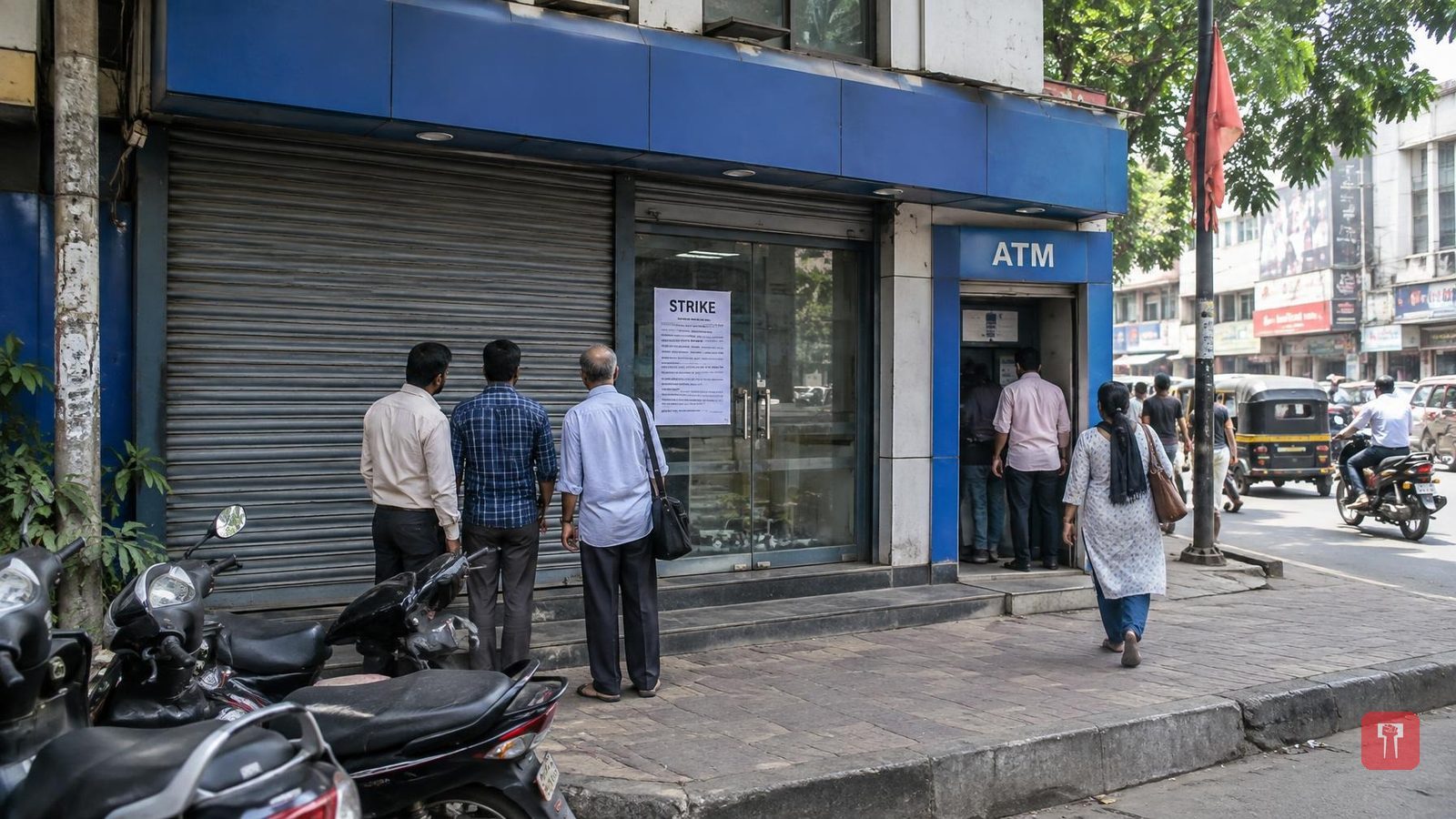
India's banking sector is set for a major disruption as bank employees have announced a three-day nationwide strike from September 28 to 30. To ensure customers do not face difficulty with banking work staying shut for five straight days, banks kept functioning on Sunday. Banks had earlier been closed for the fourth Saturday of September.
The strike starting tomorrow is expected to affect essential banking services such as cheque clearance and cash withdrawals and deposits. The impact will be felt most at government banks, older private banks and regional rural banks.
However, even as physical banking work remains shut, digital banking and other online services will continue to run as usual. Branches of newer private banks such as ICICI Bank, HDFC Bank and Axis Bank will remain open as usual during the strike.
Most government banks have already informed their customers about the strike through various channels. SBI has clearly stated that it will try to provide as many services as possible at its branches and offices during the strike. However, some services may still be affected, so SBI has appealed to customers to use ATMs for cash withdrawals, cash deposit machines for deposits, and digital options such as internet banking, mobile banking and UPI for other transactions. Employees had earlier held a nationwide strike on September 11 as well.
The strike has been called by the United Forum of Bank Unions (UFBU), the central body of seven unions of bank employees and officers. UFBU has warned that if the central government does not accept their demands, an indefinite strike will begin from October 26.
The biggest demand from employees is a five-day work week. Union leaders say the government gave no firm assurance on the five-day week during talks with the Chief Labour Commissioner. Other demands include improving pension benefits, implementing a uniform dearness allowance (DA) policy for all pensioners, and giving employees under the National Pension System (NPS) the option to return to the Old Pension Scheme (OPS).
AIBOC general secretary Rupam Roy said the union was forced to choose the path of a strike because of the stubborn policy of the government and management. NCBE general secretary L. Chandrasekhar said a five-day week is already in place at central and state government offices and institutions such as the RBI, LIC, GIC and NABARD. He said even the stock market, currency market and foreign exchange market operate only five days a week, so there was no reason the same rule could not apply to banks.
The finance ministry has appealed to bank employees not to take the path of a strike and to resolve the issue through talks. The ministry also recalled that the PLI scheme had been withdrawn earlier this month after lengthy discussions.
This story has published but the live thread has not started. Updates appear here the moment the desk files one.
