

Repair Cafe collective urges people to mend before they throw away, from Bengaluru to Pune
The Repair Cafe Collective India, which began in Bengaluru in 2015, now backs repair initiatives across the country, including in Pune.
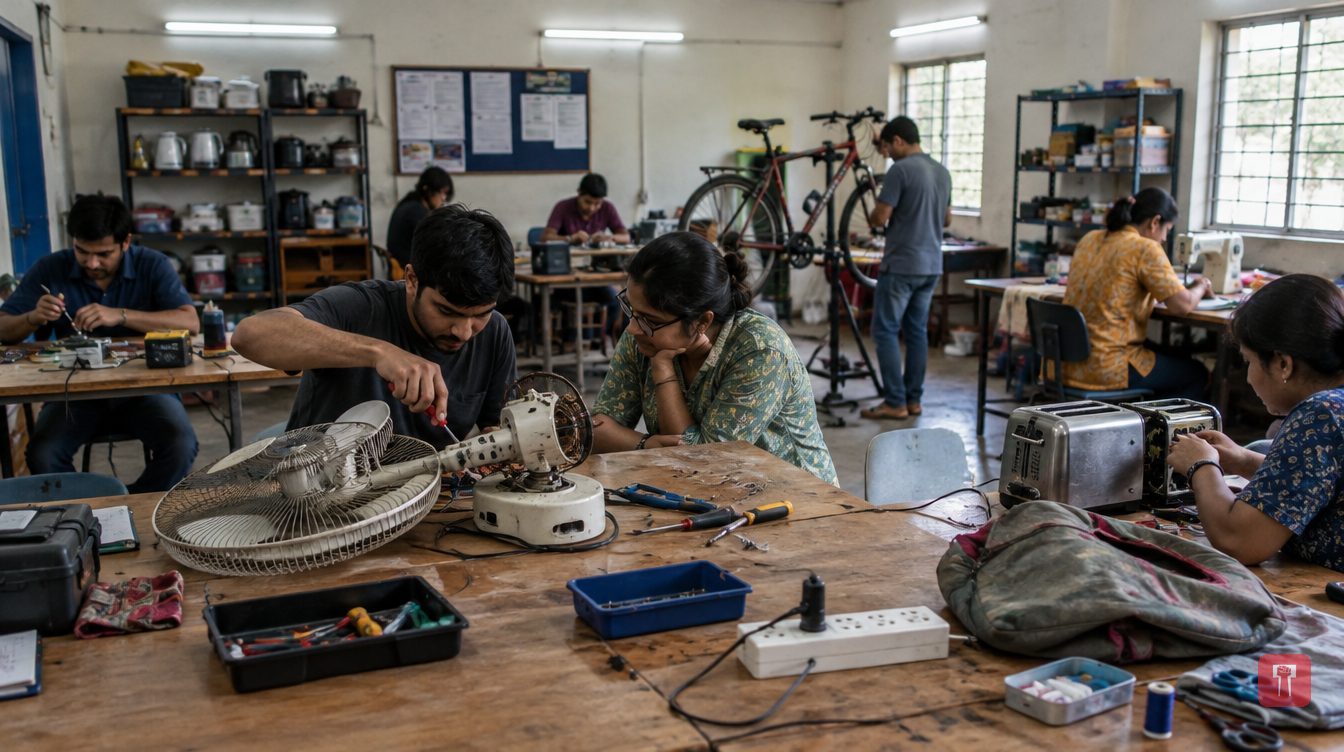 Images are not validated/verified
Pune, October 27, 2026: When something breaks these days, people often buy a new one instead of getting it fixed. A community-based campaign is trying to change that habit. Its message is simple: before throwing anything away, check whether it can be repaired.
The Repair Cafe Collective India brings together volunteers, professional repairers, teachers, makers and local residents. Its aim is to promote repair, reuse, maintenance and the learning of useful skills. It began in 2015 as Repair Cafe Bengaluru and has grown into a larger collective supporting repair initiatives across India.
Purna Sarkar, founder of Repair Cafe Bengaluru, and co-founder Himadri Das, along with Babajan Sajjan, founder of the Pune-based organisation Erepair, are part of the effort to spread repair knowledge to more people and make everyday objects last longer. The collective holds that repair is not just about getting an object working again. It also helps people understand how things work, reduces waste and raises appreciation for the skills involved.
According to Purna Sarkar, the approach is to create spaces where people can learn to fix everyday items rather than discard them at once. Repair cafes are essentially community workshops. People bring broken household items and work out solutions with volunteers and professional repairers. Depending on the workshop, these can include electronics, clothes, bicycles and other common items.
The emphasis is on participation and learning, not simply handing over an item. Once people understand what is wrong and how it can be fixed, they can look after their other belongings as well. The collective also accepts that not every repair can be done by oneself. Some items need specialised knowledge or professional help. Its larger aim is to help people understand what repair makes possible, so that they decide wisely before throwing something away.
Repair Cafe Bengaluru has held workshops in schools, cafes, garages, parks and other shared spaces, relying largely on volunteers. According to figures cited by the initiative, it had organised more than 50 repair workshops by 2023. Earlier reporting also records that by 2019 around 40 pop-up events had kept more than 4,500 kg of material out of landfills.
These figures show that community repair can help reduce waste. Extending the life of an item delays new purchases and can also save the resources needed to make new goods. Himadri Das is part of this wider effort to make repair a shared learning experience. The impact is not limited to the count of items fixed; people learn new skills and connect with experienced repairers.
For children, the collective runs an educational programme called TinkerKinder, which introduces them to repair, maintenance, tinkering and problem-solving. Children use tools themselves, learn how everyday objects work and gain confidence in tackling difficulties. In the collective's educational approach, children can see a broken object as a chance to examine and experiment rather than as something useless.
India has an old repair economy, run by skilled people such as neighbourhood electricians, tailors, cobblers, bicycle mechanics and appliance technicians. But finding the right repairer can sometimes be hard, especially when local shops are not easy to spot. Repair mapping and community initiatives can make these services visible. Babajan Sajjan, founder of Erepair in Pune, is involved in the collective's efforts to strengthen ties between communities and repair services in this way.
Repair walks and mapping create a record of the local repair ecosystem, while online groups let people seek and give advice. In training programmes and workshops, professional repairers, volunteers and learners sit together. Repair is therefore not only an environmental matter; it also supports local livelihoods.
What began with Repair Cafe Bengaluru has inspired repair-related activities in cities such as Hyderabad, Mumbai and Chennai. The collective's public resources also mention communities and activities in Ahmedabad, Delhi and Pune. The model can adapt to local needs. In some places the focus may be on electronics and household appliances, in others on clothes, bicycles or basic home maintenance. Instead of one central venue, volunteers, skilled people and those keen to learn can come together in existing spaces.
The benefits of repair go beyond cutting waste. When things last longer, households save unnecessary spending, resources are conserved and local repair work keeps going. There is also a cultural side: when people get used to replacing an item at the first fault, they lose the skill of looking after it. These repair initiatives want to reverse that trend by building curiosity, practical learning and respect for skilled work.
Not every item can be repaired, or repaired economically, and some things can be unsafe to fix without professional help. Even so, making repair a more visible option lets people check whether an item can be mended before throwing it away. Shared repair spaces give communities a chance to exchange information and work together.
The Repair Cafe Collective India's long-term vision is for repair to become a normal part of everyday life, with repair knowledge, skilled people and hands-on learning opportunities in every neighbourhood. The challenge for Sarkar, Das, Sajjan and the wider network of repair advocates is to make repair a natural choice in a society where buying something new often seems easier than getting it fixed.
A repaired appliance, a stitched garment or a bicycle made roadworthy again may seem a small achievement. Together, though, such steps can reduce waste, support the local repair economy and preserve practical knowledge. In the end, the campaign is about more than mending broken things. It is about changing people's relationship with their belongings. Repair is not just fixing things; it is building a culture of care.

Comments
No comments yet. Be the first.