

Mumbai Parliament of Religions at Marine Lines discusses courage to live together
 Images are not validated/verified
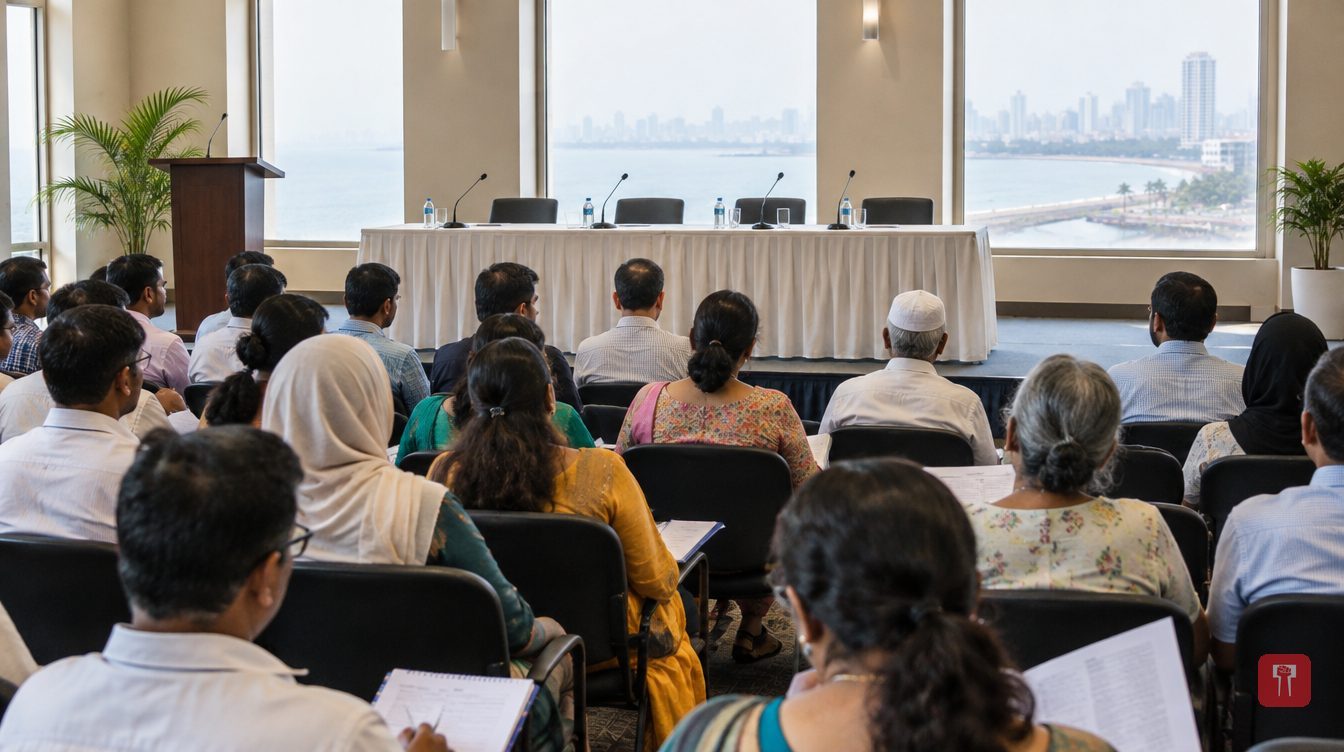
The Mumbai Parliament of Religions 2026, held at the Baha'i Centre on October 31, discussed polarisation, prejudice and the courage needed to live together.
The Mumbai Parliament of Religions 2026 was held on October 31 at the Baha'i Centre in Marine Lines. It was organised by the Inter-Religious Solidarity Council (IRSC) in collaboration with the Centre for Study of Society and Secularism (CSSS). The theme was "the courage to live together". Scholars, representatives of civil society organisations, religious leaders and ordinary citizens took part.
The conference came at a time of growing divisions in society. Participants discussed the difficulties arising from religious polarisation, prejudice, social fragmentation and mutual distrust. The expert speakers did not stop at dialogue and turned the discussion to what can be done for coexistence, dignity and social justice.
IRSC convener Prabhuji Keshav Chandra Das said that living together requires "the courage to stand up for one another's dignity while respecting the different beliefs and paths of different religions". He said this can be achieved through inter-religious dialogue. IRSC co-convener and CSSS director Irfan Engineer said, "Religious institutions must put their influence and their resources to work to solve the common social problems facing everyone."
Urmi Chanda, who is known as a "peacebuilder", referred to Swami Vivekananda's historic speech at the World's Parliament of Religions in Chicago in 1893. She recalled that its message of acceptance of religions endures today. Philosophy scholar Prof Pradeep Gokhale said that an approach "that looks at religion with the human being at the centre, and recognises the valid place of various religious and, importantly, secular views of life" is useful for the goal of unity. Gokhale also stressed that where religious traditions sustain patriarchy or exclusion, they must be critically examined.
After these speeches, the first panel discussed "Religious polarisation in public life". IRSC co-convener Rukmini Iyer moderated. The speakers were Dr Astrid Lobo Gajiwala, Prof Krishna Abhishek Ghosh, Prof Zarin Shafi, Chintan Girish Modi, Tahirih Makhija and Saba Khan. The discussion did not shy away from asking and speaking about uncomfortable questions.
Gajiwala called for a move from tolerance to acceptance. "Support inter-faith marriages and recognise those who voice differences within religious communities as potential agents of change," she said. Modi said, "You must have the courage to confront the prejudices that exist in your own family and community." Makhija stressed that "unity does not require uniformity", while Khan said that "meaningful dialogue can bring discomfort and may require challenging everyday bigotry."
At the end, a member of the IRSC core committee said, "Change begins with an exchange of ideas. First there must be dialogue and a readiness to listen and understand, and then action. Prejudices are deeply rooted and keep getting reinforced in many ways, so we are aware that this is not a one-time effort."
Reach readers on the ward they actually live in.
Advertise with Prime Time 24Reach readers on the ward they actually live in.
Advertise with Prime Time 24Reach readers on the ward they actually live in.
Advertise with Prime Time 24
Comments
No comments yet. Be the first.