

Bombay HC orders Maharashtra to appoint Shilpa Sonawane English lecturer after 12-year wait
 Images are not validated/verified
The high court said the state arbitrarily denied her a post reserved for a Scheduled Caste woman by counting two open-category women against reserved vacancies.
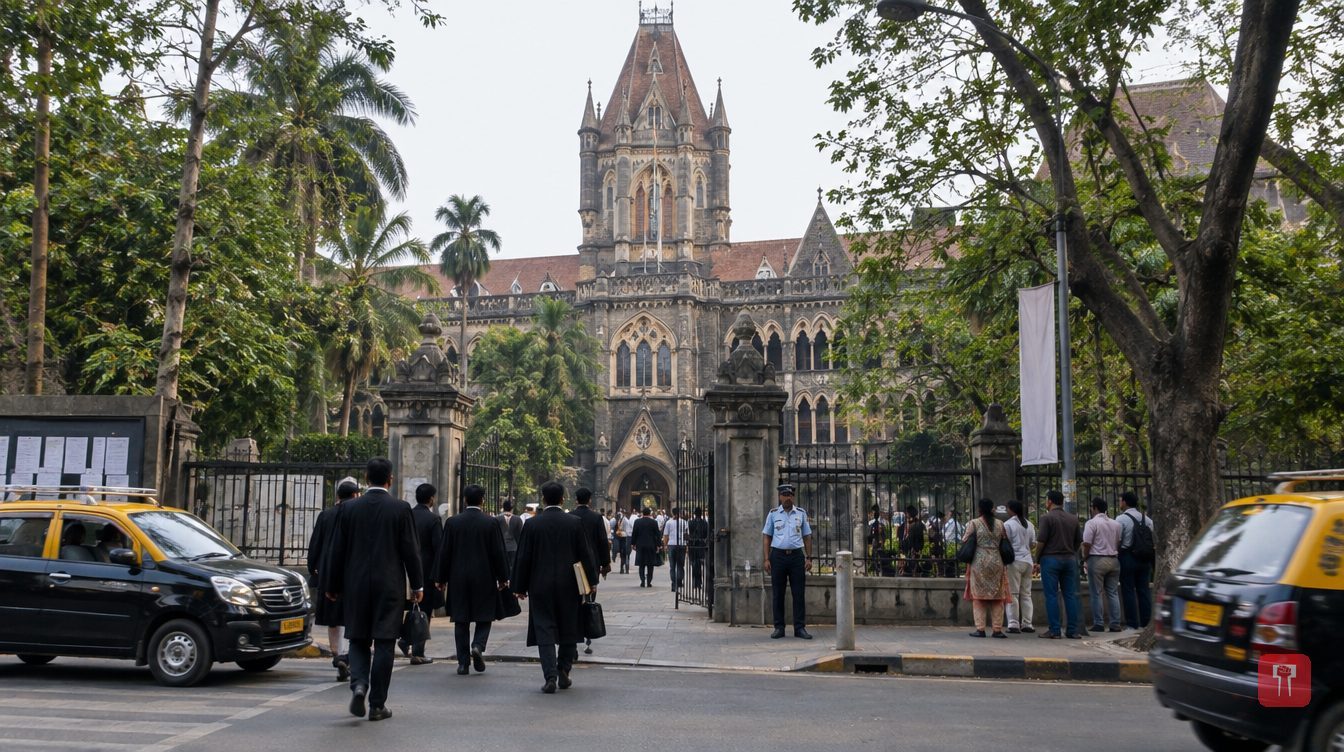
The Bombay High Court has directed the Maharashtra government to appoint Shilpa Maruti Sonawane as a lecturer in English. The ruling comes after a 12-year wait. The court said she was arbitrarily denied a post meant for a Scheduled Caste woman because two open-category women had been appointed against reserved posts.
A division bench of Justice Suman Shyam and Justice Gautam A. Ankhad modified a 2023 order of the Maharashtra Administrative Tribunal (MAT), which had refused to direct her appointment. According to the high court, the state must appoint her at any available place in Maharashtra within three months of the judgment being uploaded. If no post is vacant, a supernumerary post must be created. The appointment will take effect from a future date, and she will get no back wages or benefits because she did not work.
In July 2013, the MPSC advertised 92 Group A lecturer posts in four subjects. Sonawane cleared the written test and interview for the English post in the Scheduled Caste woman category, and her name was recommended in July 2014. She ranked second among Scheduled Caste women but was still not appointed. The high court found that two open-category women had been counted against reserved vacancies. The state could not explain why, nor say what was lacking in Sonawane's eligibility.
The state argued in court that 66 contractual English lecturers had been regularised and 26 posts remained. According to it, five Scheduled Caste posts were filled on merit. The state cited a 2025 resolution that reduced the sanctioned posts to 51, leaving 37 lecturers in excess. It also said an MPSC recommendation does not guarantee appointment. The high court rejected these arguments and said later staffing changes cannot justify the earlier oversight.
The court cited the Supreme Court's judgments in R.K. Sabharwal (1995) and Ritesh R. Sah (1996). Under these, candidates selected on open merit must be counted against open posts, not reserved posts. The high court said adjusting two open-category women against vacancies for Scheduled Caste women was illegal and arbitrary, and violated Sonawane's constitutional right to equality.
Sonawane, who lives in Kalyan and holds an MA in English, said: "This order is a good first step, but it is not complete justice. My post existed 12 years ago, but the government unlawfully appointed someone else in my place. The enormous financial and career loss I suffered in these 12 years can never be made up." She said she stayed unmarried because of the uncertainty. She could not get a private job either, because institutions feared she would leave as soon as a government appointment came.
According to Sonawane, had she been appointed in 2014, she would be earning more than Rs 1.5 lakh a month today. She said there was hardship at home too: her father is retired, her mother is a homemaker and her younger siblings are still studying. She said 58 candidates had approached the MAT, of whom 17 were appointed, 40 were left out and one withdrew the petition. She was the only one to challenge the tribunal's decision in the high court. She now hopes the government will issue the appointment order within three months.
MPSC secretary Saurabh Katiyar and Additional Government Pleader N.C. Walimbe, who appeared for the state, were contacted for comment. Neither had responded by the time this report was written.
Rajeshwar Panchal, the lawyer who argued for the candidates before the MAT, said: "I fought the case of the unfortunate candidates, including Sonawane, who were not given appointments as English lecturers in government polytechnics despite MPSC recommendations. The state's position was that there was no vacancy. We had asked the tribunal to direct the creation of supernumerary posts, but it only expressed sympathy and left the matter to a possible policy decision by the government. I am glad that she finally got justice. However, had back wages and benefits been granted, it would have sent a strong message that the judiciary will not tolerate such clear administrative errors."
Siddh Vidya, the lawyer who argued for Sonawane in the high court, said: "In the Ambadas Dawale case, the high court allowed the absorption of contractual lecturers only on the clear understanding that candidates selected through the MPSC would not suffer. Yet the state did the opposite. Giving my client's Scheduled Caste woman seat to an open-merit candidate amounts to reversing reservation. Open-merit selections cannot eat into reserved seats. Reservation is a floor, not a ceiling. After a decade of chasing justice, the Bombay High Court has corrected the wrong. Even so, the salary, seniority and promotion that were wrongly taken from her should be given to her."
Reach readers on the ward they actually live in.
Advertise with Prime Time 24Reach readers on the ward they actually live in.
Advertise with Prime Time 24Reach readers on the ward they actually live in.
Advertise with Prime Time 24
Comments
No comments yet. Be the first.