

Heart travels Mulund to Parel in 25 minutes on green corridor; 17-year-old gets transplant
A donor heart covered 23.9 km via a green corridor on October 6 for the first heart transplant at Bai Jerbai Wadia Hospital for Children, performed on a 17-year-old.
 Images are not validated/verified
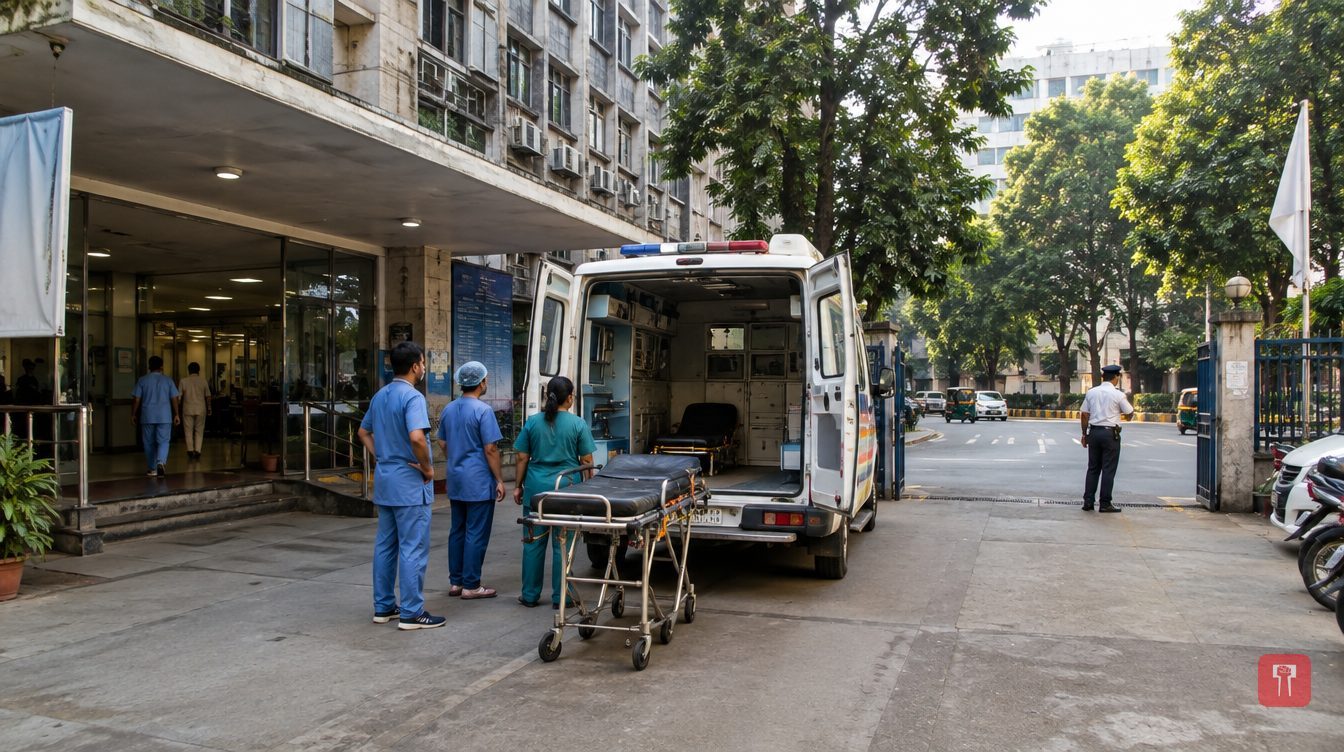
Mumbai's Mulund and Parel are about 24 km apart. On October 6, a donor heart covered this 23.9 km stretch from Mulund to Parel in just 25 minutes through a green corridor. A green corridor is a specially designated, traffic-free route along which an emergency vehicle carries an organ from the donor hospital to the recipient's hospital without stopping.
The heart reached the Bai Jerbai Wadia Hospital for Children in Parel. The hospital performed its first heart transplant on October 6. The patient was a teenager with dilated cardiomyopathy and severe heart failure.
The operation was performed by a team led by paediatric heart surgeon Dr Biswa Panda. The patient is 17-year-old Tanmay Shinde, a resident of Ghansoli in Navi Mumbai. His condition worsened after he consulted several hospitals late last year. On December 15, 2025, he was brought to Wadia Hospital in a serious condition for further tests and specialised heart treatment.
Dr Panda said, "Tanmay was found to have dilated cardiomyopathy. In this, the heart muscle becomes enlarged and weak, so it cannot pump blood properly, leading to heart failure. With intensive treatment and medicines, his heart function improved for some time and he was discharged on January 28 this year." But that was not the end of it. Even after returning home, Tanmay remained weak and had to visit the hospital repeatedly for treatment and tests, and was admitted several times.
As his heart function remained very poor, a transplant was advised. His name was entered on the transplant waiting list through the Zonal Transplant Coordination Centre (ZTCC), and the family waited for a suitable donor heart.
On October 6, the team learnt of a donor heart at Fortis Hospital in Mulund. It belonged to a 22-year-old brain-dead man whose family had consented to organ donation.
Dr Panda said, "A heart transplant needs precise coordination, because once removed, the heart has to be implanted within a limited time. After it is taken out of the donor's body, it has to be handled carefully and delivered immediately, as delay can affect its function. The heart reached us in 25 minutes."
While the donor heart was being removed and transported, the recipient team prepared Tanmay for the operation. Dr Panda further said, "The donor and recipient teams worked together. From the time the donor's heart stopped to the time the transplanted heart began beating in Tanmay's body, it took about three hours in all. His condition had deteriorated considerably, and without timely treatment there was a risk of multiple organ failure. This success shows how important it is for an organ to be available in time, to be delivered in a coordinated manner, and to have specialised heart care for children."
After the operation, Tanmay was kept in the ICU for seven days. He has now been shifted to a ward. He will have to take immunosuppressive medicines for life to reduce the risk of his body rejecting the organ. He will need regular check-ups and must guard against infection, and may have to be isolated if necessary.
Tanmay's father, Ashok Shinde, is a conductor on a BEST bus, and his mother, Sujata, is a homemaker. The family's income is limited, so the cost of the transplant was met through some savings, help from various trusts, the sale of some land and crowdfunding. The total cost was about Rs 20 lakh. His parents said, "Our son was studying in Class 12 at a college in Navi Mumbai when dilated cardiomyopathy was diagnosed. It was a huge shock for our family."
His mother Sujata, who was with Tanmay at the hospital yesterday, said, "I am very happy to see my son well. When the illness was diagnosed and a transplant was mentioned, we had so many questions: which heart it would be, whether his body would accept it. We were very scared. I am very grateful to the hospital and the team of doctors. My son has always been a little quiet; he likes spending time by himself and with his thoughts. All of us, his parents and his 11-year-old younger brother Pranav, are eagerly waiting for him to return home."
Stressing the need for organ donation among children, Dr Panda said, "Heart transplant is an established treatment for adults, but it is very rare in children. The biggest difficulty is the shortage of suitable donor hearts. Children with severe heart failure can remain on the waiting list because it is hard to find a heart that matches their size and medical need. Every suitable donation can give a child and the family a future that would otherwise be lost."
Dr Mini Bodhanwala, chief executive officer (CEO) of the hospital, said, "From the allocation and transport of the donor organ to post-transplant care, expertise and excellent coordination were evident at every stage. We hope this will raise awareness about organ donation for children and that more families will come forward to consider donation."

Comments
No comments yet. Be the first.