

Why sighting a Neelkanth bird on Vijayadashami is considered auspicious
Tradition holds that seeing the Neelkanth on Dussehra brings good fortune, and people go out at dawn to look for it.
 Images are not validated/verified
Dussehra, or Vijayadashami, is regarded as a symbol of the victory of good over evil. It is said that Lord Ram killed Ravana on this day, which is why Dussehra is celebrated with great enthusiasm across the country. This year, Dussehra falls on Tuesday, October 20.
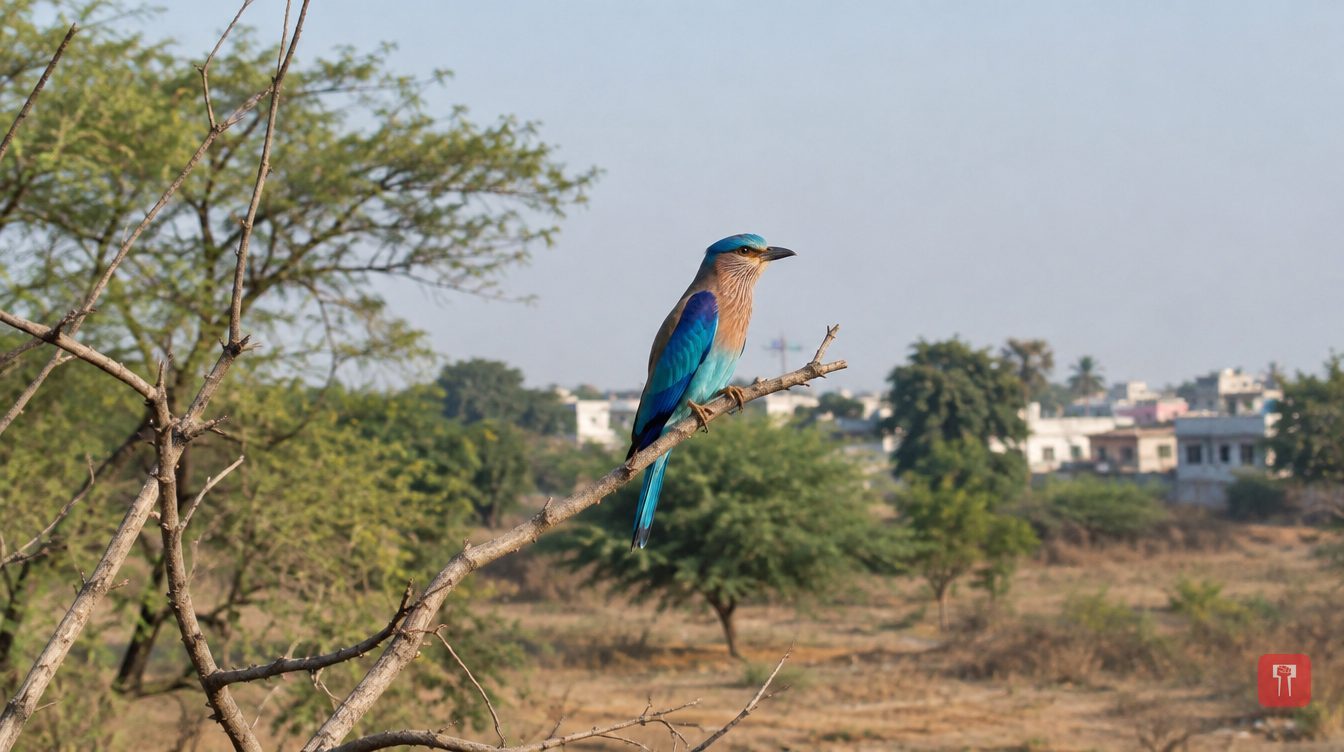
According to religious belief, sighting a particular bird on this day is considered highly auspicious. It is believed that seeing this bird on Dussehra opens the doors to good fortune, joy, prosperity and success in life. The bird is the Neelkanth (Indian roller), which is also regarded as a symbol of Lord Shiva.
Two beliefs are cited about the Neelkanth. According to one, Ram sighted the Neelkanth before marching on Lanka and killing Ravana, and went on to win. The other holds that after killing Ravana, Ram prayed to Lord Shiva to be freed from the sin of killing a Brahmin, and Shiva appeared in the form of the Neelkanth. For this reason, seeing the Neelkanth on Dussehra is considered a good omen and a sign of victory.
In Hinduism, sighting the Neelkanth on Vijayadashami is considered very auspicious. In popular belief the bird is a symbol of Lord Shiva. When Shiva drank the poison during the churning of the ocean, his throat turned blue, and that is why Mahadev is called Neelkanth.
It is believed that seeing the bird on Dussehra washes away the sins accumulated over the year and removes obstacles in life. It is also seen as a symbol of happiness and prosperity at home, wealth and success at work. Sighting the Neelkanth on Dussehra is therefore given special importance.
On the muhurat: the Dashami tithi begins at 12.51 pm on October 20 and ends at 2.11 pm on October 21. The Vijay muhurat will be from 1.59 pm to 2.45 pm. The afternoon puja time is from 1.14 pm to 3.30 pm, which is Pradosh Kaal. Ravana Dahan is after 5.47 pm.
By tradition, people go to rooftops or open grounds on the morning of Dussehra to look for the Neelkanth. If it is sighted, it is taken as a good omen. People then fold their hands and recite a traditional saying: "Neelkanth, may you stay blue, may you eat a meal of milk and rice, may you tell Ram what we have said."
Information of this kind on religion, astrology and Vastu is meant only for readers' awareness. Experts should be consulted before trying any related practice.
