

Why khil and batashe are offered at Lakshmi Puja: the religious belief and the health angle
 Images are not validated/verified
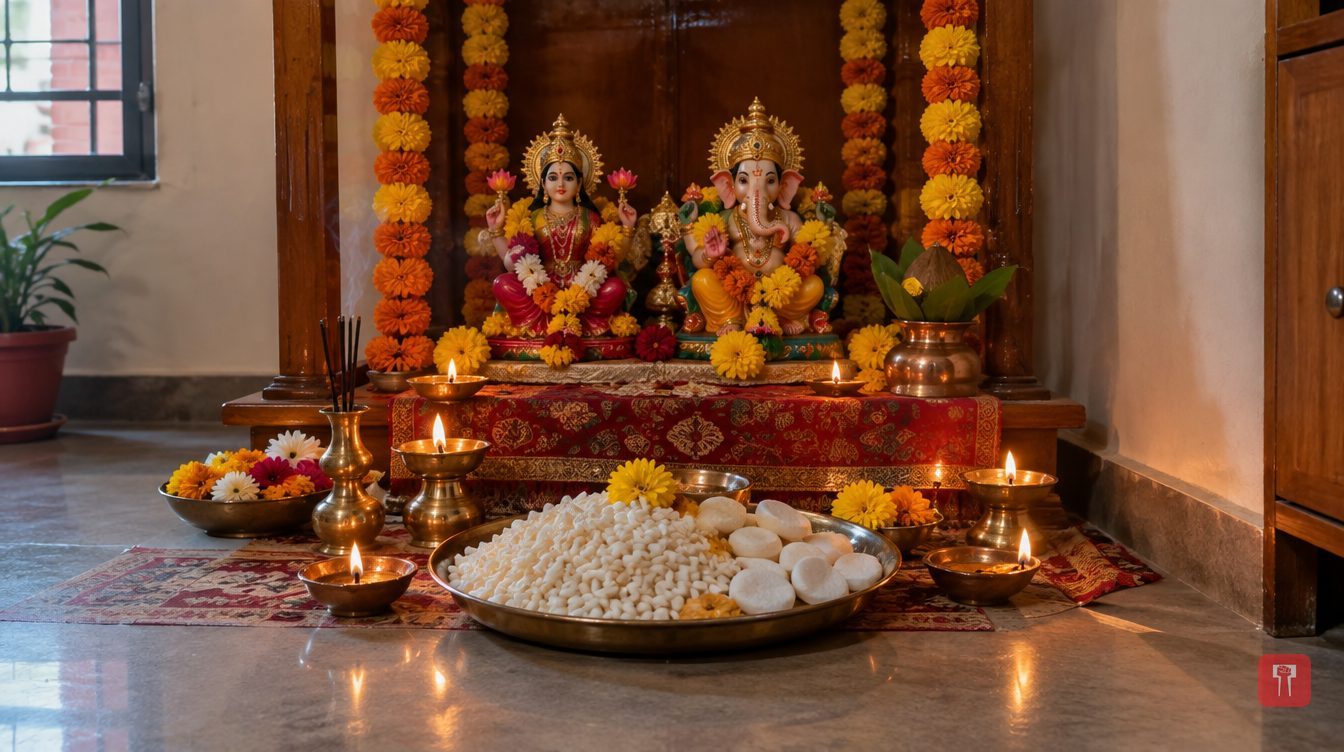
Puffed grain and sugar drops are offered to Goddess Lakshmi on Diwali as symbols of prosperity and sweetness, and are light but best eaten in moderation.
Lakshmi Puja during Diwali is regarded as a festival of happiness, prosperity and opulence. On this day Goddess Lakshmi and Lord Ganesh are worshipped according to ritual and offered a variety of dishes. Among them, khil (puffed grain) and batashe (sugar drops) hold special significance. The tradition of offering khil and batashe at Lakshmi Puja has been followed in Maharashtra and many other parts of the country.
It is believed that offering khil and batashe keeps the home happy and prosperous. The practice is also described as one that joins devotion, tradition and sweetness. Besides religious faith, some traditional food-related reasons are also cited for it.
On the religious side, grain is seen as a symbol of prosperity in Indian culture. The belief is that Lakshmi dwells where grain is plentiful. Khil is made from grain, so by offering it to the goddess at Lakshmi Puja, devotees pray that the home may always have an abundance of grain.
Batashe are made from sugar and are considered symbols of sweetness and auspiciousness. The sentiment behind offering them is that love, happiness and unity may remain among family members and that life may stay sweet.
Another reason is to express gratitude for the new grain. Farming and grain hold a special place in Indian culture. In some areas, there is a tradition of offering the deity khil made from grain of the new harvest. Through this, gratitude is expressed to nature, farmers and food grain.
Now to health. Khil is made by roasting rice or other grain until it puffs up. Because it is light, it is included in many traditional diets. Eaten in the right quantity, it does not sit heavy on the stomach. Rice khil contains carbohydrates, which give the body energy. Plain khil made without oil or ghee has little fat. Many people digest plain khil easily when eaten in the right quantity, though digestion can differ from person to person.
Batashe are made mainly of sugar, so they can give the body quick energy. This energy from sugar lasts only a short while. Batashe have limited nutrients. They are included in the traditional offering as the sweet item. They contain a lot of sugar, so they should be eaten only in limited quantity.
A few things should be kept in mind while making the offering. Clean, fresh khil and batashe should be taken. They can be offered on separate plates or together. After the puja, they are distributed among family members as prasad. People with diabetes should eat fewer batashe. From the health point of view, it is best to eat khil and batashe in moderation.
Reach readers on the ward they actually live in.
Advertise with Prime Time 24Reach readers on the ward they actually live in.
Advertise with Prime Time 24Reach readers on the ward they actually live in.
Advertise with Prime Time 24Reach readers on the ward they actually live in.
Advertise with Prime Time 24
Comments
No comments yet. Be the first.