

Why Diwali Padwa is called Balipratipada: the story of King Bali and Vamana
 Images are not validated/verified
Balipratipada, observed on Kartik Shukla Pratipada, is linked to the generous King Bali and Lord Vishnu's Vamana avatar, and carries religious and cultural significance.
The day after Diwali, Kartik Shukla Pratipada, is also called Balipratipada. In Indian culture the day is said to have religious, mythological and cultural significance. It is linked to the charitable King Bali and Lord Vishnu's Vamana avatar. The story is said to carry several messages through Bali's generosity, his concern for his subjects, the test set by Lord Vishnu and the sacrifice of Bali's surrender. It is said to place humility above ego, generosity above wealth and adherence to dharma above power.
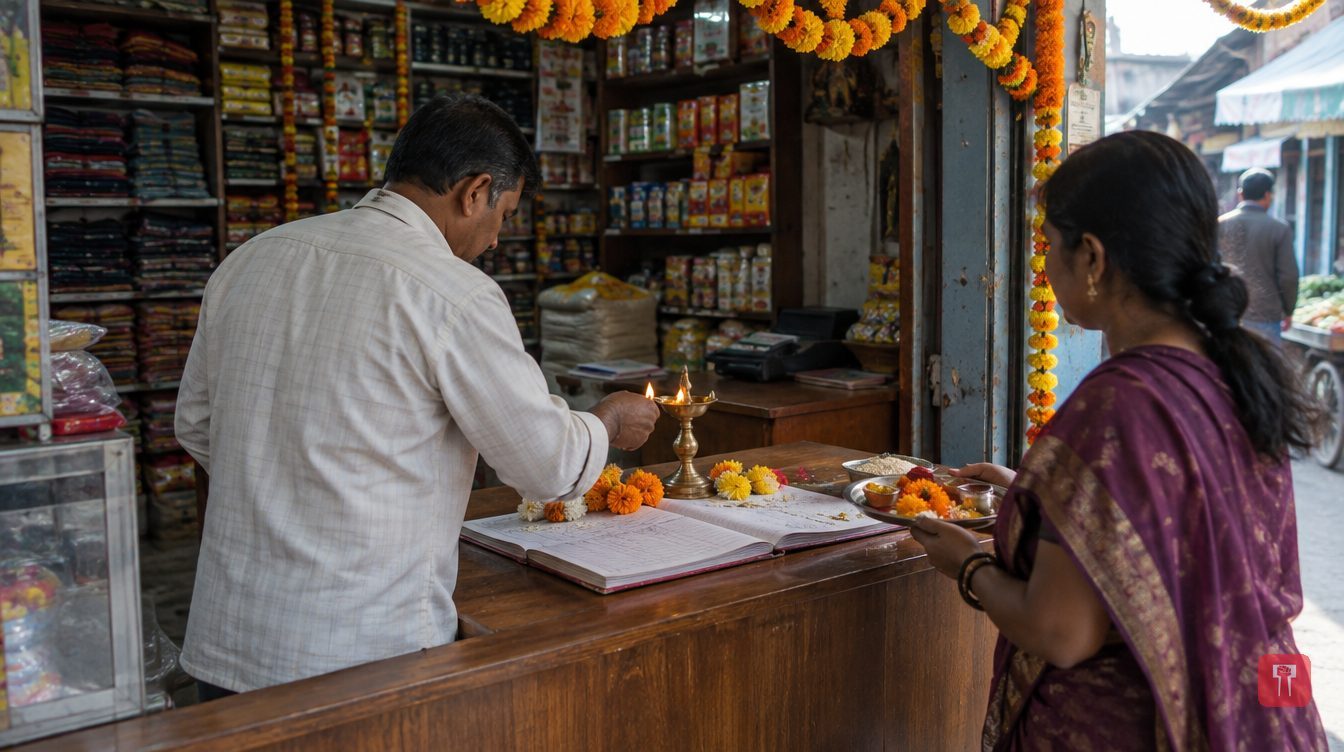
Balipratipada, or Diwali Padwa, is the Kartik Shukla Pratipada that follows Lakshmi Puja on Ashwin Amavasya. In Maharashtra the day is celebrated with great enthusiasm as Diwali Padwa. It holds special importance for traders, and in many places the new financial year is considered to begin on this day. Traders perform puja of their account books in their shops.
King Bali is worshipped on this day. In some places there is a tradition of drawing a symbolic image of Bali and worshipping it. On this day the wife performs aarti of her husband and the husband gives his wife a gift, so it is also regarded as a day expressing love, trust and devotion in the relationship between husband and wife.
King Bali was the grandson of Prahlad and the son of Virochana. Despite being born in an asura family, he had many qualities, including generosity, valour, care for his subjects and magnanimity. His grandfather, the devotee Prahlad, was a supreme devotee of Lord Vishnu, so the tradition of devotion and dharma also influenced Bali's life. On the strength of his valour, Bali built a large empire, performed many yajnas, gave in charity and undertook various works for his subjects' welfare. His kingdom had wealth and prosperity, and his popularity kept growing.
Some mythological accounts say that as his power grew, Bali became proud of his authority. The struggle for power between the gods and the asuras intensified again, and the gods sought refuge with Lord Vishnu.
To relieve the gods' worry, Lord Vishnu decided to take the Vamana avatar. He was born to Sage Kashyapa and Mother Aditi as a radiant Brahmin boy. This is considered Vishnu's fifth avatar and the first human form among the Dashavatara. Dressed as a celibate Brahmin, carrying an umbrella, a kamandalu and a staff, Vamana arrived at the sacrificial pavilion of Bali.
Bali was then performing a major yajna. It was his tradition to give alms to the Brahmins and supplicants who came to the yajna, and he had vowed that no one who came to ask for something would be sent away empty-handed. On seeing Vamana, Bali welcomed him with respect and asked what he wanted.
Vamana asked Bali for only three paces of land. Bali was surprised to hear this. He said, "Why are you asking for such a small gift? I can give you a large kingdom, gold, wealth or as much land as you wish. Ask for more." Vamana still declined to ask for anything beyond three paces.
Bali agreed to the request. Bali's guru Shukracharya then recognised through his divine vision that Vamana was not an ordinary Brahmin but Lord Vishnu. He felt there was some great secret behind the request, and tried to stop Bali from making the gift. But Bali did not go back on his word. He said that having given his word, it was his duty to honour it.
As soon as Bali promised the gift of three paces of land, Vamana assumed a gigantic form and his body reached the sky. With one pace he measured the entire earth, and with the second, the heavens. Lord Vishnu then asked Bali where he should place the third pace.
Bali faced a great dilemma, as he had no land left to fulfil his promise. Even so, he did not break his word. With great humility he bowed his head and asked Lord Vishnu to place the third pace on his head. Vamana placed the third pace on Bali's head and sent him to Patala Loka.
Although Bali was sent to Patala, Lord Vishnu was pleased with his generosity and his habit of keeping his word. Even after giving away everything, Bali had kept his word and did not hesitate to offer even his own head. Vishnu asked him to seek a boon. Bali loved his subjects, so he expressed a wish to meet them, and Lord Vishnu granted it.
According to the mythological account, King Bali comes to earth on Kartik Shukla Pratipada, and Balipratipada is observed in his memory. In some traditions it is customary to worship Bali on this day. The Puranas also say that Lord Vishnu made Bali the ruler of Patala Loka. In the tradition of Kerala's Onam festival too, the story of King Mahabali coming to meet his subjects is told in particular.
On this day Bali is remembered and worshipped. In some places an image of Bali is made from cow dung and worshipped. The sentiment behind this is said to be prosperity, generosity and the welfare of the people.
Reach readers on the ward they actually live in.
Advertise with Prime Time 24Reach readers on the ward they actually live in.
Advertise with Prime Time 24Reach readers on the ward they actually live in.
Advertise with Prime Time 24Choose primetime24.com as a preferred source on Google Google shows more stories from your preferred sources in Top Stories.
Reach readers on the ward they actually live in.
Advertise with Prime Time 24
Comments
No comments yet. Be the first.