

Ravana, Bali and Duryodhana: three different ends, three different religious meanings
Though all three were powerful and devout, the Puranic tradition ends their stories differently, and each carries its own moral lesson.
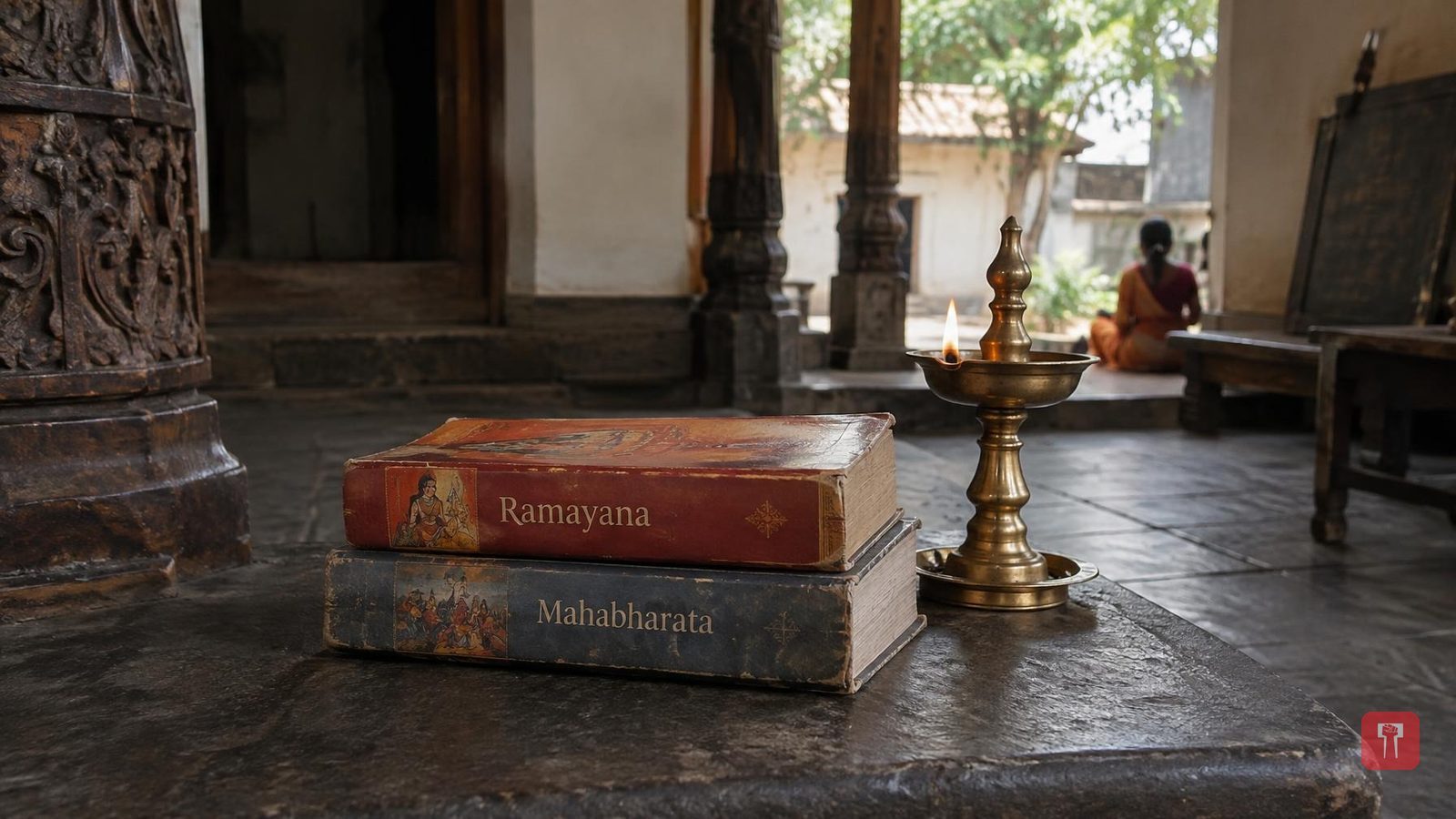
Indian Puranic tradition treats the relationship between devotion, righteousness, unrighteousness, ego and action with great subtlety. Worshipping a deity does not make every act of a person righteous. However powerful, learned or devout a person may be, if their conduct harms dharma, they must face the consequences. Ravana, King Bali and Duryodhana can be seen as three different examples of this.
One thing is common to all three stories. Despite their strength, devotion and splendour, their lives took a decisive turn because of adharma born of ego or circumstance. Yet their ends were not the same. Ravana was slain, Bali was given the kingdom of Patala, and Duryodhana was killed by Bhima in a war fought for dharma. Rather than reading these stories merely as "the deity defeated the devotee", it is more important to look at their religious and moral meaning.
Ravana of the Ramayana is regarded as a complex character. He was not just the king of Lanka or Ram's enemy. He is also described as learned, mighty, an ascetic and a great devotee of Lord Shiva. Through severe penance he won boons from Brahma. He knew the Vedas and shastras, and gods, demons and many kings feared his strength.
His good qualities were as striking as his ego was large. As his power and authority grew, his faith in his own strength turned into arrogance. The decisive event of his life was the abduction of Sita. It was not merely the kidnapping of a woman but an act of adharma. After this, the clash between Shri Ram and Ravana could not be avoided. Ram is regarded as an incarnation of Vishnu. According to the Ramayana tradition, he fought Ravana to protect dharma and destroy adharma. Ravana lost the war in Lanka and was slain by Shri Ram.
The character of Mahabali, or King Bali, is different from Ravana's. Bali is regarded as the grandson of Prahlad and the son of Virochana. Like Prahlad, he came from a tradition of devotion to Vishnu. He is famed as a mighty and generous king. Bali built a vast empire by his strength, and his influence grew so great that he established his dominance even over heaven. This put the gods' position and the throne of Indra in danger.
Against this background, Lord Vishnu took the Vamana avatar. Vamana came to Bali's sacrificial site as a small Brahmin boy and asked him for just three paces of land. The generous Bali agreed. Vamana then assumed a colossal form. With the first pace he measured the earth and with the second, heaven. There was no space left for the third. Bali then bowed his head and asked that the third pace be placed on it.
The most important point of this story is that Vamana did not kill Bali. Instead, because of Bali's devotion, generosity and surrender, he was given a special place. According to Puranic tradition, he was given the kingdom of Sutala loka, and Lord Vishnu stayed there to protect him. One meaning drawn from the Vamana avatar is that no matter how great one's power, it must in the end remain within the limits of dharma. Bali offered everything he had in the end, which is why his story is remembered with respect in Indian folk tradition.
Duryodhana of the Mahabharata also has a many-layered personality. He was a prince of the Kuru dynasty, a mighty warrior and a master of mace combat. Some traditions also describe him as a worshipper of Lord Shiva. But his most prominent traits were a fierce hunger for power and hatred of the Pandavas. He believed the throne of Hastinapur was his by right and always regarded the Pandavas as rivals. Events such as the lacquer house plot, the dice game, the exile and the conflicts that followed widened the gulf between the two sides.
One of the most painful episodes of the Mahabharata is the humiliation of Draupadi in the dice hall. It sharpened the conflict further. Shri Krishna tried to avert war. A very limited demand was also placed on behalf of the Pandavas, but Duryodhana refused to compromise. The result was the great war at Kurukshetra. In it Shri Krishna became Arjuna's charioteer without taking up arms himself, and kept guiding him. Duryodhana's last fight was against Bhima in a mace duel. At the end of the war Bhima struck Duryodhana on the thigh and he was defeated.
Duryodhana's end came neither at Ram's hands nor at those of a direct incarnation of Vishnu. His story is therefore not like Ravana's. Here Shri Krishna's role is that of a guide and strategist on the side of dharma, and Duryodhana is killed by Bhima.
Taken together, the three stories bring out an important idea of Indian Puranic tradition: devotion is not limited to outward worship but is also tied to conduct. Devotion to the divine and moral conduct are not entirely separated in Indian tradition. Devotion can give a person strength, but the bigger question becomes the path along which that strength is used. To bind the three stories into one thread and say merely that "the gods killed them despite their devotion" would be incomplete, because the religious meaning and outcome of each story are different.
