

Which appliances are safe on an inverter, and why earthing matters in rain
A guide to using inverters safely at home and why proper earthing is critical during the monsoon
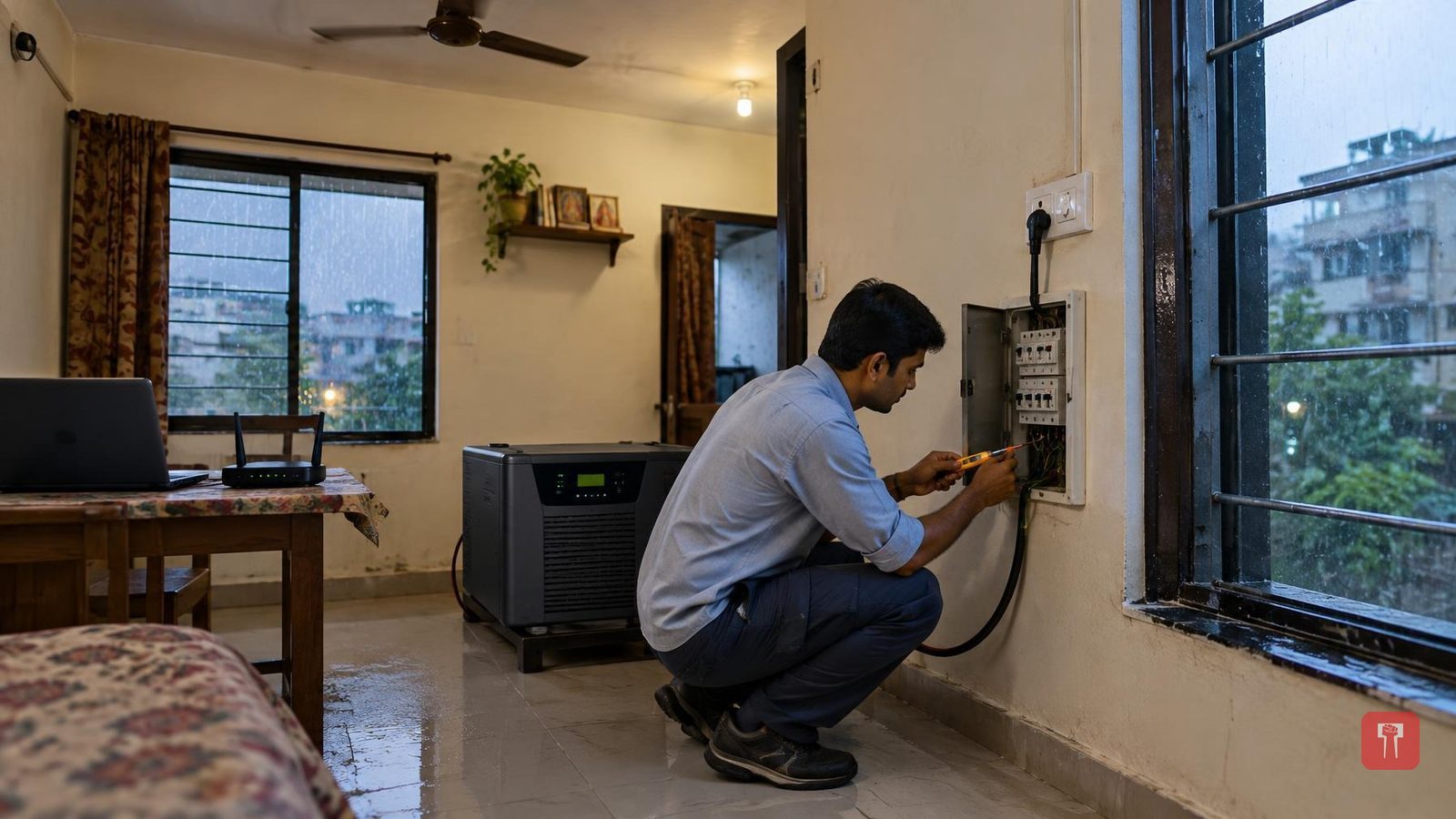
An inverter is very useful for running bulbs, fans and essential appliances at home after a power cut. But an inverter's capacity is limited, so it is not advisable to run every home appliance on it. What matters is how much power an appliance draws and what the VA capacity of the inverter is.
Among everyday appliances, low-load devices such as LED bulbs, fans, Wi-Fi routers, mobile chargers, TVs or laptops can run comfortably on an inverter of normal capacity. These days, with work from home or online tasks needing a router, laptop and charging, it is often fine to keep these on the inverter. But connecting several appliances at once significantly increases the risk of overload.
On the other hand, appliances such as refrigerators, pumps, microwaves, mixers, irons, geysers, heaters or air conditioners draw a much higher load. Many of these have a motor or heating element, which means they consume more power at start-up or during continuous use. Such appliances should only be run after checking the inverter's capacity. In particular, heating appliances like irons, heaters and geysers should not be run on an inverter unless necessary. The Bureau of Indian Standards' electrical safety guidelines also note that heating appliances carry a risk of overheating and fire.
During the monsoon, ignoring earthing in rural homes can be dangerous. Damp ground, wet walls and electrical wiring make safety concerns more serious during rain. Proper earthing gives fault current a safe path, which reduces the risk of electric shock and short circuits.
In village homes with old wiring, farm pumps, metal appliances or damp areas, regular checks of the earthing become even more important. Rather than attempting to fix wiring themselves during the monsoon, it is safer to have a trained electrician check the earthing, the MCB and the entire electrical system.
