

When to see a specialist for recurring headaches: doctors list the warning signs
 Images are not validated/verified
Most headaches are not serious, doctors say, but frequency, a change in pattern, failing treatment or certain sudden symptoms mean it is time to get checked.
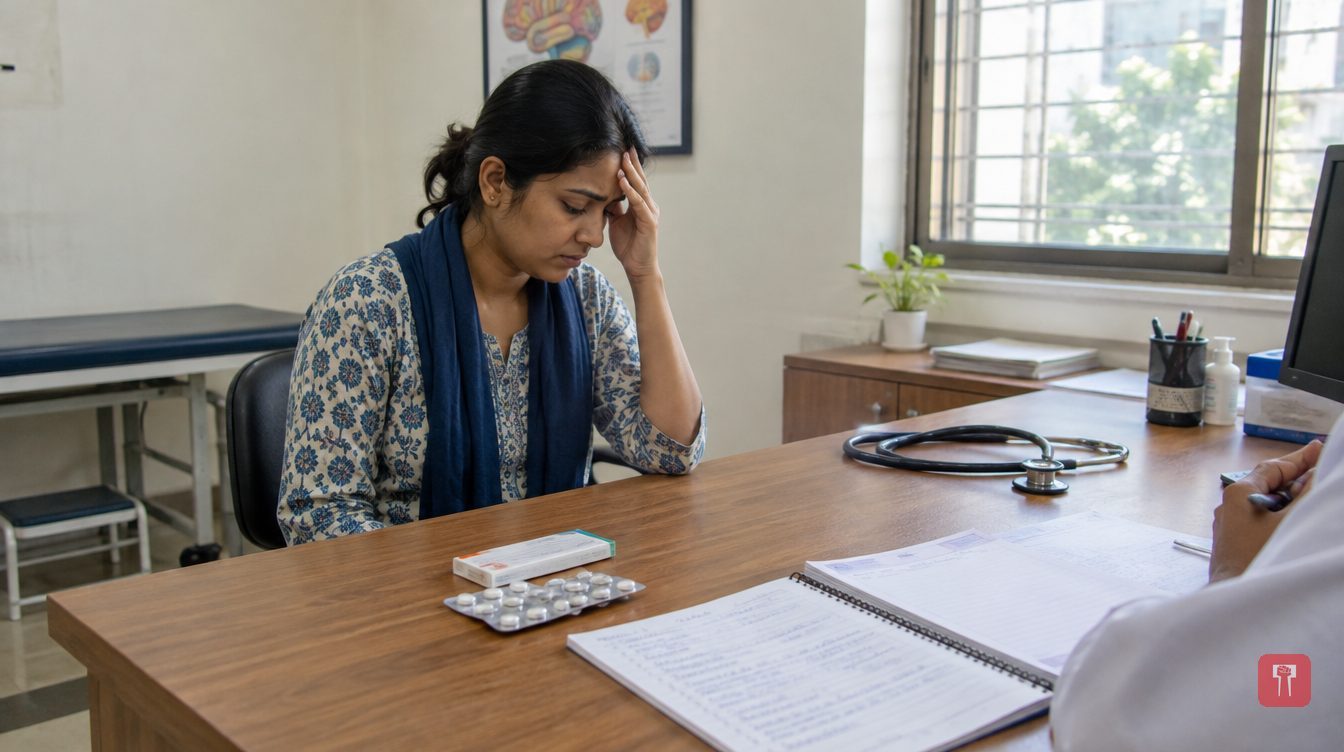
Keeping a strip of tablets in the purse and replacing it nearly every week has become routine for many people. Headache is no longer an occasional thing, and many learn to live with it rather than get it treated. According to doctors, this habit makes it easy to ignore a long-running headache, because a pain that keeps returning eventually stops feeling like a symptom.
Doctors say most headaches are not a serious problem. In some cases, however, the pain is severe and needs immediate help. It is therefore useful to know when to see a doctor about a headache.
Four in every 10 people worldwide have headaches. When counted in 2021, the figure reached about 3 billion people. Very few health problems on earth affect so many people, and that may be why headache is so easily put off.
Doctors broadly look at headaches in two ways. One kind, such as migraine, is the main problem itself but does not damage the brain. The other kind gives a warning. These occur when something else is going on, such as an injury, an illness or raised pressure inside the head. Most headaches fall in the first group, so there is usually no cause for alarm. But if the pattern of the pain starts to change or something new is felt, it is wise to get checked.
Doctors say frequency matters more than intensity here. A headache on 15 or more days a month, continuing for three months in a row, is called chronic by doctors. Mild pain counts too. Having mild pain on 20 days a month deserves a check-up just as much as a few severe attacks do.
A change in pattern is equally important. A person who has had the same kind of migraine for 20 years knows its nature well. But a headache that starts behaving differently deserves attention even if the pain does not increase. The third sign is treatment that no longer works. Tablets that once worked and now barely touch the pain, a headache that forces a person to go to bed early, or one that costs a working day every month, points to the same thing.
For some signs, a check-up the same day is advised. If a headache becomes very severe suddenly, in less than a minute, it is a major emergency. Feeling the worst pain ever can mean bleeding near the brain, and such a person should seek a doctor's help immediately. A headache with fever and a stiff neck that cannot bend forward needs emergency care within the hour. A head injury or a first-ever seizure also calls for a doctor at once.
In some situations, the advice is to book an appointment early rather than wait. A completely new headache starting after the age of 50 is worth investigating. Pain that worsens on lying down, coughing, sneezing or straining, or that gets sharper on standing and comes with vomiting, points to raised pressure inside the skull. The same applies to a history of cancer, a weak immune system or unexplained weight loss. Pain building gradually over weeks, and blurred or double vision, also fall in this group.
Doctors say a vicious cycle can develop in people who take headache pills repeatedly. Taking regular painkillers for more than three months can itself cause a daily headache, leading to a need for more medicine. Using ordinary painkillers on 15 or more days a month, or migraine tablets, opioids or combination medicines on 10 or more days a month, is considered overuse. Its share in the general population is 0.5% to 2.6%, yet it accounts for a large proportion of patients at specialist headache clinics. The decision to stop the medicine should be taken only on a doctor's advice, because the pain may seem worse for a week or two while the body adjusts.
At a visit to a specialist, most diagnoses come from the patient's history. Doctors say a headache record should be kept for at least 4 to 6 weeks, noting the time, location, warning symptoms, triggers, sleep and medicine use. Scans are done in selected cases, not routinely. If the headache is migraine-like and the physical examination is normal, a brain scan may not be needed either.
Reach readers on the ward they actually live in.
Advertise with Prime Time 24Reach readers on the ward they actually live in.
Advertise with Prime Time 24Reach readers on the ward they actually live in.
Advertise with Prime Time 24
Comments
No comments yet. Be the first.