

Use modern technology to cut road accidents, says Maharashtra transport minister
Transport minister Pratap Sarnaik has ordered state agencies to coordinate and use modern technology to reduce road accidents and deaths.
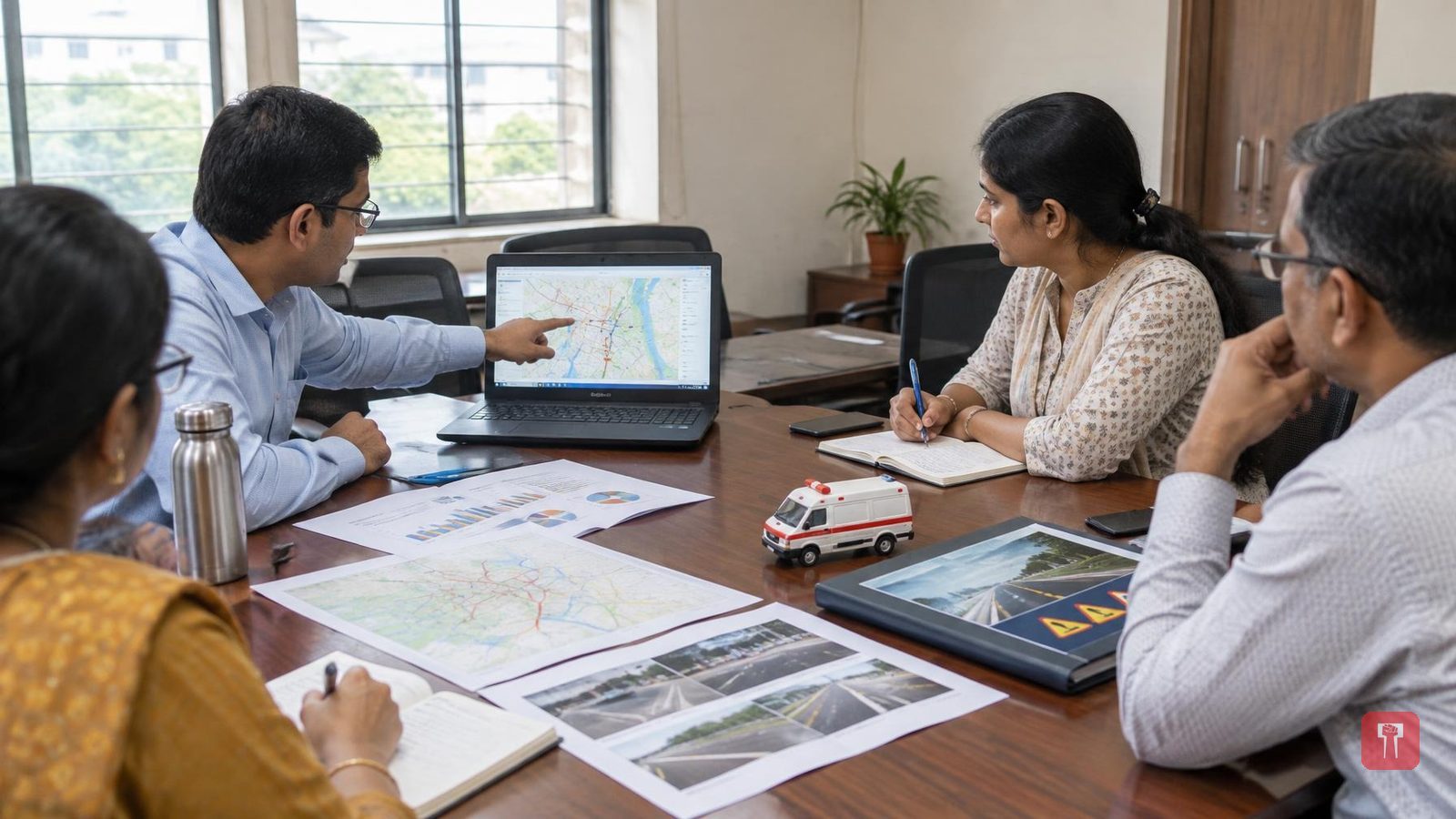
Government agencies must use modern technology and coordinate with each other to reduce road accidents and deaths in the state, transport minister and chairman of the State Road Safety Council Pratap Sarnaik has said. The directive was issued at the 13th meeting of the State Road Safety Council, held at the state secretariat under his chairmanship.
The meeting stressed that the transport, police, public works and health departments must work together to control accidents. It was emphasised that the "golden hour" immediately after an accident is the most crucial period for victims, and top priority must be given to ensuring prompt treatment during that time.
Officials were directed to effectively implement the PM-RAHAT scheme to ensure timely treatment for accident victims. The meeting was told that under the scheme, a victim can get cashless treatment worth up to Rs 1.5 lakh for up to seven days. To avoid delays in starting treatment after hospital admission, the health, police and transport departments were asked to jointly develop a procedure to ensure police registration, a digital identification number and treatment approval are completed within a set time.
A proposal will be prepared to bring the 108 ambulance service and private ambulances onto a single digital platform so that the nearest ambulance can reach the accident site immediately. Minister Sarnaik also directed officials to consider fitting ambulances with cameras and telecommunication facilities so hospital doctors can directly view a victim's condition and provide necessary guidance until the patient arrives.
The meeting stressed the need to assess the availability of manpower, medical equipment and specialist doctors at trauma care centres across the state, and to plan for capable trauma care facilities within every 50-kilometre stretch. It was also suggested that a policy for air ambulance services be prepared to evacuate the injured quickly in case of serious accidents on the Samruddhi Expressway, expressways, coastal roads and in remote areas.
The meeting raised the need for regular road safety audits at every stage of road planning, construction and maintenance. It was suggested that 10 percent of the public works department's funds be set aside for road safety to fix engineering flaws in roads and reduce accident risk. Officials were directed to conduct a scientific study using data on accident time, location, vehicle speed, road design, lighting, pedestrian movement and driver condition, to identify accident-prone "black spots" and speed up remedial measures there.
A pilot project for electronic "weigh-in-motion" sensors was proposed to control overloaded vehicles. The use of remote sensing technology to check pollution from moving vehicles is also under consideration. Officials were directed to link Pollution Under Control certificates with the vehicle and challan systems through hybrid software.
In collaboration with the union Ministry of Road Transport and Highways and the SaveLIFE Foundation, road safety initiatives will be undertaken in 100 high-risk districts across the country. The meeting was told these include 11 districts in Maharashtra: Nashik rural, Pune rural, Ahilyanagar, Solapur rural, Jalgaon, Satara, Chhatrapati Sambhajinagar rural, Beed, Nagpur rural, Kolhapur and Dhule. Officials were directed to carry out data-based analysis and an action plan to reduce accident deaths in these districts.
According to information presented at the meeting, even as the number of vehicles in the state is rising, accident deaths fell by 6 percent between January and July 2026 compared with the same period the previous year. The meeting noted that in 2025 accident death figures, two-wheeler riders accounted for 60 percent and pedestrians for 22 percent. Transport minister Pratap Sarnaik directed that special safety measures for two-wheeler riders and pedestrians be implemented more effectively as a result.
