

US troops complete Iraq withdrawal; Oct 1 to be marked as Sovereignty Day
The US has formally ended its military mission in Iraq and left Baghdad, and the Iraqi government will observe 1 October as Sovereignty Day.
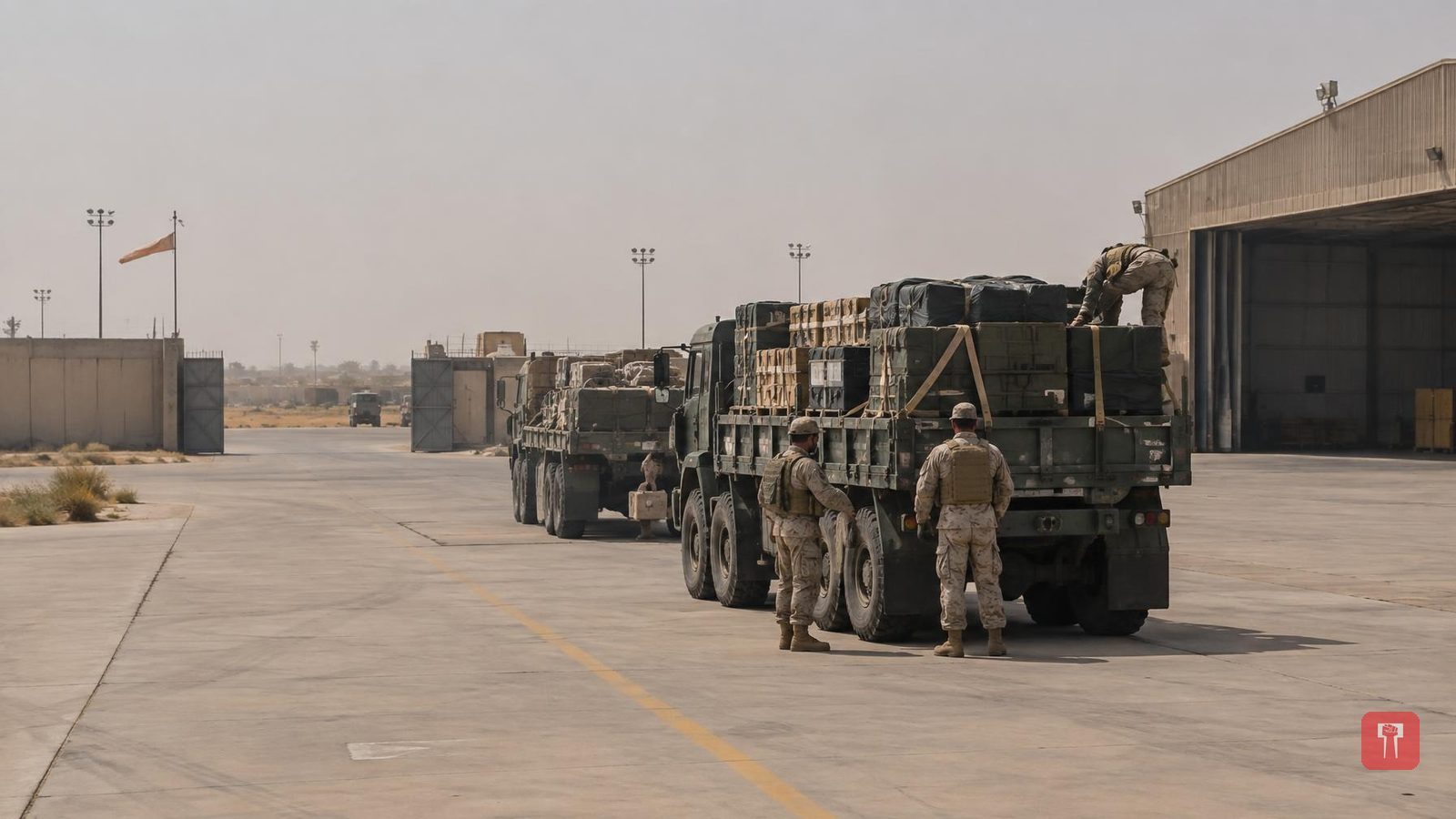
An era in the Middle East has ended. The United States has formally brought its military operation in Iraq to a complete close and left Baghdad. American forces have returned home after nearly two decades. Following the withdrawal, the Iraqi government will officially mark 1 October as "Sovereignty Day" with great enthusiasm.
The decision comes at a time when tension and war-like conditions persist between the US and Iran in the Middle East. The international coalition force played an important role in protecting Iraq from terrorist and extremist groups. But it was also repeatedly accused of raising tension in the region through its presence.
The war began in 2003. The then US administration and its allies levelled the grave charge that Iraqi President Saddam Hussein was building "weapons of mass destruction". The US then attacked Iraq directly, taking along the forces of NATO allies such as Britain, Canada and France. The fierce war between the Iraqi army and the US-led coalition lasted about three years. Saddam Hussein was finally hanged on 30 December 2006, ending the first phase of the war.
After Saddam Hussein's fall, US forces carried out an intensive search across Iraq, including the presidential palaces. Despite the extensive search, the US found no weapons of mass destruction or chemical weapons there.
After Saddam's death, heavy political and social chaos spread in Iraq. To keep the situation under control, US forces built permanent military bases and deployed troops. At one point, about 150,000 American soldiers were stationed in Iraq.
After toppling Saddam, the US administration made a historic blunder. It wrongly assumed that the Iraqi army of the time would remain loyal to Saddam, and abruptly disbanded the entire government army. This one decision left about 350,000 Iraqi soldiers jobless overnight. Angered, these soldiers later joined the notorious terror outfit Islamic State (IS) and other hardline groups. Later, with the help of these former soldiers, ISIS carried out brutal bloodshed and terror attacks not only in Iraq but across the Middle East, including Syria.
In 2014, when Islamic State seized large parts of Iraq and Syria, the international coalition force returned to Iraq to stop it. ISIS lost its territory in Iraq in 2017 and in Syria in 2019. Even so, the coalition force stayed on in Iraq to wipe out the group's remaining hidden cells.
Former US President Joe Biden signed a historic agreement in 2024, during his term, to withdraw US forces from Baghdad in phases. Under this timetable and agreement, US forces completed their full withdrawal from Iraq on 30 September 2026.
The Iraqi administration believes that with the foreign coalition force gone, local extremist groups will no longer have any excuse to keep weapons or commit violence. Iraq's new Prime Minister Ali al-Zaidi, who came to power this year, announced that 1 October, the first day after the US forces leave, will be observed as "Sovereignty Day". The heads of Iraq's executive, legislature and judiciary welcomed the decision and said the national occasion symbolises Iraq's complete self-reliance.
The government of Prime Minister al-Zaidi is currently appealing to various rebel and armed groups to hand over their weapons. A deadline of 30 September was initially set, but it has been withdrawn because talks on the regulation of weapons are under way. Several powerful groups have refused to lay down arms, but senior leaders are mediating to try to establish peace.
