

US proposes fresh scrutiny of every H-1B and L-1 extension application, ending deference to earlier approvals
 Images are not validated/verified
A proposed Department of Homeland Security rule would stop immigration officers from treating earlier visa approvals as the basis for deciding extension applications.
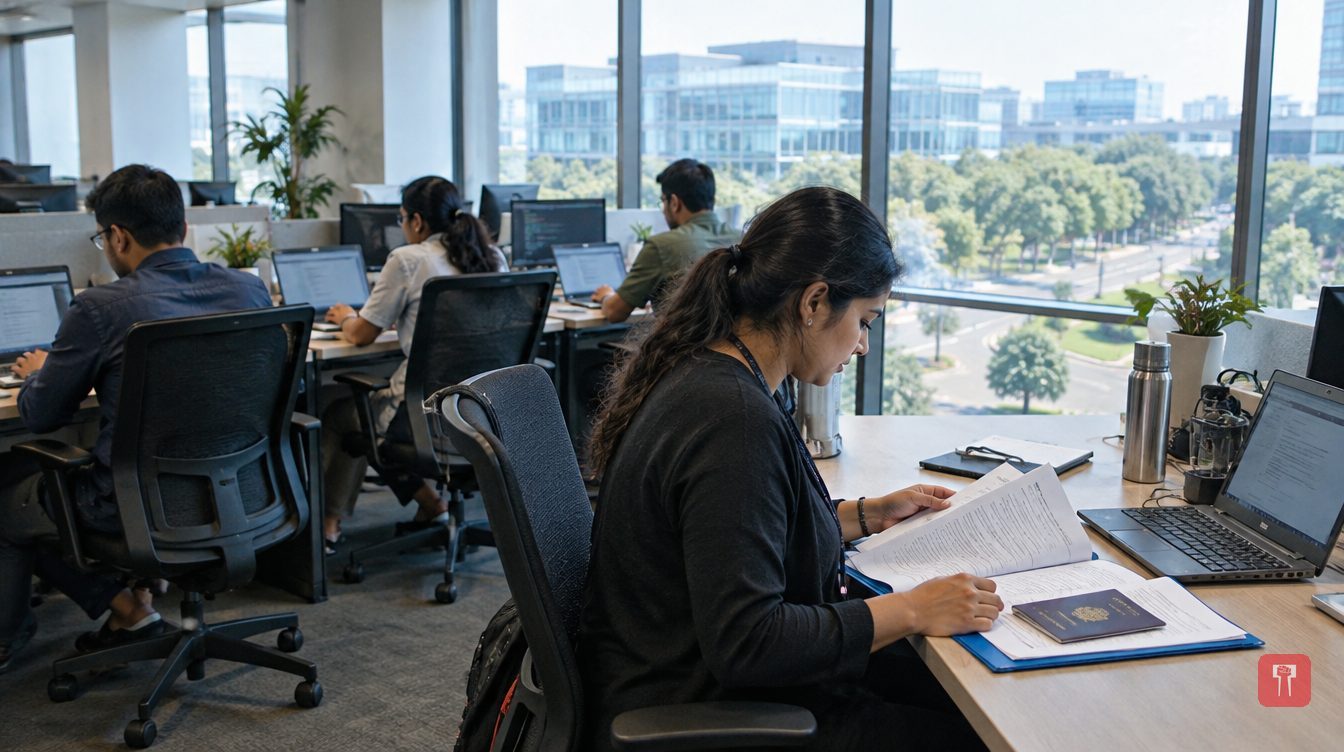
A proposed immigration policy of the Donald Trump administration in the United States could add to the difficulties of Indian professionals working on H-1B and L-1 visas. Under the proposal, US immigration officers deciding on visa extension applications would no longer have to treat an earlier visa approval as the basis. This means every extension application could be examined afresh.
The proposal has been put forward by the Department of Homeland Security (DHS). It is titled 'Removing Deference to Prior USCIS Determinations of Eligibility' and was published in the Federal Register on October 14. The public can submit comments and objections until November 13.
Rule 8 CFR 214.1(c)(5) is currently in force. Under it, if an employee has already been granted a visa and there has been no major change in the job or circumstances, officers are generally expected to respect that earlier decision. If the proposed change comes into effect, this will no longer apply. Applications for H-1B and L-1 visas, as well as O-1, TN, E and P category visas, could then be examined afresh every time.
Indians are said to be the most affected. According to data from US Citizenship and Immigration Services (USCIS), about 3.99 lakh H-1B petitions were approved in fiscal year 2024. Of these, 71 per cent of the beneficiaries were born in India.
About 2.58 lakh petitions were approved in the continuing employment category. Of these, 2.03 lakh, or 79 per cent, were for Indian professionals. This is why employees in India's IT and technology sector are seen as likely to bear the brunt of the change.
DHS estimates that about 2.08 lakh applications a year could be affected. Request for Evidence (RFE) notices, which seek additional documents, could rise by about 3 per cent, meaning roughly 6,000 additional notices a year. The department has also said that processing such cases could take 64 days longer on average.
The department says that under the current rule, immigration officers carry the burden of showing why they are reaching a decision different from the earlier one. After the proposed change, officers would be free to assess each application separately and in light of the circumstances at the time.
The department has also clarified that officers will not ignore earlier visa approvals entirely. The difference would be that they would no longer be a binding basis for later decisions.
The practice of giving weight to earlier approvals began in 2004. It was scrapped in 2017 during Trump's first term, reintroduced in 2021 and written into formal rules in 2024. The proposal to change the rule again is now under discussion.
Reach readers on the ward they actually live in.
Advertise with Prime Time 24Reach readers on the ward they actually live in.
Advertise with Prime Time 24Reach readers on the ward they actually live in.
Advertise with Prime Time 24
Comments
No comments yet. Be the first.