

US midterm candidates court Indian-American voters with dosa-making and temple visits
 Images are not validated/verified
As campaigning for the 3 November US midterms ends, candidates from several parties are seeking out Indian-American voters at restaurants, temples and Diwali events.
Campaigning for the US midterm elections has entered its final phase and the atmosphere is charged. Voting will be held on 3 November. Leaders and candidates of all parties are looking for new ways to reach voters. This time, many candidates have placed the Indian-American community at the centre of their campaigns. Mindful of the growing number of Indian voters and their political weight, candidates are seen adapting to Indian culture. Some are going to Indian restaurants to make hot dosas, while others are visiting Hindu temples to pray and taking part in cultural events.
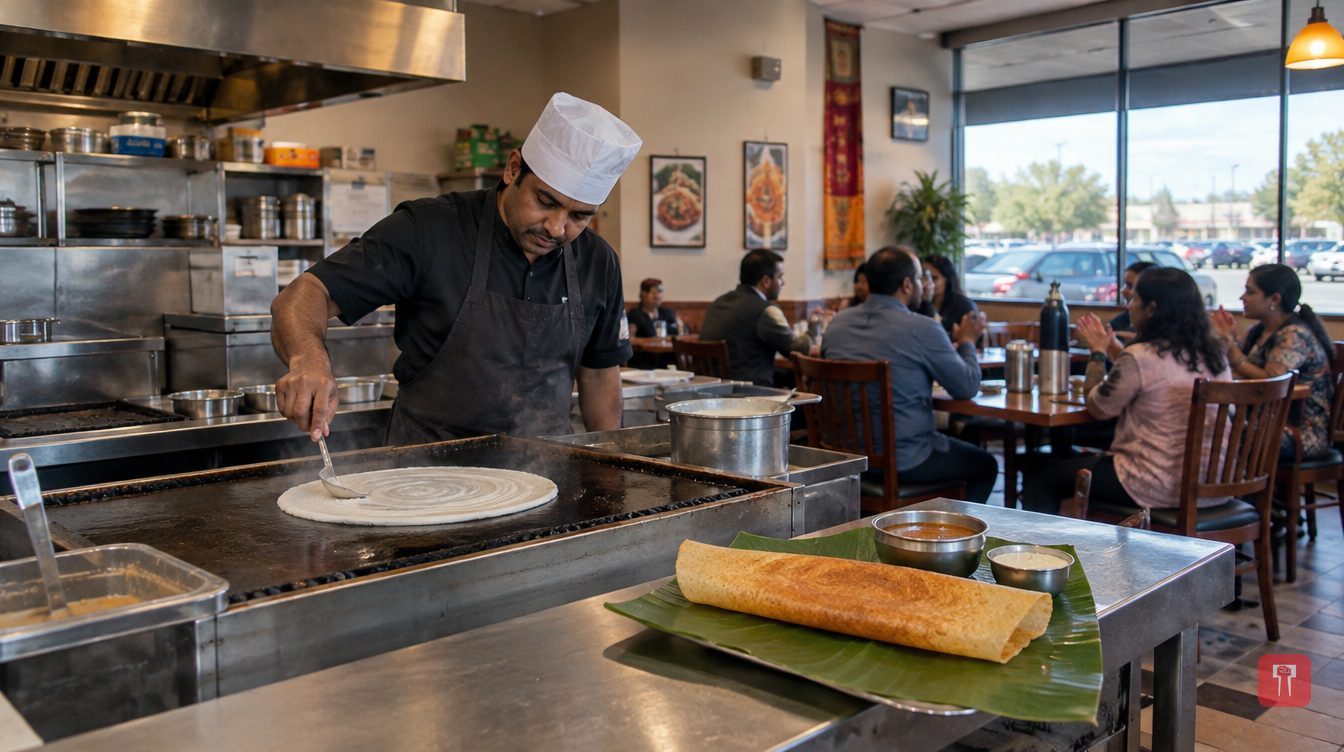
The most talked-about figure in this campaign is Democratic candidate James Talarico. He is contesting the Senate seat in Texas against veteran Republican candidate Ken Paxton and is giving him a stiff challenge. During the campaign, Talarico visited a well-known Indian restaurant in Irving, a Dallas suburb. He did not merely chat with voters there; he put on a chef's cap and made a crisp masala dosa from rice batter on the griddle himself.
When the dosa was served on a banana leaf, the Indian community gathered there applauded his effort. Videos of the act are going viral on social media. Businessman and political analyst James Blunt strongly backed the effort. Blunt said, "At a time when Republican supporters are making negative remarks about Indians and their food, Talarico is winning hearts through a tasty dosa made from Indian rice. On one side is divisive politics, on the other a stance of cooperation."
The campaign is not limited to food. In states with large Indian-American populations, temples have now become the main venues for candidates' political engagement. In Connecticut, Governor Ned Lamont, who is seeking a second term, took part in a grand Diwali celebration at the State Capitol with Deputy Secretary of the State Jennifer Barhona. He lit lamps with the Indian community and joined in the festivities.
In Ohio, Congressman Greg Landsman visited the BAPS Swaminarayan temple. Attending the temple's 11th annual Patotsav, he praised the spirit of service of the Hindu-American community. New Jersey Senator Cory Booker went to the Akshardham temple, took part in the Diwali celebration there and spoke directly to the Indian community.
In the Harrisburg area of Pennsylvania, Republican Congressmen Randy Fine and Scott Perry visited local temples to reach Indian voters. The main aim of the visits was to understand the community's concerns and respect its religious beliefs. Michigan Congressman John James also visited a Swaminarayan temple. He took detailed note of the temple's traditions, architecture and the Hindu-American community's social service. In a closely contested state such as Michigan, even 1 to 2 per cent of the vote can be decisive, so the visit is considered politically significant.
The answer to why Indian-American voters matter so much lies in the numbers. The Indian-American population is large in major states including California, Texas, New Jersey, New York, Washington, Illinois, Pennsylvania and Georgia. In battleground states such as Pennsylvania, Michigan, Georgia and North Carolina, the margin between victory and defeat is very small. In such situations, the votes of even 1 to 2 per cent of Indian voters can change a candidate's fortunes. That is why candidates have put their full strength into winning over the Indian community. It will be interesting to see how much the candidates gain from "dosa diplomacy" and "temple tours" in the 3 November vote.
Reach readers on the ward they actually live in.
Advertise with Prime Time 24Reach readers on the ward they actually live in.
Advertise with Prime Time 24Reach readers on the ward they actually live in.
Advertise with Prime Time 24
Comments
No comments yet. Be the first.