

UPSC completes 100 years; Modi names 'nation first, citizen first' as twin tests for administration
At the Union Public Service Commission's centenary event at Bharat Mandapam, Prime Minister Narendra Modi said selection must be guided by 'Nation First' and 'Citizen First'.
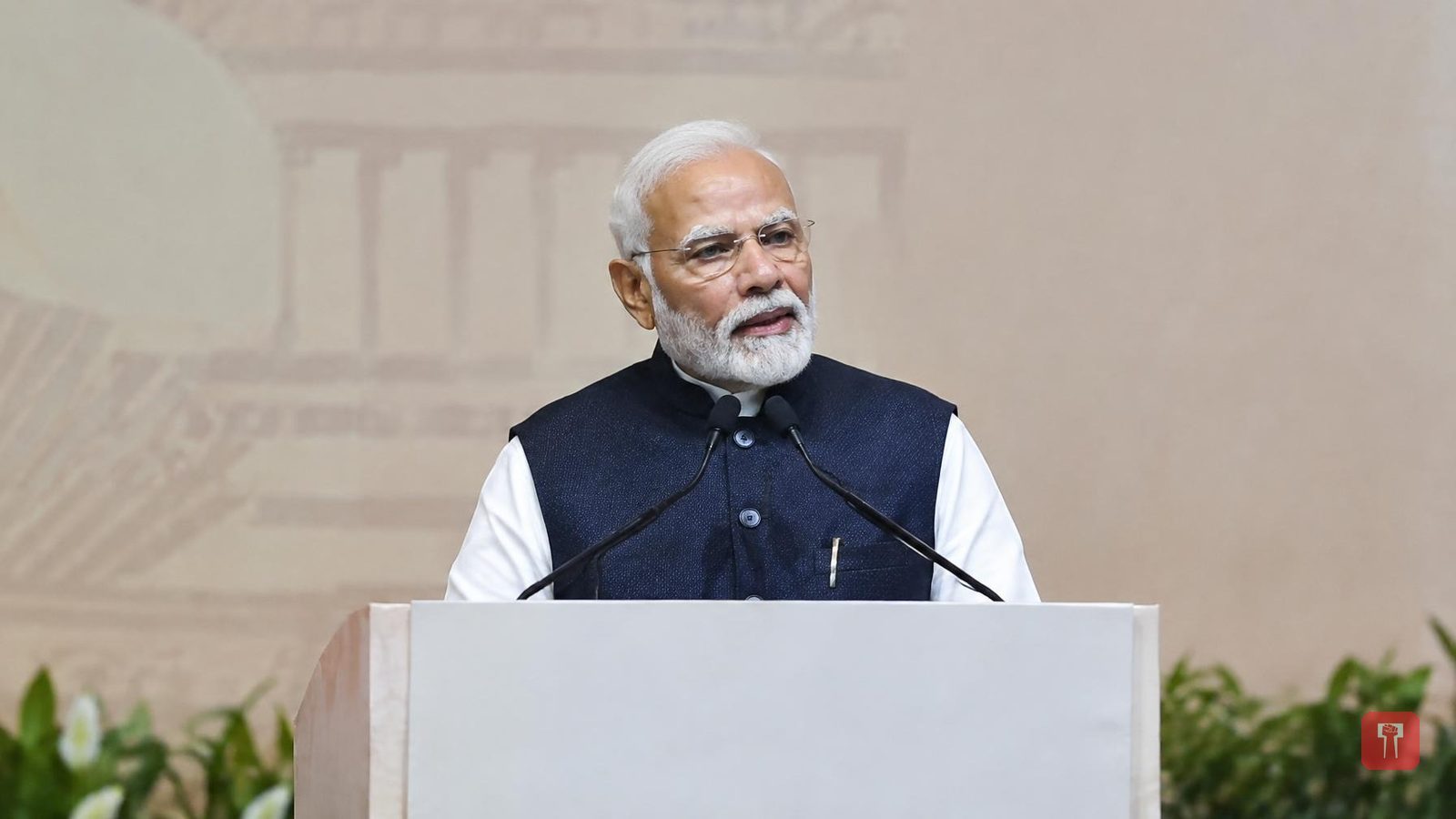
The Union Public Service Commission (UPSC) has completed 100 years since its establishment. A centenary celebration was held at Bharat Mandapam in Delhi to mark the occasion. Prime Minister Narendra Modi was the chief guest. He released a book based on 100 landmark decisions related to public service commissions. A commemorative centenary coin and a special postage stamp were also issued.
The celebration will run for two days, on September 30 and October 1. On the first day, a programme titled "Shatabdi Sohala - Manthan" was held at Bharat Mandapam. Chairpersons and members of State public service commissions from across the country, senior officials, educationists and UPSC officials took part.
Mr. Modi said that when the institution was established in 1926, its arrangements were different. After the country became independent, the UPSC discharged its responsibilities well, keeping in mind the dreams of independent India and its system. He said India's future now lies before it, as a quarter of the 21st century has ended and the next 25 years are extremely special for individuals and institutions alike.
The Prime Minister said the UPSC and the States' selection commissions are a major medium for the kind of administration needed for a developed India. Young people are being recruited today, and they will play an important role in a developed India. Two things must always be kept in mind for this: the first test is "Nation First" and the second is "Citizen First". He said every selection process is based on these criteria, and that if candidates imbued with this spirit are selected, it will be easier to achieve national goals.
Referring to the participation of women, Mr. Modi said women made up only 3 per cent of those in the UPSC examination in 1952, and the figure has now risen to 30 per cent. Four women have headed the UPSC so far, three of them after 2014. He noted that these are not mere numbers but show how much opportunities have grown.
Speaking of the age of AI, he said AI can check some documents moment by moment, and citizens now want instant satisfaction. On selection parameters and the recruitment process, he said the public service must bring in young people who are drawn to "public service", meaning serving the people, and not to public office. He said that knowing why a candidate wants to join the civil services is as important as knowing how much the candidate knows, and stressed the need to look at the selection process in light of changing aspirations.
In the examinations conducted by the UPSC in 2025, 10 to 12 lakh students took part. Of them, more than 9 lakh candidates filled in applications for the civil services examinations.
The UPSC is a constitutional body, provided for in Article 315 of the Constitution of India. Examination questions are prepared with the help of experts. Answer sheets are coded, so the examiner evaluating them does not know the candidate's name or roll number. Candidates' personal information is also kept limited during interviews.
